
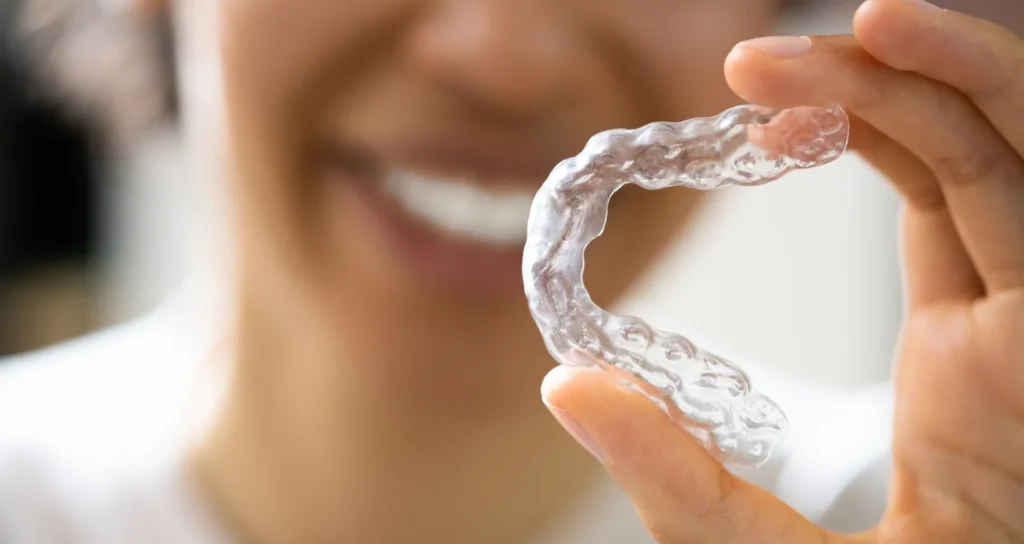
A night guard helps protect your teeth from grinding and clenching while you sleep. It creates a protective barrier between your upper and lower teeth, reducing enamel wear, chips, cracks, jaw strain, and damage to dental work. If you wake up with jaw pain, tooth sensitivity, or morning headaches, a dental night guard may help prevent the problem from getting worse.
What Is a Night Guard?
A night guard is a removable dental appliance worn over the teeth while sleeping. It is also called a dental night guard, bite guard, occlusal guard, mouth guard night appliance, or night mouth guard for grinding.
The main purpose of a night guard is to protect the teeth from bruxism. Bruxism means grinding, clenching, or gnashing the teeth. It can happen during the day, but sleep bruxism is often harder to control because the person is not aware they are doing it.
A night guard may cover the upper teeth or lower teeth, depending on the patient bite and the dentist recommendation. When it fits properly, it should feel stable, comfortable, and secure enough to wear through the night.
Why Teeth Grinding and Clenching Can Be a Serious Problem
Teeth are strong, but they are not designed to handle constant grinding pressure every night. Normal chewing happens for short periods during the day. Grinding and clenching can place heavy force on the teeth for longer periods, especially during sleep.
Over time, this pressure can wear down enamel, flatten tooth edges, crack teeth, damage fillings, and make teeth more sensitive. Some patients also develop jaw soreness, facial muscle pain, morning headaches, or discomfort around the jaw joint.
The problem with nighttime grinding is with many people do not know it is happening. By the time symptoms appear, the teeth may already show signs of damage. This is why early diagnosis and protection matter.
Common Signs You May Need a Night Guard
You may need a night guards if you show signs of grinding or clenching during sleep. Some symptoms are easy to notice, while others are only found during a dental exam.
Common signs include:
- Waking up with jaw pain or tightness
- Morning headaches near the temples
- Teeth that feel sore after sleeping
- Tooth sensitivity to cold, heat, or pressure
- Flattened, worn, or short-looking teeth
- Chipped or cracked tooth edges
- Broken fillings or crowns
- Clicking or discomfort in the jaw
- Cheek biting marks
- Grinding sounds noticed by a sleep partner
Not every jaw pain or tooth sensitivity problem means you need a night guards. Cavities, gum disease, sinus pressure, bite problems, and TMJ disorders can also cause symptoms. A Grimsby dentist can check your teeth, bite, jaw muscles, and dental history before recommending the right treatment.
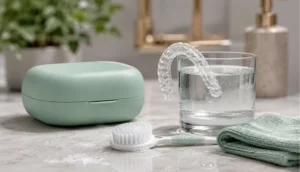
Benefits of Wearing a Night Guard
1. Protects Tooth Enamel
Enamel is the hard outer layer of your teeth. It protects the deeper layers from sensitivity, decay, and damage. Grinding can slowly wear enamel away, and once enamel is lost, it does not grow back naturally.
A night guards helps protect enamel by reducing direct friction between the upper and lower teeth. This is one of the most important benefits for people with visible wear, sensitive teeth, or signs of nighttime grinding.
2. Helps Prevent Chipped and Cracked Teeth
Strong clenching pressure can create small cracks in teeth. Over time, these cracks may become painful, deeper, or harder to repair. Teeth with large fillings or older dental work may be even more vulnerable.
A mouth guard for grinding teeth at night helps absorb and spread some of the pressure. This can reduce the chance of direct impact and help protect teeth from chips, cracks, and fractures.
3. Reduces Pressure on Dental Work
Dental restorations such as fillings, crowns, bridges, veneers, and implants can be damaged by repeated grinding pressure. A patient who breaks fillings often or wears down crowns may have an underlying grinding problem.
A dental night guards helps protect dental work by reducing direct contact and pressure during sleep. This can help extend the life of restorations and lower the risk of repeated repairs.
4. May Reduce Jaw Pain and Muscle Tension
A night guards does not cure every jaw problem, but it may help reduce muscle strain linked to clenching. When the teeth are separated and the bite is supported, some patients feel less morning tightness, jaw soreness, or facial muscle fatigue.
If jaw pain is caused by a deeper TMJ issue, bite imbalance, arthritis, or sleep-related breathing problem, the dentist may recommend additional evaluation.
5. Helps Protect Teeth From Long-Term Wear
Grinding damage usually happens slowly. A small flat edge may not seem serious at first, but years of grinding can make teeth look shorter, thinner, or uneven. The bite may also change as enamel wears down.
A night guards gives the teeth a protective barrier every night. This makes it a preventive tool, not just a treatment for pain.
6. May Help Improve Sleep Comfort
Some patients feel more relaxed wearing a night guards because their teeth are protected and their jaw feels more supported. While a night guards is not a sleep cure, it may reduce discomfort caused by clenching and help patients wake up with less soreness.
If grinding is linked to poor sleep, snoring, or possible sleep apnea, a dentist or physician may recommend further screening.
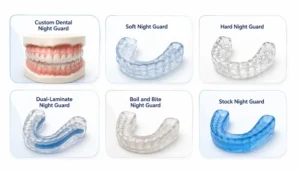
Types of Night Guards
Different night guards are available, and the best choice depends on the patient’s grinding level, bite, comfort needs, and dental condition.
1. Custom Dental Night Guards
A custom dental night guards is made by a dentist using a dental impression or digital scan of your teeth. It is designed to fit your mouth closely and match your bite.
This type usually offers the best fit, comfort, and durability. It is often recommended for patients with moderate to severe grinding, strong clenching, existing dental work, jaw symptoms, or visible tooth wear.
A custom guard may cost more than store-bought options, but it usually provides better long-term protection because it is made specifically for your teeth.
2. Soft Night Guards
A soft night guards is made from flexible material. It may be recommended for mild grinding or light clenching. Some patients find soft guards comfortable because they feel cushioned.
However, soft guards may wear down faster in heavy grinders. In some patients, the softer texture may also encourage chewing on the appliance. This is why a dentist should decide whether a soft guard is suitable.
3. Hard Night Guards
A hard night guards is made from firm acrylic or similar material. It is often used for stronger grinding or clenching because it is more durable than a soft guard.
Hard guards may feel less flexible at first, but they can provide strong protection and are often easier to adjust for bite comfort. They are commonly recommended for patients with heavy bruxism or repeated dental damage.
4. Dual-Laminate Night Guards
A dual-laminate night guards has a softer inner layer and a harder outer layer. The soft inside improves comfort, while the hard outside adds durability.
This type may be useful for patients who want comfort but also need stronger protection. It can be a good option for moderate grinders or patients who cannot tolerate a fully hard guard.
5. Boil and Bite Night Guards
A boil and bite night guard is bought from a store and softened in hot water before being shaped at home. It usually fits better than a stock guard but is less accurate than a dentist-made guard.
This may be a temporary option for some people, but it can feel bulky, uneven, or loose. Poor fit can make it harder to sleep and may reduce protection.
6. Stock Night Guard
A stock night guard comes pre-made and is not shaped to your teeth. It is usually the cheapest option, but it often has the weakest fit.
Because it is not customized, it may feel uncomfortable, move during sleep, or make breathing and speaking more difficult. It is usually not the best choice for long-term teeth grinding protection.
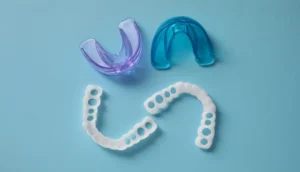
Custom Night Guard vs Store-Bought Night Guard
A custom dental night guard is usually better for long-term use because it is made for your mouth. It fits more closely, feels more stable, and can be adjusted by a dentist if needed.
A store-bought guard may help temporarily, but it may not fit your bite properly. If it feels bulky or uncomfortable, many patients stop wearing it. A guard that stays in a drawer does not protect your teeth. For patients with heavy clenching, worn enamel, crowns, veneers, implants, or jaw pain, a custom guard is usually the safer and more predictable option.
What Is the Best Night Guard for Teeth Clenching?
The best night guard for teeth clenching is usually a custom dental night guard that can handle strong pressure. Clenching is different from grinding because the jaw may stay locked with heavy force rather than moving side to side.
Heavy clenchers may need a hard or dual-laminate guard because soft guards may wear out quickly. The right choice depends on bite pressure, tooth condition, jaw symptoms, and comfort. A dentist can check whether your clenching is mild, moderate, or severe and recommend the correct material.
What Is the Best Night Guard for Teeth Grinding?
The best night guards for teeth grinding depends on how much wear your teeth show and how strong the grinding habit is.
For mild grinding, a soft or thinner guard may be enough. For moderate to heavy grinding, a hard or dual-laminate dental night guards may provide better durability. For patients with crowns, veneers, implants, or repeated tooth fractures, a custom night guards is usually the better option.
The best night guards is not always the cheapest one. It is the guard that fits well, protects properly, feels comfortable, and can be worn consistently.
How a Dentist Makes a Custom Night Guard
A custom night guards is usually made through a simple process. First, the dentist examines your teeth, bite, gums, and jaw. They look for signs of wear, cracks, sensitivity, damaged restorations, or jaw muscle tension.
Next, the dentist takes a digital scan or impression of your teeth. This information is used to create a guard that fits your mouth closely. Once the guard is ready, the dentist checks the fit and bite. Small adjustments may be made so the appliance feels stable and comfortable.
You may be asked to bring the night guard to future appointments so the dentist can check wear, fit, and hygiene.
How Long Does It Take to Get Used to a Night Guard?
Most patients need a short adjustment period. At first, the night guards may feel strange because you are not used to sleeping with something over your teeth.
Many people adjust within a few nights to a couple of weeks. A well-fitted guard should not cause sharp pain, gagging, sore spots, or major bite discomfort. If the guard feels too tight, loose, bulky, or painful, it should be checked by your dentist.
Consistent use matters. Wearing the guard only once in a while will not provide the same protection as regular nightly use.
How Do You Clean a Night Guard?
Many patients ask, “how do you clean a night guards?” Cleaning is important because a guard sits in your mouth for several hours and can collect saliva, plaque, and bacteria.
Rinse your night guards with cool or lukewarm water after removing it. Brush it gently with a soft toothbrush. You can use mild soap if your dentist recommends it. Let it dry fully before placing it in its case.
Avoid hot water because heat can change the shape of the guard. Do not use harsh chemicals, bleach, or abrasive toothpaste unless your dentist specifically recommends a product. Clean the storage case regularly because bacteria can build up inside it.
How to Store a Night Guard Properly
A night guard should be stored in a clean, ventilated case after it dries. Do not wrap it in tissue because it may get thrown away by mistake. Keep it away from pets, especially dogs, because they often chew dental appliances.
Do not leave the guard in direct sunlight, hot cars, or near heat. Heat can warp the material and change the fit. If the night guard no longer fits properly, it may not protect your teeth correctly.
How Long Does a Night Guard Last?
The lifespan of a night guard depends on the material, how heavily you grind or clench, and how well you clean and store it.
Some store bought guards may last only a few months. A custom dental night guard may last several years with proper care, but heavy grinders may wear through it faster.
You may need a replacement if the guard has cracks, holes, rough areas, bad odor, poor fit, or visible thinning. You may also need a new guard after major dental work, such as crowns, bridges, veneers, implants, or orthodontic changes.
Can a Night Guard Stop Grinding Completely?
A night guards protects teeth from grinding damage, but it does not always stop the grinding habit itself. Bruxism may be connected to stress, sleep quality, bite issues, caffeine, alcohol, medications, or sleep-related breathing problems.
Think of a night guards as protection. It reduces the damage caused by grinding and clenching, but the cause may still need to be addressed.
Your dentist may also discuss stress management, jaw relaxation, bite evaluation, sleep habits, or medical screening if symptoms suggest another underlying issue.
What Happens If You Do Not Wear a Night Guards?
If you grind or clench your teeth and do not protect them, the damage may get worse over time. At first, you may only notice mild sensitivity or small chips. Later, you may develop cracks, worn enamel, broken fillings, or jaw discomfort.
Untreated grinding can lead to more expensive dental problems. A tooth that could have been protected with a night guards may later need bonding, crowns, root canal treatment, or even extraction if it cracks badly. This is why a night guards is often recommended before major damage happens.
Night Guards Teeth Protection: Real Patient Example
A patient may visit the dentist because of cold sensitivity and morning jaw tightness. They may not know they grind their teeth, but the dentist sees flat tooth edges, worn enamel, and small cracks in old fillings.
In this situation, a dental night guards may protect the teeth from more damage. The dentist may also check for cavities, bite problems, gum health, and jaw joint symptoms. If the teeth are already damaged, the patient may need both a night guards and restorative treatment.
This example shows why grinding should not be ignored. It is easier to protect teeth early than repair serious damage later.
Who Should Avoid Using a Store-Bought Night Guards Without Dental Advice?
Store-bought guards may not be suitable for everyone. You should speak with a dentist before using one if you have severe jaw pain, loose teeth, gum disease, braces, dental implants, crowns, bridges, dentures, or a history of broken teeth.
You should also avoid guessing if you have tooth pain, swelling, or sensitivity. These symptoms may come from cavities, infection, cracked teeth, or gum disease. A night guards will not fix those problems. A proper exam helps make sure the guard is safe and appropriate for your mouth.
When Should You See a Dentist?
You should book a dental exam if you notice jaw pain, headaches, tooth sensitivity, chipped teeth, worn edges, broken fillings, or grinding sounds during sleep.
You should also see a dentist if your current night guard feels loose, painful, cracked, or worn out. A poor fitting guard can reduce protection and may cause discomfort. The earlier grinding damage is found, the easier it is to manage.