

What Is Root Canal Therapy?
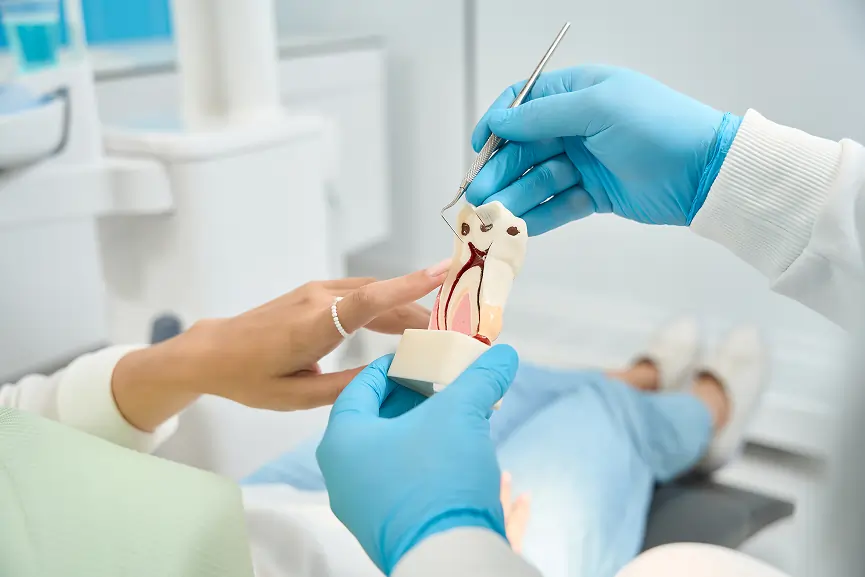
Root canal therapy removes infected or damaged tissue from inside a tooth and then cleans and seals the space.
Inside each tooth is soft tissue called the pulp. It holds nerves, blood vessels and connective tissue. Bacteria reach it through deep decay, a crack or an injury.
Once the pulp is infected or damaged beyond repair, it cannot heal by itself. Removing it treats the infection and keeps the tooth in your mouth. The Canadian Dental Association calls root canal treatment effective and safe.
When May You Need a Root Canal?
You need a root canal when the pulp is damaged for good. These problems point to it:
Not every toothache means a root canal. A small exposure of the pulp can sometimes be treated so the pulp stays alive. An exam and X-rays show whether a filling, a crown or root canal therapy fits. Start with a tooth pain assessment if you are not sure.
- ✓Deep tooth decay
- ✓Tooth infection
- ✓Severe toothache
- ✓A cracked or broken tooth
- ✓A darkened or discoloured tooth
- ✓Repeated dental work on the same tooth
Signs of an Infected Tooth
An infected tooth shows up as pain, swelling or pressure. Some cause no pain at all and appear only on an X-ray.
Call a dentist if you have:
- ✓Tooth pain that does not settle
- ✓Throbbing pain
- ✓Pain when biting
- ✓Lingering hot or cold sensitivity
- ✓Gum swelling near one tooth
- ✓Facial or jaw swelling
- ✓Bad taste or drainage near a tooth
- ✓A bump on the gum
- ✓A tooth that has darkened
- ✓Pain that wakes you up at night
Call 911 if you have trouble breathing or swallowing. Go to a hospital emergency department for a serious facial injury, uncontrolled bleeding or severe swelling.
Fever with worsening swelling needs urgent medical care, and so does swelling that spreads toward the eye or neck. Our emergency dentistry page lists other warning signs.
What Causes a Tooth to Need Root Canal Treatment?
A tooth needs root canal treatment when its pulp is infected or damaged beyond repair. Your dentist first checks whether the pulp can be kept alive. Common causes:
A dental filling placed early stops decay before it gets this deep. Once the pulp is infected, a filling alone will not fix it.
- ✓Untreated cavities
- ✓Deep decay under a filling or crown
- ✓Cracked or broken teeth
- ✓Dental injury
- ✓Repeated dental procedures on one tooth
- ✓Large fillings that weaken the tooth
What Happens During Root Canal Therapy?
Tooth Assessment
Your dentist checks the tooth and asks about your symptoms and dental history. X-rays show the root and the bone around it.
Comfort Before Treatment
Local freezing numbs the tooth and the area around it when needed.
Cleaning Inside the Tooth
The infected or inflamed tissue comes out, and the root canal spaces are cleaned and shaped.
Sealing the Tooth
The cleaned canals are filled and sealed to help stop reinfection.
Temporary or Final Restoration
A temporary or final filling closes the tooth. Which one depends on the tooth and the timing.
Crown Assessment
Your dentist tells you whether the tooth needs a crown to protect it.
Does Root Canal Therapy Hurt?
The tooth is frozen with local anaesthetic first, so most people feel pressure or vibration and not sharp pain. Cleveland Clinic compares it to getting a filling.
The tooth feels sore for a few days afterwards, more so if it was infected before the visit. Cleveland Clinic says most people recover in less than a week.
Call the clinic if the pain gets worse, new swelling appears or your bite feels high.
Root Canal vs Tooth Extraction
A root canal keeps your natural tooth. An extraction removes it. The gap then needs a bridge, implant or denture, or it stays empty.
Extraction is the right choice when the tooth is too cracked or decayed to restore or has too little bone support. A root canal also carries a real risk: it can fail when infection returns or the tooth cracks. The options then are re-treatment or tooth extraction.
Why a Crown May Be Needed After a Root Canal
A tooth that needs a root canal is already weak from decay, cracks or large fillings. Treatment removes more of its inside.
Back teeth take most of your chewing force. So most molars and premolars need a dental crown afterwards, as the Canadian Dental Association notes. A front tooth with plenty of healthy structure left can take a filling instead.
Your dentist checks how much tooth remains and how you bite before recommending a crown.
Recovery After Root Canal Therapy
Tenderness after treatment is normal and strongest when the tooth was painful or infected before.
After treatment:
- ✓Wait until the numbness wears off before you eat
- ✓Avoid chewing hard foods on the treated tooth until it is restored
- ✓Keep the area clean with brushing and flossing
- ✓Return for the final restoration if one is needed
- ✓Call if swelling, pain or bite discomfort gets worse
- ✓Keep up with regular dental exams
A treated tooth can still get decay or gum disease, so it needs the same daily care as your other teeth.
Cost and CDCP Information
The cost of root canal therapy depends on the tooth, how many canals it has, the restoration it needs and your coverage.
Molars cost more because they have more canals. A root canal plus crown comes to $2,000 to $3,700 for both. Before treatment begins, our team explains the expected cost for your tooth, and that estimate is the number to plan around.
Grimsby Lake Dental is a CDCP provider and bills the plan directly for eligible treatments. Under the CDCP Dental Benefits Guide, standard root canals on front teeth, premolars and first and second molars need no preauthorization. Re-treatment and root canals on wisdom teeth need it.
Have private insurance or another dental benefit? Bring your plan details to your visit. Our team can help review the estimated cost with you before treatment begins.
Related Services
Good to know
Frequently Asked Questions
What is root canal therapy?+
A treatment that removes infected or damaged tissue from inside a tooth, then cleans and seals it so you can keep it.
When do I need a root canal?+
When the pulp is infected or damaged beyond repair. An exam and X-rays confirm it.
What are signs of an infected tooth?+
Pain that lingers or wakes you at night, pain when biting and gum or facial swelling. The full list is above.
Is root canal therapy painful?+
Local anaesthetic numbs the tooth, so most people feel pressure, not sharp pain. Some tenderness for a few days is normal.
Can a root canal save my tooth?+
Yes, if the tooth is restorable and has enough bone support. If not, your dentist discusses extraction.
Do I need a crown after a root canal?+
Most back teeth do. A front tooth with enough healthy structure can take a filling instead.
Is root canal therapy better than extraction?+
It depends on the tooth. A root canal keeps your natural tooth. A tooth too damaged to restore needs extraction.
How much does a root canal cost in Ontario?+
About $700 for a front tooth up to about $1,500 for a molar, before coverage.
How long does a tooth last after a root canal?+
Half the treated teeth in a large US study lasted more than 11 years, and about 20 with a filling and a crown.
Does CDCP cover root canal therapy?+
Yes, for eligible patients when the tooth meets the plan's criteria. See our CDCP page for the rules.
Book Root Canal Therapy in Grimsby
Have severe tooth pain, lingering sensitivity, swelling or pain when biting? Book a root canal assessment at Grimsby Lake Dental.