
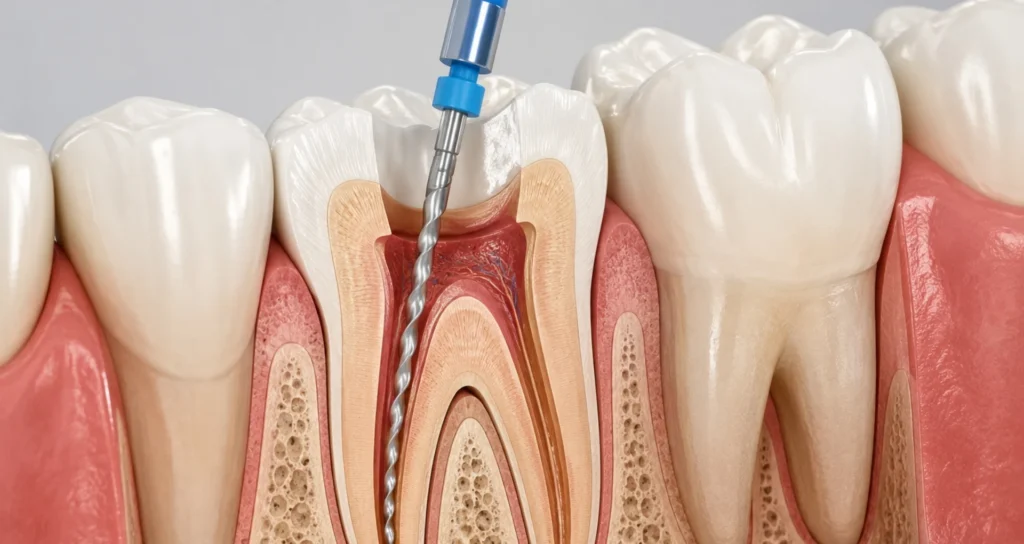
Root canal therapy saves a natural tooth by removing infected, inflamed, or damaged pulp from inside the tooth. The dentist cleans and disinfects the root canals, fills the space with a sealing material, and restores the tooth with a filling or crown. This helps stop infection, protect the tooth structure, and allow the tooth to function again. In simple terms the infected tissue is removed, but the outer tooth structure is preserved.
What Is Root Canal Therapy?
Root canal therapy is a dental treatment used when the soft tissue inside a tooth, called the pulp, becomes infected, inflamed, or damaged. The pulp contains nerves, blood vessels, and connective tissue. It is important while the tooth is developing, but a fully developed tooth can often survive without the pulp because surrounding tissues continue to support it.
The goal of root canal therapy is to:
- Remove infection from inside the tooth
- Relieve tooth pain caused by inflamed or infected pulp
- Clean and seal the root canal system
- Preserve the natural tooth structure
- Prevent infection from spreading
- Avoid tooth extraction when the tooth can still be saved
A root canal is commonly recommended for teeth affected by deep decay, cracks, repeated dental work, trauma, or infection around the root.

Why Saving Your Natural Tooth Matters
Whenever possible, keeping your natural tooth is usually better than removing it. Your natural tooth helps maintain your bite, chewing strength, jaw function, and smile appearance.
When a tooth is extracted and not replaced, nearby teeth may shift into the empty space. This can affect your bite, make chewing harder, and create areas that are more difficult to clean. Over time, missing teeth can also affect speech, smile balance, and jawbone support.
Root canal therapy helps protect:
- Natural biting and chewing function
- Tooth alignment
- Jaw comfort
- Smile appearance
- Long-term oral health
- Adjacent teeth from extra pressure
This is why dentists often compare extract tooth vs root canal carefully before recommending treatment. Extraction may be necessary if a tooth is too damaged to save, but if the tooth has enough healthy structure, root canal therapy may be the better long-term option.
When Do You Need Root Canal Therapy?
You may need root canal therapy when bacteria reach the inner pulp of the tooth. This can happen through a deep cavity, cracked tooth, broken filling, dental injury, or repeated dental procedures on the same tooth.
Common signs that may point to a root canal problem include:
- Tooth pain while chewing or biting
- Lingering sensitivity to hot or cold
- Swollen or tender gums near one tooth
- A pimple-like bump on the gum
- Tooth darkening or discoloration
- Pain spreading to the jaw or nearby teeth
- Swelling around the face or jaw
- A cracked, chipped, or deeply decayed tooth
Not every toothache means you need a root canal. Some pain may come from gum irritation, a small cavity, sinus pressure, or bite issues. A dentist needs to examine the tooth and usually take an X-ray before confirming the right treatment.
Root Canal Procedure: Step-by-Step
The root canal procedure is usually completed in one or two visits, depending on the tooth, the level of infection, and whether a crown is needed.
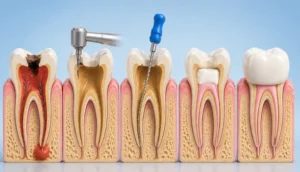
1. Dental Exam and X-Ray
Before treatment begins, the dentist examines the tooth and checks the surrounding gum and bone. X-rays help show the shape of the roots, the depth of infection, and whether there is bone change near the root tip.
The dentist may also check your bite, tap the tooth gently, test sensitivity, and ask about your pain symptoms.
2. Local Anesthesia
The area around the tooth is numbed so the treatment can be done comfortably. If the tooth is infected, the dentist may take extra steps to make sure the area is properly numb before starting.
3. Isolation of the Tooth
A dental dam may be placed around the tooth to keep it dry and protected from saliva during treatment. This helps maintain a clean working area.
4. Opening the Tooth
The dentist creates a small opening in the top of the tooth to reach the infected or inflamed pulp inside.
5. Removing the Damaged Pulp
Small dental instruments are used to remove the infected, inflamed, or dead pulp from the pulp chamber and root canals.
This is the main part of the tooth root canal process. The goal is to remove the source of infection while preserving the natural tooth structure.
6. Cleaning and Shaping the Canals
The inside of the tooth is cleaned, disinfected, and shaped. This step helps remove bacteria and prepares the canals for filling.
7. Filling and Sealing the Canals
After cleaning, the canals are filled with a rubber-like dental material. The tooth is then sealed to reduce the chance of reinfection.
8. Temporary or Permanent Filling
A temporary filling may be placed if another appointment is needed. In some cases, a permanent filling is placed right away.
9. Crown or Final Restoration
Many back teeth need a dental crown after root canal therapy because molars and premolars handle strong chewing forces. A crown helps protect the treated tooth from cracking and restores normal function.
Front teeth may sometimes be restored with a filling, depending on how much healthy tooth structure remains.
Before and After Root Canal: What Changes?
When patients search for root canals before and after, they are usually trying to understand what actually improves after treatment.
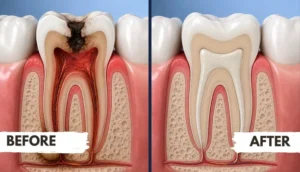
Before root canal therapy, the tooth may have:
- Deep decay
- Infection inside the pulp
- Pain when biting
- Lingering temperature sensitivity
- Gum swelling
- Abscess or drainage
- A darkened appearance
- Weak or broken tooth structure
After root canal therapy, the goal is:
- Reduced infection
- Pain relief as healing progresses
- A sealed root canal system
- Restored chewing ability
- Protection with a filling or crown
- Preservation of the natural tooth
The outside appearance of the tooth may not look dramatically different immediately after the root canal itself. The biggest visible improvement usually comes after the final filling or crown is placed. The most important change happens inside the tooth: infection is removed and the tooth is sealed.
Root Canal Recovery: What to Expect
Root canal recovery is usually straightforward. Most patients return to normal daily activities soon after treatment, especially if only local anesthesia was used.
You may feel:
- Mild soreness around the treated tooth
- Tenderness when biting
- Gum sensitivity near the area
- Temporary numbness after anesthesia
- Slight discomfort for a few days
This does not always mean something is wrong. The tooth and surrounding tissues may need time to settle, especially if there was infection or swelling before treatment.
Root Canal Recovery Time
Typical root canal recovery time is a few days to about one week for most patients. Some tenderness may last longer, especially if the tooth was badly infected before treatment.

You should contact your dentist if you notice:
- Severe pain that gets worse
- Swelling that does not improve
- Fever
- A bad taste or drainage
- Pain when biting that feels high or sharp
- A temporary filling that falls out
- The tooth cracks or breaks before the crown is placed
After root canal therapy, avoid chewing hard foods on the treated tooth until the final restoration is completed. This is especially important for back teeth, which often need crowns for long-term strength.
Root Canal Treatment Side Effects
Most patients recover well, but it is still fair to discuss possible root canal treatment side effects. These are usually temporary and manageable.
Possible side effects include:
- Mild soreness after treatment
- Temporary bite sensitivity
- Gum tenderness
- Jaw tiredness from keeping the mouth open
- Temporary numbness from anesthesia
- Slight swelling in some cases
Less common complications may include persistent infection, a missed canal, tooth fracture, or the need for retreatment. These risks are one reason the final restoration matters. A root canal-treated tooth should be properly sealed and protected so bacteria cannot re-enter.
Extract Tooth vs Root Canal: Which Is Better?
The decision between extract tooth vs root canal depends on the condition of the tooth.
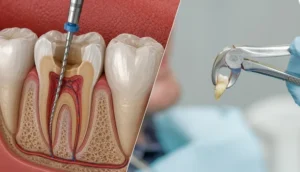
Root canal therapy may be recommended when:
- The tooth can still be restored
- There is enough healthy structure left
- The root and surrounding bone are stable
- The infection can be cleaned and sealed
- The patient wants to keep the natural tooth
Extraction may be recommended when:
- The tooth is severely broken below the gumline
- There is not enough tooth structure for a crown
- The tooth has a major root fracture
- Gum disease has badly weakened support
- The infection cannot be treated predictably
Extraction can solve the immediate infection problem, but it creates a new issue: the missing tooth usually needs replacement. Replacing a tooth with an implant, bridge, or denture may involve additional cost, appointments, and healing time.
Looking for root canal therapy near me? Learn how treatment can relieve tooth pain, remove infection, and help save your natural tooth at Grimsby Lake Dental.
Teeth Filling vs Root Canal
Many patients also compare teeth filling vs root canal because both treatments are used for damaged or decayed teeth. The difference is the depth of the problem.
A dental filling is used when decay or damage affects the outer tooth structure but has not reached the pulp. The dentist removes the decayed portion and fills the area.
A root canal is needed when bacteria or damage reaches the pulp inside the tooth. At that point, a simple filling is usually not enough because the infection is deeper.
Simple Comparison
Dental filling:
- Treats smaller cavities
- Repairs outer tooth damage
- Does not remove pulp
- Usually faster and simpler
- Used before infection reaches the nerve
Root canal therapy:
- Treats infected or inflamed pulp
- Cleans inside the root canal system
- Removes the damaged nerve tissue
- Requires sealing and often a crown
- Used when the tooth can still be saved but the pulp is affected
A filling can repair a cavity. A root canal treats infection inside the tooth.
Does a Root Canal Hurt?
A root canal is often misunderstood. The pain people associate with root canals usually comes from the infected tooth before treatment, not from the procedure itself.
During treatment, the area is numbed. You may feel pressure or vibration, but sharp pain should not be expected. After treatment, mild soreness is possible while the tissues heal.
If you feel severe pain during or after treatment, tell your Grimsby dentist. Pain control and follow-up care are part of proper treatment.
How Long Does a Root Canal-Treated Tooth Last?
A root canal-treated tooth can last many years, and in many cases, it may last a lifetime with proper care. Long-term success depends on several factors:
- How damaged the tooth was before treatment
- Whether the tooth was properly sealed
- Whether a crown was placed when needed
- Daily brushing and flossing
- Regular dental checkups
- Avoiding hard chewing on weak teeth
- Treating grinding or clenching if present
The root canal removes the infected pulp, but the tooth can still get cavities or gum disease. Good oral hygiene remains important.
How to Care for Your Tooth After Root Canal Therapy
After treatment, follow your dentist’s instructions carefully. Good aftercare helps protect the tooth and supports healing.
Helpful steps include:
- Do not chew hard foods on the treated tooth until the final restoration is placed
- Brush and floss normally, but be gentle near the area
- Take recommended medication only as directed
- Keep your follow-up appointment for the crown or permanent filling
- Avoid sticky or hard foods if you have a temporary filling
- Call your dentist if pain, swelling, or bite discomfort gets worse
The root canal is only one part of saving the tooth. The final restoration is what helps protect it from future damage.
Common Example: Deep Cavity Turning Into a Root Canal
A patient may start with a small cavity and feel no pain. Over time, if the cavity grows deeper, bacteria can move closer to the pulp. At first, the tooth may become sensitive to cold. Later, the pain may linger after hot drinks or chewing. If the pulp becomes infected, the patient may develop swelling or constant pain.
At the early stage, a filling may be enough. Once the pulp is infected, root canal therapy may be needed to save the tooth. Waiting too long can reduce the chance of saving it.
This is why regular dental checkups matter. Treating decay early is simpler, faster, and usually less expensive than treating infection later.
FAQs About Root Canal Therapy
How long does a root canal take?
Most root canal appointments take 60 to 90 minutes. Complex molars, severe infection, curved canals, or retreatment may need two visits. A final filling or crown appointment may also be scheduled after the tooth is fully sealed.
How to know if I need a root canal?
You may need a root canal if you have lingering hot or cold sensitivity, tooth pain when chewing, swelling, a gum pimple, dark tooth color, deep decay, or pain that does not improve with simple dental care.
How can you tell if you need a root canal?
You can tell you may need a root canal when tooth pain feels deep, returns often, wakes you at night, or comes with swelling. Only a dentist can confirm it using an exam, symptoms, and dental X-rays.
How much does a root canal cost in Ontario?
In Ontario, a root canal commonly costs about $700 to $1,500 or more before insurance, depending on the tooth, number of canals, infection level, dentist, crown needs, and overall complexity. Molars usually cost more than front teeth.
What not to eat after a root canal?
After a root canal, avoid hard, crunchy, sticky, chewy, very hot, and very cold foods until numbness is gone and the tooth is restored. Do not chew on the treated side if a temporary filling is placed.