

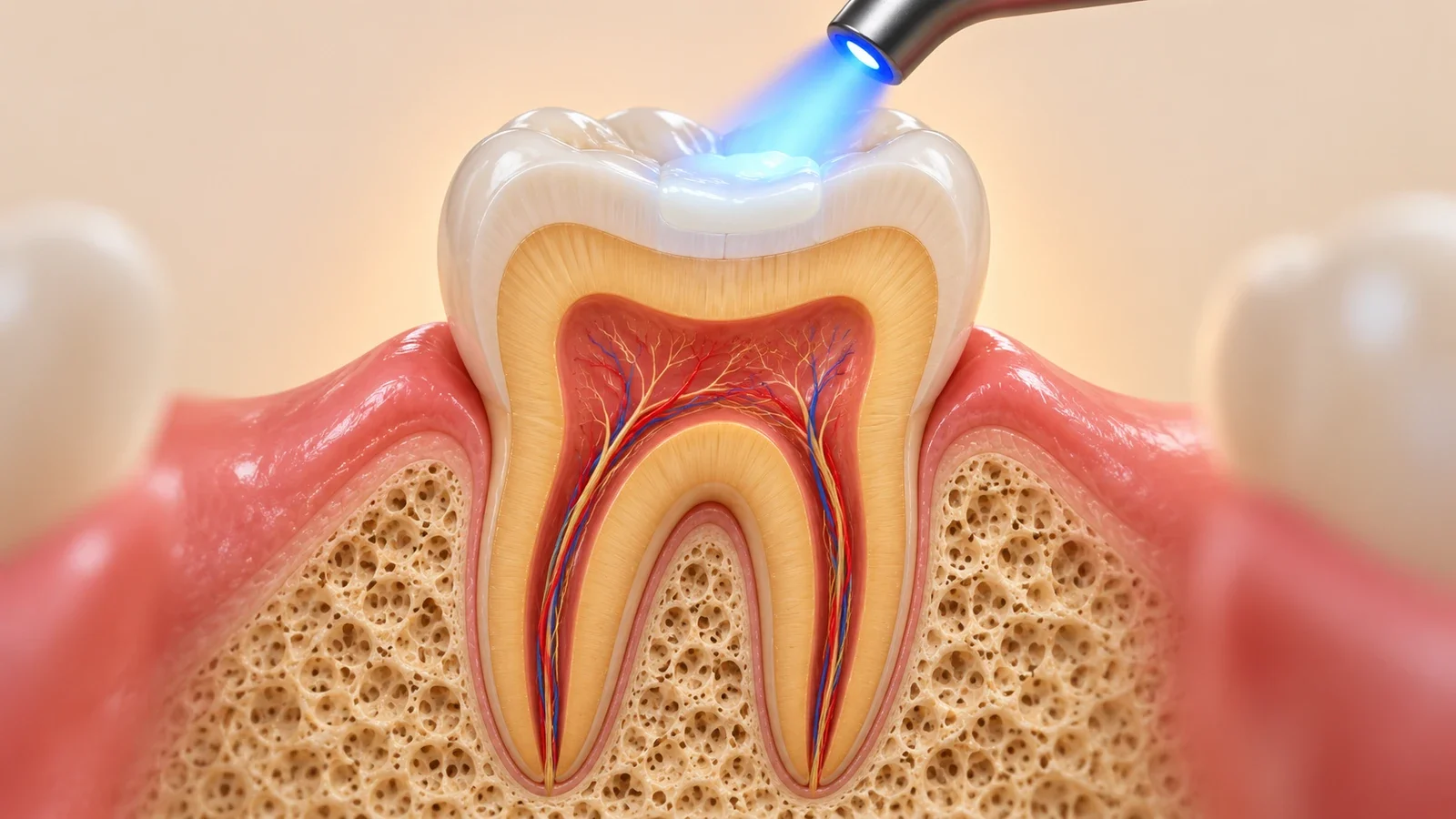
The wait depends on two things: the material in your tooth and the local anaesthetic, or freezing, that numbed it. Below you will find what to eat on day one, what to skip and which signs need a call.
Key takeaways
- The freezing sets the first wait: eating before the numbness fades puts your cheek, lip and tongue at risk.
- The material sets the second: a tooth-coloured filling is hard right away, and silver amalgam needs about a day.
- Soft and lukewarm food is kindest on day one: skip hard, sticky and very hot or cold food for a day.
- Mild soreness is expected: a bite that feels high, pain that is getting worse or any swelling needs a call.
- Your dentist's instructions come first: a deep or large filling can change the advice.
Does the type of filling change the wait?
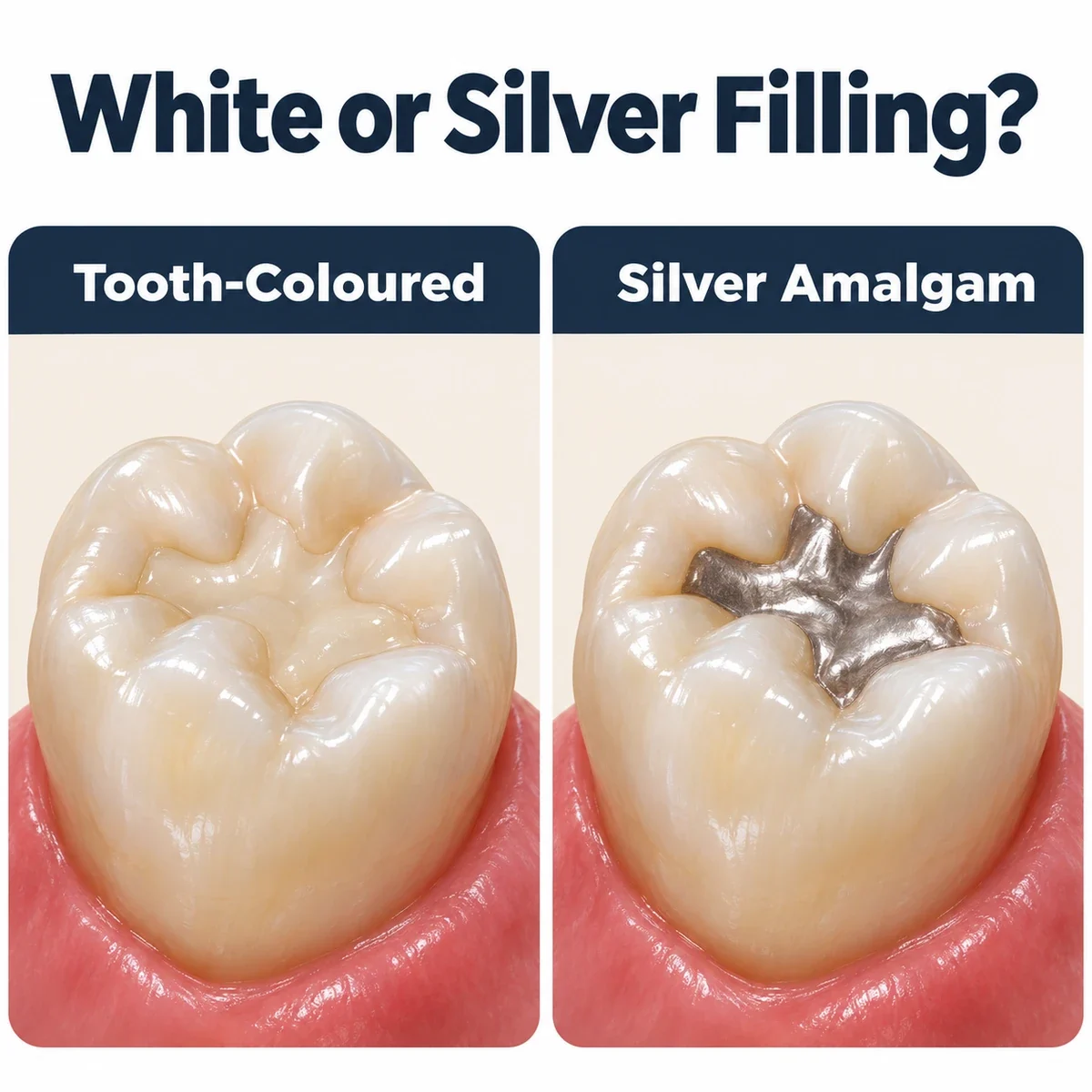
Yes. A tooth-coloured filling is hard before you leave the chair. A silver amalgam filling keeps gaining strength for about a day.
Tooth-coloured fillings, also called white or composite fillings, are made of a resin mixed with fine glass particles. They go in as thin layers, and a blue curing light hardens each layer in seconds. Once the last layer is set, the filling is fully hard. The only reason to wait is the freezing.
Silver amalgam is silver, tin and copper bound together with mercury. It goes in as a soft paste and sets through a slow chemical reaction. It feels solid when you get up from the chair, yet it needs about 24 hours to reach full strength. A hard bite in that first day can dent or crack the surface. As a precaution, Health Canada advises dentists to limit amalgam for children, pregnant women and people with kidney disease.
| Filling type | When you can chew on it | Why |
|---|---|---|
| Tooth-coloured (composite) | Once the freezing wears off | Hardened by a curing light in the chair |
| Silver amalgam | Gently after the freezing, normally after about 24 hours | Sets slowly and reaches full strength in about a day |
If you are not sure which type you have, ask before you leave. Our dental fillings page explains how the dentist chooses between the two for each tooth.
Why wait for the freezing to wear off?
Waiting protects the soft parts of your mouth. With your lip, cheek and tongue numb, you cannot feel where they end and the food begins. It is easy to bite them hard without noticing.
Freezing wears off within about 1 to 3 hours for most people. A deep filling in a lower molar can keep you numb longer than a small filling on a front tooth.
Hot drinks are the other risk. Numbness dulls your sense of heat as well as touch. A sip of coffee can scald your mouth before you feel it. Until then, sip water and keep to cool, smooth foods if you are hungry.
Is hot coffee safe after a filling?
Yes, once the freezing is gone, but drink it warm and not hot for the first day. Water is fine straight away, and tea follows the same rule as coffee.
A freshly filled tooth can react to heat, so a warm cup is kinder for the first day. Rinsing with water after coffee or tea also helps limit surface stains on tooth-coloured fillings over time.
Is it normal for a filled tooth to feel sore?
Yes, some tenderness is expected for a few days. The tooth has been drilled and filled. The gum beside it can be sore from the injection or from the clamp that kept the area dry.
Sensitivity to hot, cold or sweet is common too. Removing decay exposes dentin, the layer under the enamel. The nerve inside the tooth can stay irritated after the work. Deeper fillings sit closer to the nerve, so they can feel sensitive for longer.
The pattern matters more than the feeling. Sensitivity that eases a little each day is a good sign. Sensitivity that gets worse needs a call as soon as you can, and so does sensitivity still there after a couple of weeks.
What does it mean when your bite feels high?
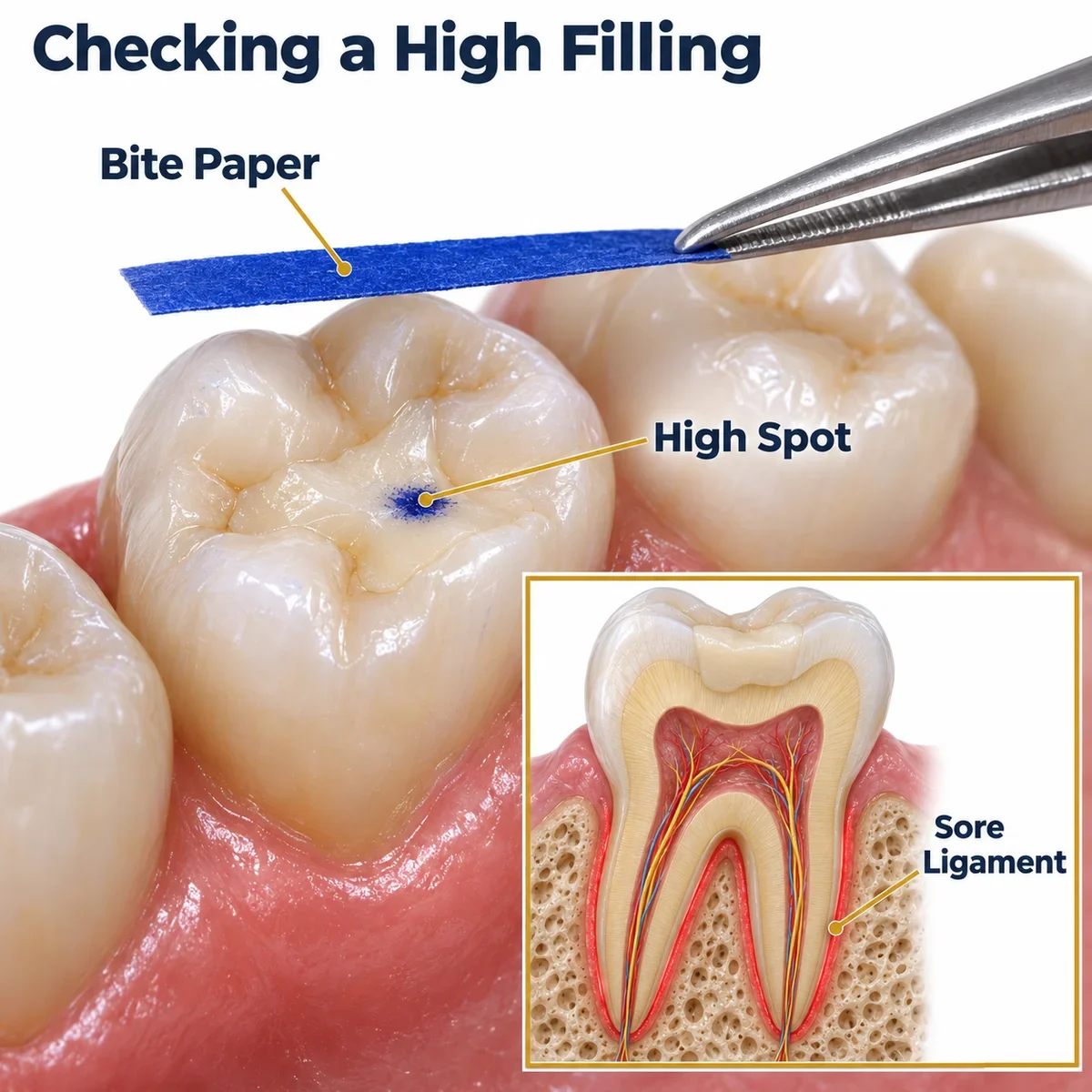
A bite that feels high means the filling is a fraction taller than it should be. That tooth then takes the first and hardest contact every time your teeth meet, and it can feel bruised.
Your bite is checked before you leave, and dentists use thin coloured paper for this. Your jaw is still numb at that point, and biting on paper is not the same as eating a meal. A tiny difference can slip past in the chair and show up at dinner.
The fix is a short visit. The dentist finds the high spot with bite paper and smooths it down. Most people need no new freezing for this. A high filling does not settle by itself, so call as soon as you can if biting hurts or your bite still feels off the next day.
Which soft foods suit the rest of the first day?
Once the feeling comes back, soft and lukewarm foods are the easiest choice for the rest of the day. They need little chewing and do not shock a tooth that has just been worked on.
These foods go down easily after a filling:
- Dairy and eggs: yogurt, cottage cheese and scrambled eggs.
- Starches: mashed potatoes, oatmeal, pasta and soft rice.
- Soups: smooth soups served warm and not hot.
- Fruit: bananas, applesauce and smoothies.
- Protein: flaked fish, soft tofu or tender chicken in small pieces.
With a tooth-coloured filling, most people can return to their normal diet by the next day. With a silver filling, give it a full day before you chew firm food on that side.
What puts a fresh filling at risk?
Hard, sticky, sugary and very hot or cold foods are the ones to skip for the first day. They put sharp pressure on the tooth, pull at the filling or set off sensitivity.
Leave these until the tooth feels settled:
- Hard foods: nuts, hard candy, ice cubes, popcorn kernels and crusty bread put a fresh silver filling at risk of a chip or dent.
- Sticky foods: caramel, toffee and chewing gum can tug at the edges of a filling that is still setting.
- Tough foods: steak and chewy rolls need heavy biting force.
- Very hot or cold food and drinks: temperature swings can set off a sharp twinge in a sensitive tooth.
- Sugary snacks and drinks: sugar can trigger sensitivity and feeds the bacteria that cause decay.
Chew on the opposite side and take smaller, slower bites. This keeps pressure off the treated tooth as it settles.
Avoid biting right through firm food in one go. Much of the force in chewing comes from your teeth pressing together. A looser jaw means less pressure on the filling. If cold air makes the tooth zing, keep your lips closed as you chew.
Which changes after a filling need a call?
Most fillings need nothing more than your next routine checkup. A few changes need a call as soon as you can, before the tooth gets worse.
Call the office as soon as you can if you notice any of these:
- Pain when you bite or a bite that still feels uneven the next day.
- Sensitivity that is getting worse instead of better.
- A chip, a crack or a missing piece of the filling.
- A rough or sharp edge your tongue keeps finding.
- Floss that shreds or catches at the filling.
Severe or throbbing pain, pain that keeps you awake, swelling or a fever with tooth pain can mean the nerve is inflamed or infected, so call us that day at (905) 309-5757 for the soonest available appointment. When we are closed, severe or spreading swelling goes to the hospital list below, and Health811 at 811 gives nurse advice for anything else.
How long does a filling last?
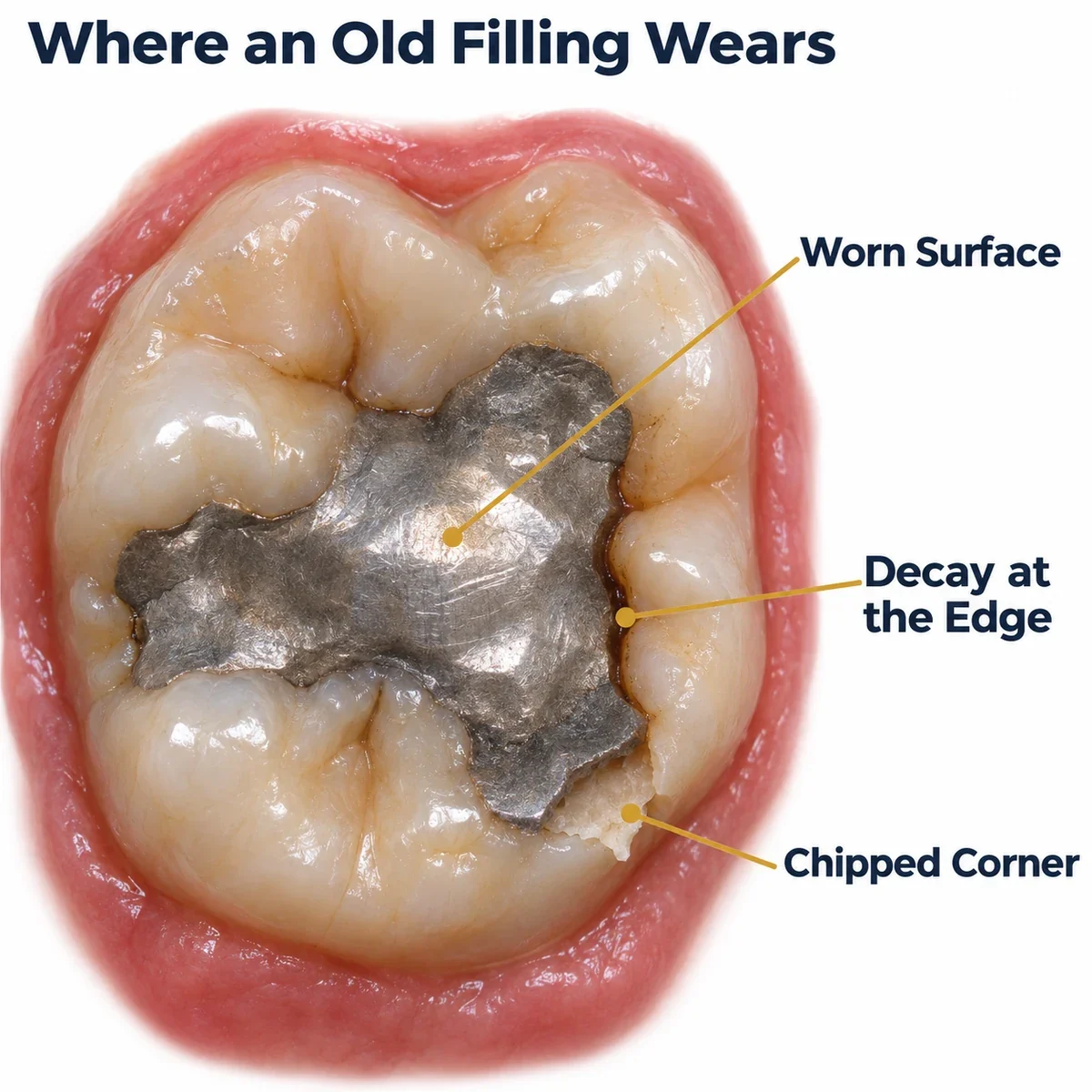
A filling lasts for years, but not forever. How long yours holds up depends on the material, its size and the tooth it sits in. How hard you bite and how well you keep it clean matter too.
Fillings wear down over the years, more so on back teeth. The weak point is the edge, where the seal between filling and tooth slowly opens and bacteria slip underneath. A large filling that props up thin walls of enamel can also crack under heavy chewing.
Several everyday habits wear a filling down faster:
- Grinding or clenching: night-time grinding puts far more force on a filling than normal chewing.
- Frequent sugar and acid: sipping sweet or acidic drinks through the day keeps attacking the edge of the filling.
- A dry mouth: less saliva means less natural rinsing around the filling.
- Using teeth as tools: chewing ice or pens and opening packets with your teeth.
A failing filling can feel fine until decay under it is deep. Watch for food that suddenly traps between two teeth or a dark line around a white filling. New sensitivity in an old filling and pain on biting months later are reasons for a check too. A routine exam can find these changes before you feel anything.
How do you protect a filling for years?
Protect the tooth around it, because that is where fillings fail. Brush twice a day with fluoride toothpaste. Clean between your teeth every day to reach the edges a brush misses.
Keep sweet snacks and drinks to mealtimes so your teeth get long breaks from acid. A night guard is worth asking about if your jaw aches in the morning or your dentist sees signs of grinding. At Grimsby Lake Dental, regular exams and cleanings are the visits where a small gap at the edge of a filling can be found early.
Do children need extra care after a filling?
Yes, mainly until the freezing wears off. Children are more likely to chew a numb lip or cheek out of curiosity. A bitten lip can swell and get sore.
Watch your child until the feeling comes back. Offer cool, soft food that needs no real chewing. Remind them not to bite or suck on their lip. If a bitten lip looks infected, call the office. Call your doctor if your child seems unwell or has a fever.
Frequently asked questions
Can I brush my teeth after a filling?
Yes, the same day. Use a soft brush and go gently around the tooth if the gum is tender. You can floss as normal too.
Can I eat right away if my tooth was not frozen?
Yes, with a tooth-coloured filling, because it is already hard. A silver filling still needs a day of gentle chewing away from that tooth.
How long does freezing last after a filling?
Most people get the feeling back within a few hours. A lower back tooth or a large filling can stay numb longer.
Can I chew gum after a filling?
Wait a day. Gum is sticky and can pull at a filling, above all a silver one that is still setting.
Why does my new filling feel rough?
Your tongue notices any change in shape for a day or two. If a sharp or rough edge is still there after a few days, ask the dentist to smooth it.
What should I do if a new filling falls out?
Keep the area clean, chew on the other side and phone the office right away. The open tooth can be sensitive and is more open to decay.
When is a crown better than a filling?
A crown covers the whole tooth. It suits a tooth with too little healthy structure left to hold a large filling safely.