

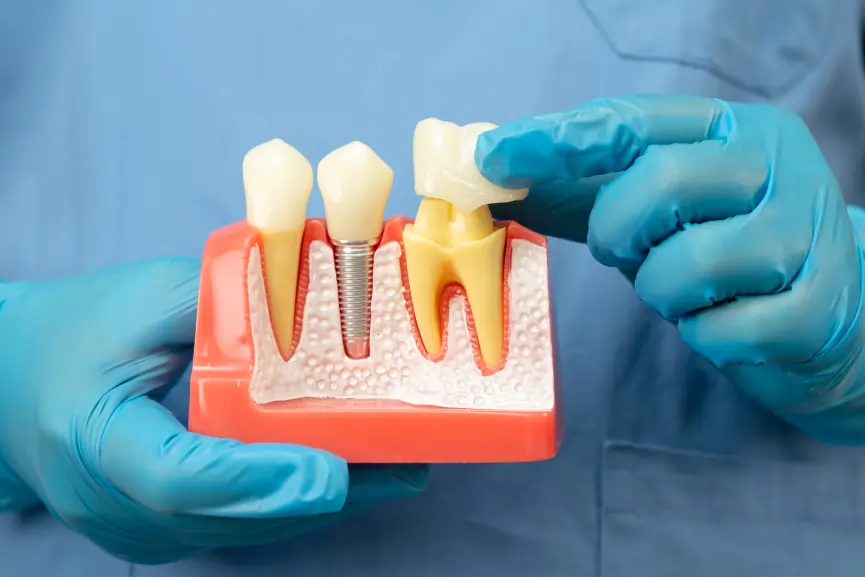
What Is a Dental Crown?
A dental crown is a cover made to fit over one tooth. It restores the tooth's shape, strength and chewing function.
A crown covers the whole visible part of the tooth above the gumline. It does not replace the root. To make room for it, the dentist removes a thin layer of the outer tooth. That layer does not grow back, so your dentist explains the decision before you agree to one.
When May You Need a Dental Crown?
You need a crown when a tooth is too weak or too damaged for a filling alone. Common reasons include:
Not every damaged tooth needs a crown. A filling or bonding keeps more of your natural tooth, so it comes first when it will hold.
- ✓A cracked or broken tooth
- ✓A heavily filled or worn-down tooth
- ✓A large cavity
- ✓A tooth after root canal therapy
- ✓An older crown that no longer fits well
Signs a Tooth May Need a Crown
Book a crown assessment if you notice:
These signs do not prove you need a crown, but the tooth needs a check before it gets worse.
- ✓Pain when you bite down
- ✓A tooth that feels weak or has a rough or sharp edge
- ✓The same tooth needing repeated filling repairs
- ✓A crown that feels loose or damaged
What to Expect During a Dental Crown Visit
Tooth Assessment and Planning
The dentist checks the tooth, the gums around it, your bite and any existing dental work. X-rays are taken when the damage is not fully visible. We explain why a crown is recommended and what other options exist. You also hear the expected cost before treatment begins.
Treatment Planning
We explain why a crown may be recommended, what options may be available, and what costs may apply before treatment begins.
Tooth Preparation and Temporary Crown
The dentist shapes the tooth so the crown fits over it. A badly damaged tooth gets a buildup first to give the crown a solid base. An impression or digital scan records the tooth and your bite, and a temporary crown protects the tooth until the final crown is ready.
Crown Impression or Scan
An impression or digital scan may be taken so the crown can be made to fit your tooth and bite.
Final Crown Placement
At the second visit, the dentist checks the final crown for fit, bite and appearance. Then it is cemented in place.
Final Crown Placement
At the second visit, the dentist checks the final crown for fit, bite and appearance. Then it is cemented in place.
Types of Dental Crowns
The right crown material depends on where the tooth sits, how hard you bite and the look you want. Tooth-coloured crowns are made from porcelain, ceramic or zirconia. Metal crowns suit some cases. Here is how the options compare.
- ✓Tooth-coloured crowns
- ✓Porcelain or ceramic crowns
- ✓Zirconia crowns
- ✓Porcelain-fused-to-metal crowns
- ✓Metal crowns in selected cases
Dental Crowns for Cracked Teeth
A crown protects a cracked tooth by covering it and holding it together when you bite.
A deep crack needs more than a crown. If it has damaged the pulp (the soft inner tooth) beyond repair or let infection in, and the tooth can still be restored, root canal therapy comes first. Some cracks run too deep to save the tooth.
Your dentist judges whether the tooth can be restored. A crack's full depth is not always visible, even on X-rays. Our broken tooth repair page covers cracked and chipped teeth in more detail.
Dental Crowns After Root Canal Therapy
Many teeth need a crown after root canal therapy, especially back teeth and teeth that have lost a lot of structure.
One long-term study backs this up. A University of Iowa study followed root-canal-treated teeth for about ten years. Teeth left without a crown were lost at about six times the rate of crowned teeth.
Until the crown is placed, avoid biting hard on the treated tooth.
Dental Crowns for Worn or Heavily Filled Teeth
Teeth with large fillings, repeated repairs or heavy wear get weaker over time. A crown rebuilds the outside of the tooth and covers it more fully than another filling.
How to Care for a Dental Crown
A temporary crown is designed to come off at your second visit. Chew on the other side where you can. Skip sticky and hard foods and brush and floss around it gently.
- ✓Brush twice a day and floss around the crown every day
- ✓Keep up with dental exams and dental cleanings
- ✓Avoid chewing ice, hard nuts and other very hard objects
- ✓Call if the crown feels loose or high
- ✓Wear a night guard if you grind or clench
Dental Crown Cost and CDCP Information
A single dental crown in Ontario costs about $1,300 to $2,200, including the dental lab fee. That is a general market range from published Ontario and Canadian fee sources and not this clinic's fee.
The price for your tooth depends on the crown material, any core or post, root canal therapy first and X-rays. Before treatment begins, our team explains the expected cost for your tooth. That estimate is the number to plan around, not the range above.
Grimsby Lake Dental is a CDCP provider and bills the plan directly for eligible treatments. CDCP covers crowns only in selected cases, and each crown needs preauthorization before treatment. Our CDCP page explains the rules.
Have private insurance or another dental benefit? Bring your plan details and our team will help review the estimated cost before treatment begins.
Related Services
Good to know
Frequently Asked Questions
What is a dental crown?+
A dental crown is a custom cover placed over a tooth to restore its shape and strength.
Is a crown better than a filling?+
A crown is better when the tooth is too weak or damaged for a filling alone. When a filling will hold, it keeps more of your natural tooth.
How long do dental crowns last?+
About 5 to 15 years on average, and many last longer.
Can a crown fix a cracked tooth?+
A crown protects many cracked teeth. Your dentist assesses the crack first, because a deep crack needs other treatment as well or can mean the tooth cannot be saved.
Do I need a crown after a root canal?+
Many teeth do, especially back teeth. Your dentist explains what your tooth needs.
Does getting a dental crown hurt?+
The area is numbed first, so the treatment should not hurt. Mild sensitivity to hot and cold for a couple of weeks afterwards is normal.
Does CDCP cover dental crowns?+
Only in selected cases, and each crown needs preauthorization first. Our CDCP page explains the rules.
Do you accept new patients for dental crowns?+
New patients are welcome.
Where is Grimsby Lake Dental located?+
We are at 414 Winston Rd, Grimsby, ON L3M 0H2, near Lake Ontario and the QEW. Parking on site is free. We are open Monday to Friday 8:00 AM to 6:00 PM and Saturday 8:00 AM to 2:00 PM. Patients also come from Beamsville, Lincoln, Vineland and Winona.
Book Dental Crowns in Grimsby
Have a cracked or weak tooth? Book a dental crown assessment at Grimsby Lake Dental.