

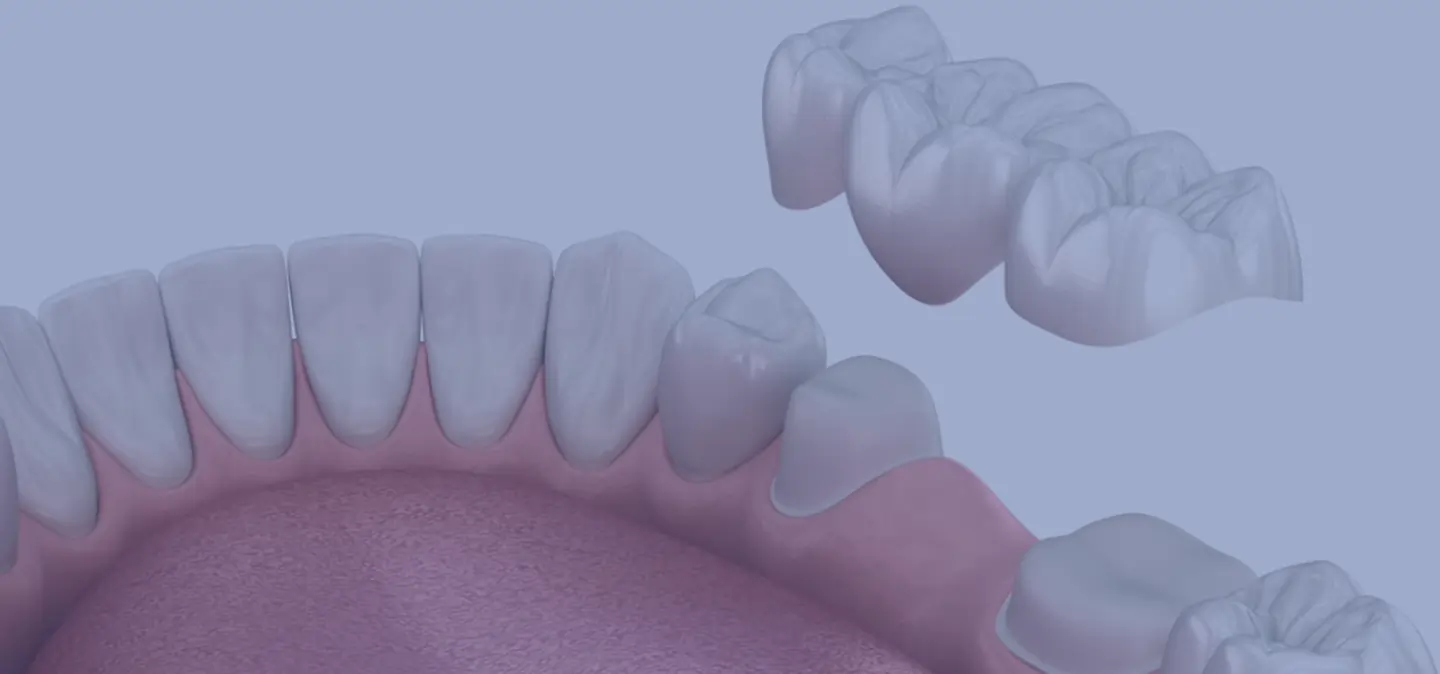
What Is a Dental Bridge?
A dental bridge is a fixed restoration that replaces one or more missing teeth and stays in until a dentist removes it.
The false tooth that fills the gap is called a pontic and the natural teeth that hold it are abutment teeth. In a traditional bridge, each abutment tooth wears a dental crown and the pontic is joined between them.
Know the trade-off before you choose. Your dentist removes a layer of enamel from the supporting teeth to fit those crowns. You cannot undo that step.
What Do Dental Bridges Help With?
A dental bridge helps you:
- ✓Fill a visible gap in your smile
- ✓Chew and speak more comfortably
- ✓Keep your bite balanced
- ✓Stop nearby teeth from shifting into the space
- ✓Avoid a removable partial denture
Who May Need a Dental Bridge?
A bridge suits an adult with one to three missing teeth in a row and strong, healthy teeth beside the gap. You also need healthy gums and a stable bite.
Weak supporting teeth, untreated gum disease or a long gap point to another option. After a tooth is removed, you may need to wait a few months for the gum and bone to heal before the final bridge.
- ✓You are missing one tooth
- ✓You are missing several teeth in a row
- ✓You want a fixed replacement option
- ✓Nearby teeth are strong enough to support a bridge
- ✓Your gums and bite are healthy enough for treatment
- ✓You want to improve chewing or speech after tooth loss
- ✓You want to fill a missing tooth space without a removable denture
Types of Dental Bridges
Traditional Dental Bridge
A traditional bridge uses a crown on the tooth at each end of the gap to hold the replacement tooth. It is the most common type.
Cantilever Bridge
A cantilever bridge is held by a crown on one side of the gap only, for when there is a natural tooth on just one side. It is weaker than a traditional bridge, so it does not suit every part of the mouth.
Maryland Bridge
A Maryland bridge, also called a resin-bonded bridge, uses a thin framework bonded to the back of the neighbouring teeth instead of full crowns, so less tooth is removed. It suits front teeth and cannot take the chewing force on back teeth.
What to Expect During Dental Bridge Treatment
Missing Tooth Assessment
The dentist checks the gap, the nearby teeth, your gums and your bite.
X-Rays When Needed
X-rays show whether the roots and bone around the gap can support a bridge.
Bridge Planning
You hear your options and the expected cost, with no pressure to decide.
Tooth Preparation
The area is numbed first. Then the dentist shapes the supporting teeth to take the crowns.
Impression or Digital Scan
An impression or scan records your teeth and bite so the bridge fits them.
Temporary Bridge
A temporary bridge covers the shaped teeth and fills the gap while you wait.
Final Bridge Placement
At the second visit, your dentist checks the new bridge for fit, bite and appearance before cementing it in place.
Dental Bridge vs Denture vs Implant
Here is how a bridge compares with a denture and an implant.
Cleveland Clinic notes that implants last much longer than bridges in general and help preserve the jawbone. Ask at your exam whether an implant is worth considering for you and who would place it.
Can a Bridge Replace One Missing Tooth?
Yes. A bridge replaces one missing tooth when the teeth beside the gap and your bite are suitable. A traditional bridge for one missing tooth has three units: a crown on each side and the false tooth in the middle.
Can a Bridge Replace Several Missing Teeth?
Yes, up to a point. Most bridges replace one to three teeth in a row and some replace four.
A longer bridge loads its supporting teeth harder. If too many teeth are missing, your dentist will talk you through partial dentures.
How to Care for a Dental Bridge
Clean under your bridge every day. Plaque and food collect under the false tooth, and decay in a supporting tooth can cost you the bridge.
Use a floss threader or an interdental brush once a day because regular floss cannot pass down between the joined teeth.
- ✓Brush twice a day with a fluoride toothpaste
- ✓Keep up with dental exams and cleanings
- ✓Skip ice, pens and other very hard objects
- ✓Wear a night guard if you grind and your dentist recommends one
- ✓Call if the bridge feels loose, high or painful, or traps food
An interdental brush is a tiny bristle brush that you push under the false tooth from the cheek side and move in and out. Ask at your next cleaning which size fits.
How Long Do Dental Bridges Last?
A dental bridge lasts about 5 to 15 years on average, according to Cleveland Clinic. Some last longer with good care.
A systematic review of 19 studies found that about 89 in 100 bridges were still in place after 10 years.
Regular exams check for each one.
Save the bridge and call us because the shaped teeth under it are exposed and need a look soon.
Bring the bridge in a clean container. Do not glue it back with household glue. Never carry it in your mouth. Our lost filling and lost crown page covers the next steps.
Swelling, fever or severe pain near a bridge needs a prompt visit. Call 911 if you have trouble breathing or swallowing. Go to a hospital emergency department for a serious facial injury, uncontrolled bleeding or severe swelling. Our emergency dentistry page lists other warning signs.
Cost and CDCP Information
A three-unit dental bridge in Ontario costs about $2,850 to $4,800 to replace one tooth with a crown on each side. It is a general market range from 2026 Ontario sources, not this clinic's fee.
One crown alone runs about $1,300 to $2,200. A bridge costs more because it includes two crowns plus the false tooth.
Your price depends on the teeth involved, the bridge type and material, lab fees and any treatment needed first. Before treatment begins, our team explains the expected cost. That estimate is the number to plan around.
CDCP does not cover dental bridges. The CDCP Dental Benefits Guide lists bridges as an exclusion. Grimsby Lake Dental is a CDCP provider, and our CDCP page explains what the plan does cover, including partial dentures.
Have private insurance? Bring your plan details to your visit so we can help review the estimated cost with you before treatment begins.
Related Services
Good to know
Frequently Asked Questions
What is a dental bridge?+
A fixed restoration that replaces one or more missing teeth, held by the teeth beside the gap.
What is a dental bridge used for?+
It fills a gap so you can chew and speak well.
Can a bridge replace one missing tooth?+
Yes, when the teeth beside the gap and your bite are suitable.
Can a bridge replace several missing teeth?+
Yes. Most bridges replace one to three teeth in a row when the teeth at both ends are strong.
Is a bridge removable?+
No. It is cemented in place. Dentures are the removable option.
What is the difference between a bridge and a denture?+
A bridge is fixed and held by your teeth. A denture is removable and replaces several teeth or a full arch.
How do I clean under a dental bridge?+
Once a day, with a floss threader or an interdental brush under the false tooth.
How long does a dental bridge last?+
About 5 to 15 years on average. Daily cleaning and regular exams help it last.
Does getting a dental bridge hurt?+
The area is numbed first, so treatment should not hurt. Your teeth and gums can feel sore for one to two weeks afterwards.
Does CDCP cover dental bridges?+
No. CDCP lists bridges as an exclusion. Our CDCP page explains what it covers.
Do you accept new patients for dental bridges?+
Yes. New patients are welcome. Call or book online.
Book Dental Bridges in Grimsby
Missing one or more teeth and want to ask about a fixed bridge? Book a dental bridge assessment at Grimsby Lake Dental.