

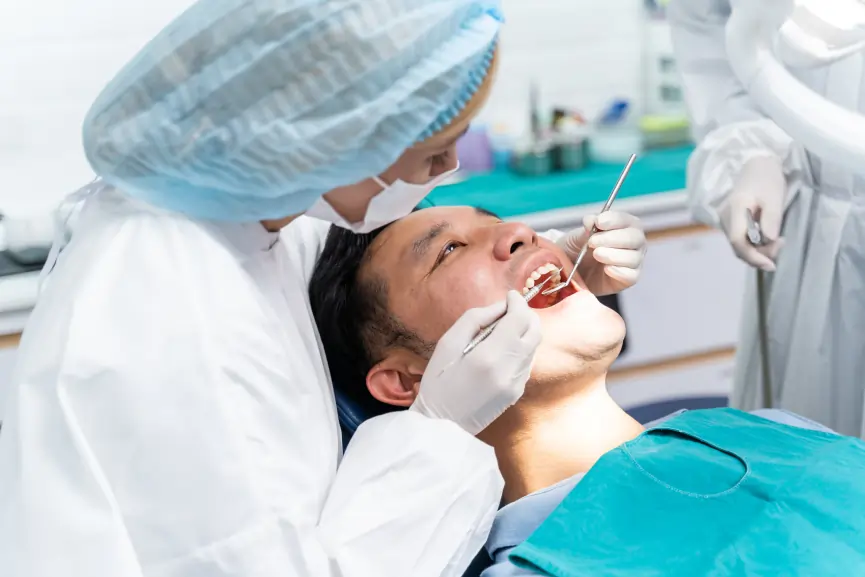
What Is Gum Health Care?
Gum health care is the checking, cleaning and follow-up that keeps the tissues around your teeth healthy. Those tissues are your gums, the bone under them and the ligaments that hold each tooth in its socket.
Care starts with a dental exam and gum measurements, then gum treatment and cleaning matched to what we find, plus home-care coaching and follow-up visits.
What Are Signs of Gum Disease?
Gums that bleed when you brush or floss are the most common sign of gum disease. Many people feel no pain at first. That is why the early signs are easy to miss.
Get these checked:
- ✓Bleeding, swollen, red or tender gums
- ✓Gum recession and sensitive exposed roots
- ✓Bad breath that does not improve
- ✓Tartar buildup near the gumline
- ✓Loose or shifting teeth
- ✓Pain when chewing
- ✓Pus or drainage near the gums
Bleeding is common, but it is not normal. Plaque irritating the gums is the usual cause, and bleeding that keeps happening needs a check.
Gingivitis vs Gum Disease: What Are the Stages?
Gingivitis
Gingivitis is gum inflammation caused by plaque at the gumline. Your gums look red and puffy and bleed when you brush or floss. There is no bone loss. A professional cleaning and better daily brushing and flossing bring it under control.
Periodontal Disease
Periodontal disease, or periodontitis, is gum disease that has reached the bone and tissues holding your teeth. The gums pull away from the teeth and form pockets. Plaque and bacteria collect in those pockets out of reach of your toothbrush and floss.
More bone is lost at each stage. In the advanced stage teeth loosen and can fall out.
What Causes Bleeding Gums?
Plaque at the gumline is the most common cause of bleeding gums. Others include:
- ✓Tartar buildup, gingivitis or periodontal disease
- ✓Brushing too hard or flossing irregularly
- ✓Smoking, dry mouth or crowded teeth that are hard to clean
- ✓Medical conditions or medications that affect gum health
What Happens During a Gum Health Assessment?
Gum and Tooth Check
The dentist checks gum colour, swelling, bleeding, recession, tooth mobility, plaque, tartar, and areas that are hard to clean.
Gum Measurements
Small measurements may be taken around the teeth to check gum pocket depth. Deeper pockets can suggest gum disease.
X-Rays When Needed
X-rays may be recommended to check bone support around the teeth and areas not visible during the exam.
Cleaning Needs Review
The dental team checks whether routine cleaning, deeper scaling, or more frequent maintenance may be needed.
Home-Care Guidance
You may receive brushing, flossing, interdental brush, or water flosser guidance based on where plaque is collecting.
Treatment Plan
Your dentist explains what is happening, how serious it appears, and what steps may help control the condition.
Gum Disease Treatment Options
Gum disease treatment starts with removing the plaque and tartar that feed the infection. Your gum care may include:
Our gum disease treatment page covers the visits. Our periodontics page explains deeper procedures such as flap surgery and gum grafts.
- ✓Dental cleaning and scaling to remove tartar buildup
- ✓Scaling and root planing, a deep cleaning below the gumline
- ✓Gum pocket monitoring and X-rays to check bone support
- ✓Oral hygiene coaching and more frequent maintenance cleanings
- ✓Referral to a periodontist if advanced care is needed
Dental Cleaning vs Gum Disease Treatment
A regular dental cleaning is for healthy gums with routine plaque or tartar. Gum disease treatment targets inflammation, bleeding, pockets and tartar below the gumline. If your gums bleed easily, measure deep or show bone loss on X-rays, you need a gum care plan with regular cleanings as one part of it.
Gum Recession Care
Gum recession is when the gumline pulls back and exposes more of the tooth or its root. Common causes are gum disease, brushing too hard, thin gum tissue, grinding or clenching and tooth position.
Exposed roots feel sensitive and are at higher risk of root cavities. If grinding plays a part, ask whether a custom night guard suits you.
- ✓Gum disease
- ✓Aggressive brushing
- ✓Thin gum tissue
- ✓Grinding or clenching
- ✓Tooth position
- ✓Tartar buildup
- ✓Previous gum inflammation
Bad Breath and Gum Health
Gum disease is one of the common dental causes of bad breath. Bacteria and tartar in gum pockets produce the odour. If brushing, flossing and cleaning your tongue do not help, book a gum health check.
Loose Teeth and Gum Disease
A loose adult tooth can signal advanced gum disease. Bite pressure, an injury or another dental problem cause it too. If a tooth moves or feels unstable, book a visit promptly.
How Can You Improve Gum Health at Home?
Brush twice a day or more for about two minutes each time, and clean between your teeth every day. This is the routine the Government of Canada recommends. It clears plaque before it hardens into tartar.
Habits that support healthier gums:
- ✓Brush gently along the gumline with a soft brush and fluoride toothpaste
- ✓Floss or use interdental brushes every day
- ✓Avoid smoking and tobacco
- ✓Keep your cleanings and gum maintenance visits
Once plaque hardens into tartar, only a professional cleaning removes it.
Cost and CDCP Information
Non-surgical gum disease treatment in Ontario is billed by time. Scaling and root planing is charged in 15-minute units at a typical Ontario market rate of about $60 to $75 per unit before coverage. We took that range from general Ontario cost guides. It is not our fee.
How many units you need depends on how much tartar sits below the gumline and how many teeth need it. Your dentist may split a deep cleaning over more than one visit. An exam or X-rays add their own fees. We explain the expected cost before treatment begins, and that estimate is the number to budget around.
Grimsby Lake Dental accepts CDCP and bills the plan directly for eligible treatments. Cleaning under the gumline and non-surgical gum disease management are on the Government of Canada list of CDCP services, and our CDCP page explains who qualifies.
Private insurance or another benefit? Bring your coverage details and our team reviews the estimated cost with you before care begins.
Related Services
Good to know
Frequently Asked Questions
Why do my gums bleed when I brush?+
Plaque irritating the gumline is the most common reason. A dental exam finds the cause.
Can gum disease be reversed?+
Gingivitis is reversible with a professional cleaning and good daily care. Periodontitis is not, but treatment and regular maintenance aim to stop it from getting worse.
Can gum disease cause loose teeth?+
Yes. Advanced gum disease destroys the bone and tissue that support your teeth, so they loosen.
Is gum disease treatment painful?+
Comfort depends on how inflamed your gums are and how deep the cleaning goes. For deeper cleaning below the gumline, the team may numb the area.
How often should I have gum maintenance?+
Your dentist sets the schedule from your pocket depths, bleeding, tartar buildup and risk factors. You may need visits closer together than every 6 to 12 months.
Does CDCP cover gum disease treatment?+
CDCP covers cleaning under the gumline and non-surgical gum disease management for eligible patients. Our CDCP page explains who qualifies and what you pay.
Do you accept new patients for gum care?+
Yes. We welcome new patients with gum concerns.
Where is Grimsby Lake Dental located?+
Grimsby Lake Dental is at 414 Winston Rd, Grimsby, ON L3M 0H2, near Lake Ontario and the QEW. Parking on site is free.
Book Gum Health Care in Grimsby
Book a gum health assessment at Grimsby Lake Dental. Our hours run 8:00 AM to 6:00 PM on weekdays and 8:00 AM to 2:00 PM on Saturday.