

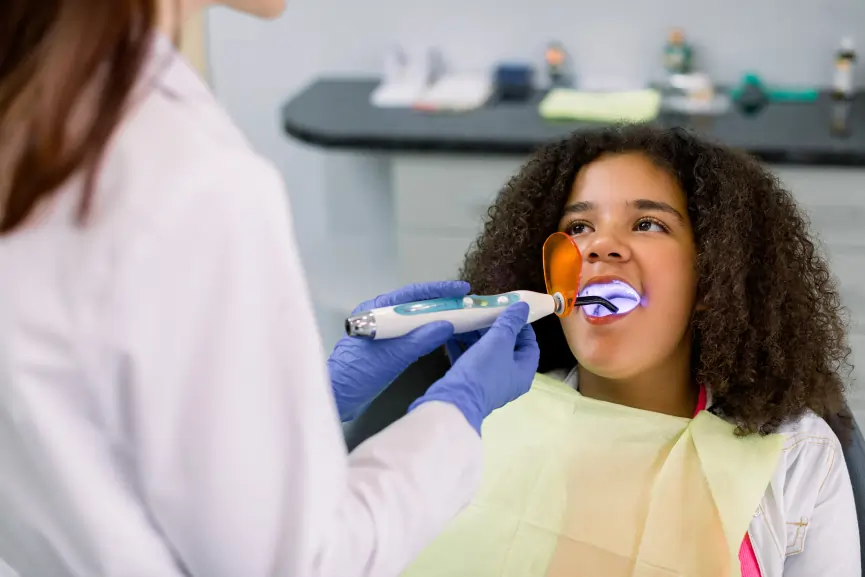
What Is Fluoride Treatment?
Fluoride treatment is a preventive dental service. A dentist or hygienist applies concentrated fluoride to your teeth to strengthen the enamel.
Enamel is the hard outer layer of each tooth. Acids from plaque bacteria, food and drinks weaken it over time. Fluoride makes enamel harder for those acids to dissolve. It also helps rebuild minerals in early weak spots before they grow into cavities.
Professional fluoride is much stronger than the fluoride in your toothpaste. Not every patient needs it. It earns its place when your cavity risk is higher.
Fluoride varnish is a concentrated fluoride coating painted onto your teeth with a small brush. It sets when it touches saliva and holds fluoride against the enamel for several hours.
Health Canada says varnish prevents tooth decay in people at risk and should be applied by someone trained to do it. Gels and foams are the other professional forms. Health Canada notes that research shows they do not work as well as varnish.
What Does Fluoride Do for Teeth?
Fluoride protects teeth by strengthening enamel and limiting the damage from acid attacks.
Fluoride helps:
- ✓Strengthen weakened enamel
- ✓Lower your cavity risk
- ✓Rebuild minerals in early weak spots
- ✓Protect children's new teeth
- ✓Protect adults with a higher cavity risk
- ✓Protect teeth when dry mouth leaves less saliva
- ✓Protect root surfaces exposed by gum recession
Fluoride does not replace brushing, flossing, dental cleanings or a healthy diet.
Who May Need Fluoride Treatment?
Anyone with a higher risk of cavities, child or adult.
Your dentist or hygienist recommends fluoride based on your actual risk. It is not a one-size-fits-all treatment.
- ✓Frequent cavities
- ✓Early signs of enamel weakness
- ✓Sensitive root surfaces
- ✓Dry mouth
- ✓Gum recession
- ✓Deep grooves or hard-to-clean areas
- ✓Braces or other orthodontic appliances
- ✓A history of many fillings
- ✓Frequent sugary or acidic snacks and drinks
- ✓Trouble brushing or flossing well
- ✓A child still learning to brush
Very little. Niagara Region does not add fluoride to tap water. It reports about 0.07 mg/L at the Grimsby plant, roughly one tenth of the 0.7 mg/L level Health Canada calls optimal. Niagara Region says local levels are too low to prevent cavities.
Fluoride Treatment for Children
Fluoride treatment helps children because their teeth are new and their brushing skills are still developing.
Snacking, deep grooves in back teeth, missed spots and trouble flossing all raise a child's cavity risk. Your dentist may recommend fluoride at routine visits to strengthen enamel.
It depends on your child's cavity risk, and your dentist sets the schedule. Niagara Region Public Health says varnish reduces cavities in children under five when it is applied twice a year.
The Region says free varnish may be offered at some daycares, schools, EarlyON centres and its own dental clinic. Tell us if your child had varnish there recently so we can space out the applications.
Ask our team which home-care habits protect your child's teeth. See children's dentistry for checkups as your child grows.
Fluoride Treatment for Adults
Fluoride is not only for children.
Not for every adult. Health Canada says varnish prevents tooth decay in people at risk. For adults, the common risks are dry mouth, gum recession, exposed root surfaces, frequent cavities, older fillings and areas that are hard to clean.
If you have none of these, daily fluoride toothpaste is your main protection. If you are unsure, your dentist or hygienist checks your risk at a dental exam or cleaning visit.
What to Expect During Fluoride Treatment
Cavity Risk Review
Your dentist or hygienist reviews your cavity risk, enamel condition, dental history and home-care routine.
Teeth Preparation
At most visits fluoride goes on after a dental cleaning. Your dentist may also recommend it at another preventive visit.
Fluoride Application
Fluoride is applied as a varnish, gel or foam. The choice depends on you and on your dentist's recommendation.
Quick Treatment Time
Applying the fluoride takes only a few minutes at most visits.
Aftercare Instructions
You may be asked to avoid eating, drinking or rinsing for a short time so the fluoride stays on your teeth.
Home-Care Guidance
Your team may also go over brushing, flossing, toothpaste, diet and cleaning frequency.
Fluoride Treatment vs Dental Sealants
Fluoride treatment strengthens enamel on every surface it coats, front teeth and back. A sealant protects one spot: the deep grooves on the biting side of a back tooth.
Dental sealants close those grooves so food and bacteria cannot settle in them.
You may need fluoride, sealants or both. Your dentist decides based on age, tooth shape and cavity history.
Can Fluoride Reverse Cavities?
Only at the earliest stage. The Canadian Dental Association says fluoride can reverse early signs of tooth decay. That means weakened enamel with no hole yet.
Fluoride cannot fix a larger cavity or a hole in the tooth. Decay at that stage needs a dental filling or another treatment.
Is Fluoride Treatment Safe?
Yes, when a trained professional applies it in the right amount. The Canadian Dental Association points to more than 50 years of research showing fluoride is safe and effective against tooth decay. Health Canada supports its use too.
Parents ask about fluorosis. It shows as faint white marks on adult teeth. It forms only when a young child swallows too much fluoride as those teeth develop.
Health Canada says you cannot get fluorosis once your adult teeth have grown in. The American Dental Association, citing the CDC, reports no published evidence that professional varnish raises the risk.
For young children, swallowed toothpaste is the thing to watch. The CDA advises a pea-sized amount from age 3 to 6. Under age 3, use a rice-grain smear only if a dental professional finds your child at risk of decay.
Tell us before treatment if you or your child has reacted to adhesive bandages, has severe allergies or has asthma that needed a hospital stay. Some varnishes contain colophony, a pine resin with a very small allergy risk. Mention any painful mouth sores too, because varnish is not applied over ulcerated gums.
Cost and CDCP Information
The cost of fluoride treatment depends on age, treatment need, visit type and dental coverage.
Published Canadian price guides put a professional fluoride treatment at about $20 to $45 per application before coverage. That is a typical market range, not our fee. Fluoride is its own item on a dental bill, separate from scaling and polishing.
Plan around the estimate our team explains before treatment. Private plans set their own age and frequency limits for fluoride. Bring your coverage details to your visit.
Yes, for eligible patients and within frequency limits. The CDCP Dental Benefits Guide allows one topical fluoride treatment, varnish included, every 6 months up to age 16. From age 17 the limit is one every 12 months.
Grimsby Lake Dental is a CDCP provider and bills the plan directly for eligible treatments. Our CDCP page explains eligibility and co-payments.
Related Services
Good to know
Frequently Asked Questions
What is fluoride treatment?+
A preventive dental service. Concentrated fluoride is applied to your teeth to strengthen enamel and lower your cavity risk.
What does fluoride do for teeth?+
It makes enamel more resistant to acid and helps repair early weak spots.
Is fluoride treatment only for children?+
No. Adults at higher cavity risk benefit too.
Is fluoride treatment necessary for adults?+
Only when your cavity risk is higher. Your dentist checks that risk at your exam.
How long does fluoride treatment take?+
Most applications take a few minutes as part of a preventive visit.
Is fluoride treatment done after dental cleaning?+
At most visits, yes. Your dental team recommends the right timing for your needs.
Can you eat after fluoride varnish?+
Follow the instructions from your visit. Programs differ, from eating right away to a 30-minute wait.
Can fluoride fix a cavity?+
No. It can reverse the earliest enamel weakening. A cavity with a hole needs a filling.
What is the difference between fluoride and sealants?+
Fluoride strengthens enamel on all your teeth. Sealants cover the grooves of back teeth to keep food and bacteria out.
Does CDCP cover fluoride treatment?+
Yes, for eligible patients and within frequency limits. See our CDCP page for the details.
Book Fluoride Treatment in Grimsby
Want to know if fluoride is right for you or your child? Book a preventive dental visit at Grimsby Lake Dental. We are open Monday to Saturday, with Saturday appointments from 8:00 AM to 2:00 PM.