

Key takeaways
- A root canal removes the pulp, not the tooth. The pulp is the soft core of the tooth
- Many back teeth need a crown afterward. The tooth is already weak
- Swelling that affects breathing or swallowing is an emergency. Go to a hospital
How does a root canal save a tooth?
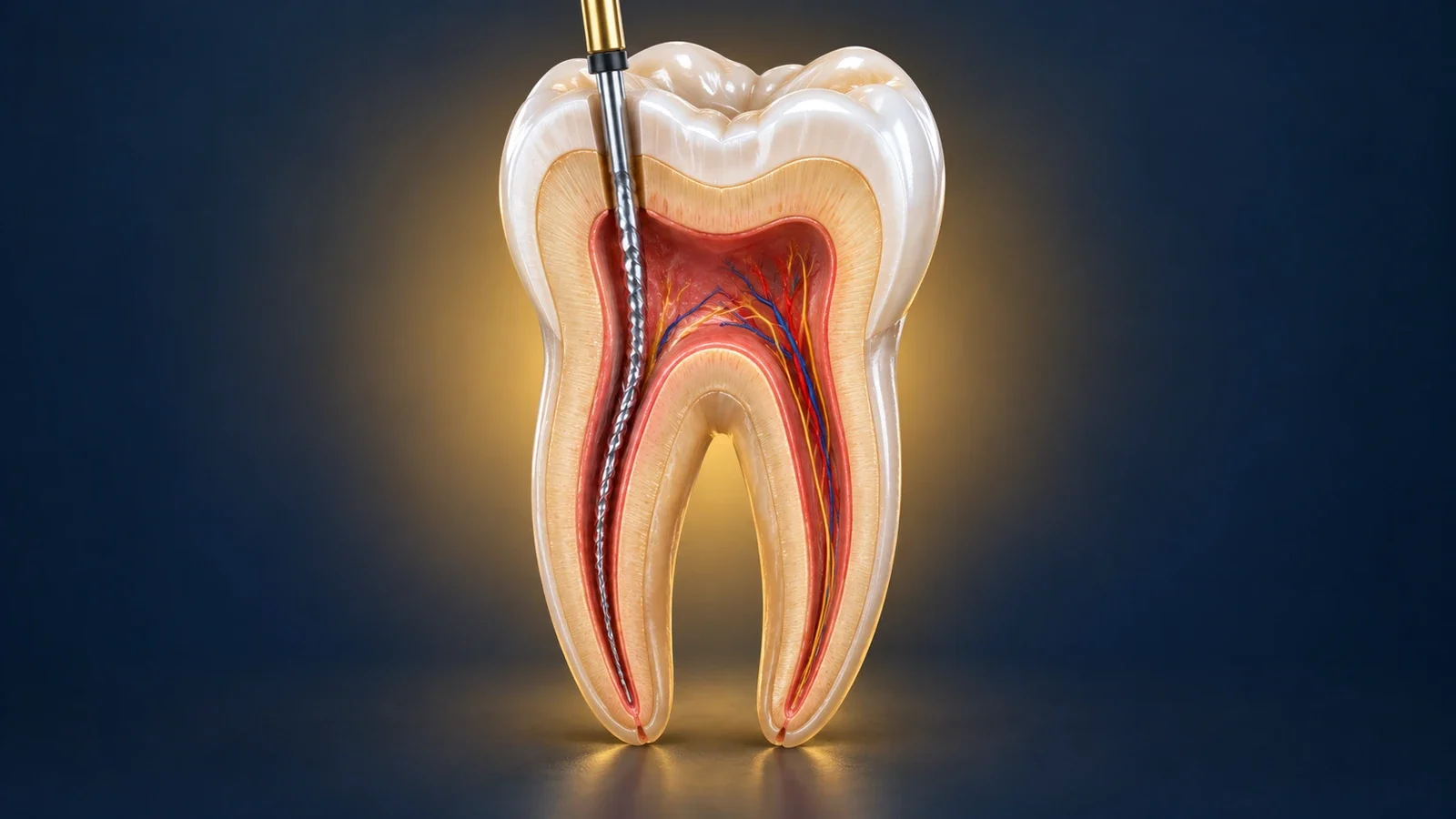
Inside every tooth is a soft core called the pulp. It holds nerves and blood vessels. Narrow channels called root canals run through the root.
When decay, a crack or an injury lets bacteria reach the pulp, it becomes inflamed or infected. A root canal clears that out so the tooth can stay in your jaw. A visit runs like this:
- Assessment. Your dentist reviews your symptoms and X-rays
- Comfort. Local freezing numbs the area where needed
- Cleaning. The sick tissue comes out and the canals are cleaned
- Sealing. The space is filled and closed so bacteria have less chance to return
- Restoration. A temporary or final filling or crown goes on
Tooth pain that will not settle? Book a visit or call (905) 309-5757.
What are the signs of an infected tooth?
An exam and X-rays decide. These signs point to an infected or badly inflamed tooth:
- Pain that throbs or wakes you at night
- Pain when you bite or chew
- A swollen gum or small bump near one tooth
A cavity a filling can fix is another cause. See toothache and tooth pain care.
Call 911 or go to the nearest hospital emergency department if you have trouble breathing or swallowing, severe facial swelling, swelling spreading toward the eye or neck, uncontrolled bleeding, a serious facial or jaw injury, or a fever with worsening swelling or illness. Our emergency page explains what to do next.
For severe tooth pain, a broken tooth or milder gum swelling near one tooth, call us on (905) 309-5757. Our emergency dentistry page and our post on what to do in a dental emergency have the full steps. When we are closed, go to the nearest hospital emergency department or an emergency dental service.
Does a root canal hurt?
The treatment targets the source of the pain and your dentist numbs the area when needed. Expect pressure or a buzzing feeling and tell us if you feel anything sharp.
Some tenderness afterward is possible, so call us if pain or swelling grows or your bite feels high. Avoid chewing hard foods on the tooth until it is fully restored and come back for the permanent filling or crown when one is planned.
Why do back teeth get a crown?
Many back teeth need a crown after a root canal. They take the heaviest chewing and were weakened first by decay, a crack or a big filling. Front teeth may not need one.
Root canal or extraction?
A root canal fits when the tooth can still be restored and supported. A tooth extraction is the safer answer when it is too damaged, cracked below the gumline, loose or unsupported.
What does it cost, and what does CDCP cover?
The cost depends on the tooth, the X-rays and the restoration. We do not publish fees and our team reviews estimated costs before treatment.
Grimsby Lake Dental accepts the CDCP for eligible patients and eligible services.
Frequently asked questions
Is a root canal painful?
You are numbed when needed, and the treatment goes after the cause of the pain. Pressure during the visit is possible, and some tenderness afterward can be normal.
Will I need a crown on a root canal tooth?
Many back teeth do, because they take the heaviest chewing.
Does CDCP cover a root canal?
It may cover eligible work for eligible patients. Coverage depends on the tooth, preauthorization, co-payments and frequency limits.