

Here is how to spot teething, the order the teeth arrive and what eases sore gums safely. You will also see which symptoms point to an illness and not a new tooth.
Key takeaways
- Around 6 months is typical: a first tooth anywhere from 3 to 12 months sits within the normal range.
- Drooling and chewing are the classic signs: sore, swollen gums can show up a few days before the tooth.
- Cold and gentle pressure help: a clean finger, a chilled washcloth or a solid teething ring settles most babies.
- Skip numbing gels and necklaces: both carry real risks for babies and young children.
- Teething does not cause a high fever: a temperature of 38°C or higher needs a call to your doctor, and a baby under 3 months needs to be seen right away.
When do most babies get their first tooth?
A first tooth at about 6 months is the most common pattern. One at 4 months or at 12 months still falls within the normal range, and early or late teething can run in families.
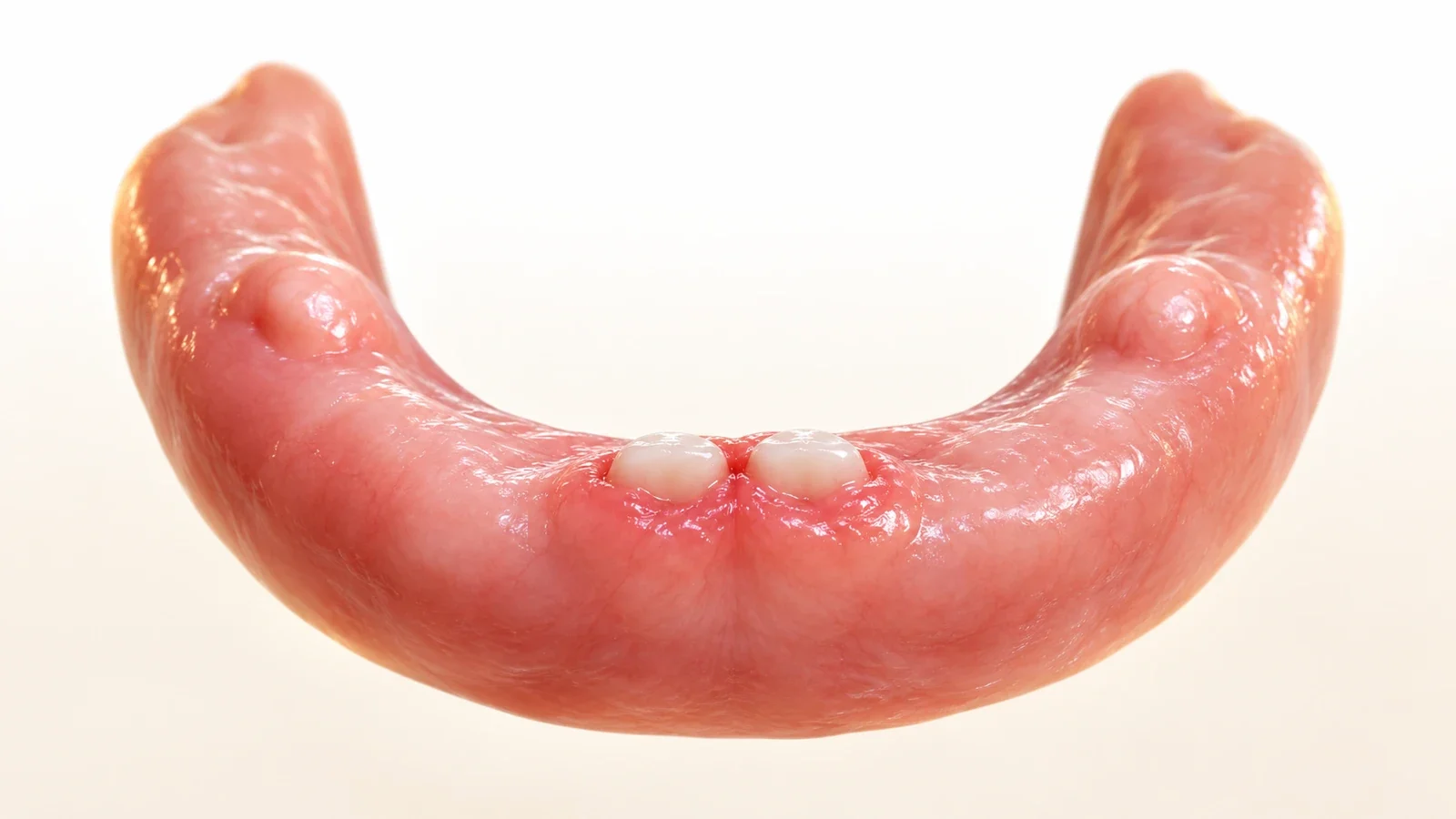
From about 3 months, babies drool more and bring hands and toys to their mouths as they explore. This is a normal stage, so a drooly 3 month old is not always teething. A hard little bump on the gum is the surer sign that a tooth is close.
A first birthday with no teeth yet can still be normal. The first dental visit around age 1 is a good time to check how the teeth are coming along. Once teething starts, it comes and goes until about age 2 or 3, when the last baby molars arrive.
What are the signs of teething?
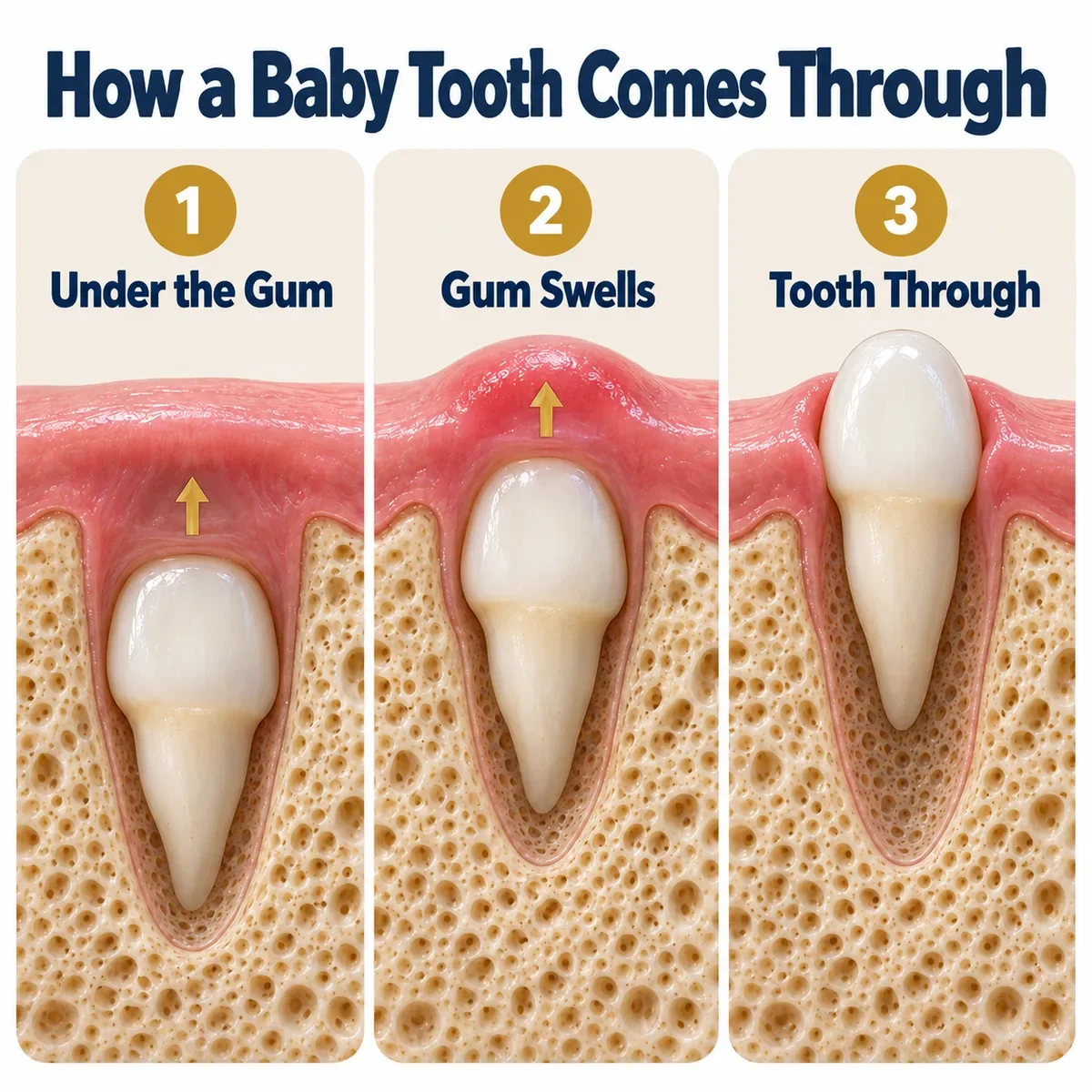
Extra drool, chewing on anything in reach and gums that look sore and swollen top the list. They can appear a few days before the tooth breaks through, then fade once it is out.
Every baby reacts in their own way. Some barely notice a new tooth, and others are unsettled for days. Watch for these signs:
- More drool than usual. It can leave a red rash on the chin and around the mouth.
- Chewing and gnawing. Your baby bites on fingers, toys or anything else that reaches their mouth.
- Red, puffy gums. The spot where the tooth is coming through can look swollen and feel tender.
- Fussiness and broken sleep. Soreness can make it harder for your baby to settle at night.
- Less interest in feeding. Sucking can press on sore gums for a day or two.
- Flushed cheeks or ear rubbing. Some babies rub an ear or cheek on the side of the new tooth.
Ear rubbing is also a sign of an ear infection. If it comes with a fever or your baby seems in real pain, have your doctor take a look.
Is it teething or something else?
A new tooth can leave your baby cranky and drooling. It does not bring on vomiting, diarrhea, a runny nose or a fever of 38°C or higher. Those signs point to an illness, even when a tooth is on its way.
The two things happen at the same age, so it is easy to blame every symptom on a tooth. Call your doctor if your baby has any of these:
- A temperature of 38°C or higher
- Vomiting, diarrhea or a rash spreading past the mouth and chin
- Crying you cannot settle, refusing feeds or being unusually sleepy
- Signs that drag on longer than a few days
A baby under 3 months with a temperature of 38°C or higher needs to see a doctor right away. If you cannot reach your doctor, call Health811 at 811 for nurse advice. Call 911 if your baby is struggling to breathe, is limp or is very hard to wake.
If a piece of a teether or a bead breaks off and your baby is choking or struggling to breathe, call 911 right away.
In what order do baby teeth come in?
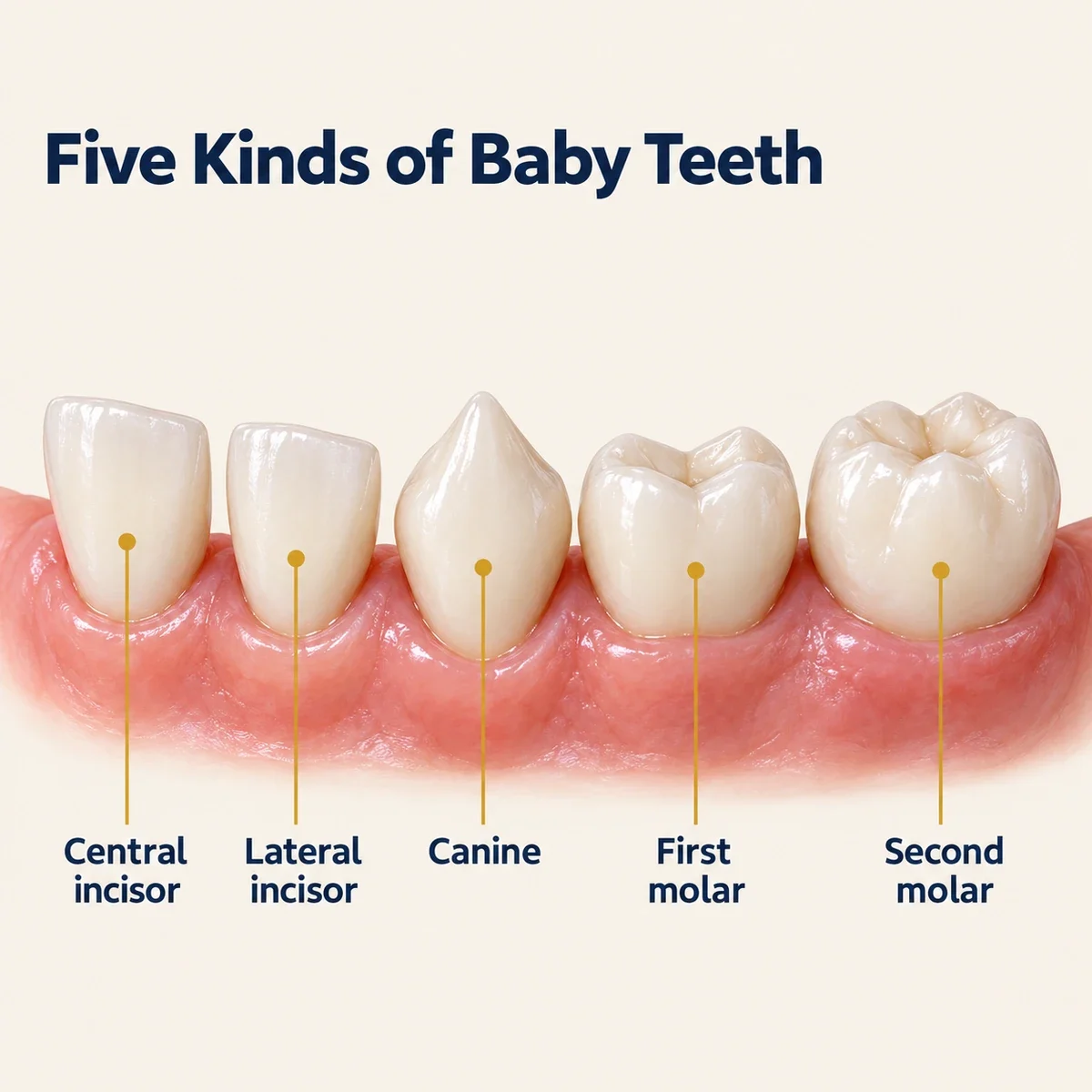
Baby teeth arrive in pairs, one on each side, starting with the two lower front teeth. The upper front teeth follow, and the rest fill in toward the back by about age 3.
The chart below shows the typical ages. Each child has their own timetable, so a baby a few months ahead of or behind it is still on track.
| Baby tooth | Upper jaw (months) | Lower jaw (months) |
|---|---|---|
| Central incisors (front teeth) | 7 to 12 | 6 to 10 |
| Lateral incisors (next to the front teeth) | 9 to 13 | 7 to 16 |
| First molars (back teeth) | 13 to 19 | 12 to 18 |
| Canines (pointed eye teeth) | 16 to 22 | 16 to 23 |
| Second molars (far back teeth) | 25 to 33 | 20 to 31 |
The first molars come in before the canines, so a gap next to the front teeth for a few months is normal. A full set has 20 teeth. They stay until the adult teeth push them out, starting between the ages of 5 and 8.
How can you soothe a teething baby safely?
Gentle pressure and something cool and firm to chew on ease most teething soreness. Extra cuddles help too, because a sore baby wants comfort as much as relief.
- Rub the gums. Use a clean finger to press gently on the sore spot for a minute or two.
- Offer a solid teething ring. Pick firm rubber or silicone and stay close as your baby chews on it.
- Chill it, do not freeze it. A teething ring or clean, damp washcloth from the fridge cools the gums. A frozen one is too hard and can hurt. Stay close while your baby chews on either one.
- Wipe away drool. Keeping the chin dry stops the skin from getting sore and cracked.
- Check bottle nipples. They wear out faster during teething, and broken pieces are a choking risk.
- Ask about pain relief. If your baby is very uncomfortable, ask your doctor or pharmacist which infant pain reliever suits your baby's age and weight.
What should you avoid?
Several products sold for teething carry risks for babies. Leave these out:
- Numbing gels with benzocaine. The Government of Canada's tips for children up to age 3 advise against them. A numbing gel can also numb the throat and make swallowing harder.
- Teething necklaces and bracelets. Health Canada warns that "Teething necklaces and chewing beads can break, and your baby can choke on the small pieces." Its page on teething necklaces adds that cords around the neck can tighten during sleep.
- Liquid or gel-filled teething rings. They can split open and leak.
- Teething biscuits. The same government tips say to avoid them.
- Honey or sweeteners on a soother. Sugar on a soother raises the risk of early tooth decay, and honey is not safe for babies under 1 year.
When should you start cleaning your baby's teeth?
Start brushing as soon as the first tooth appears. Before that, wipe your baby's gums with a clean, damp cloth after feeds.
- Use a small, soft toothbrush. Brush the teeth, gums and tongue for 2 minutes twice a day, and never skip the bedtime brush.
- Ask about toothpaste. Your dental team can tell you if your child needs a fluoride toothpaste yet and how much to use.
- Keep milk and juice out of bed. A bottle at night leaves sugar on the teeth for hours, and after 6 months, water is the best drink between meals apart from breast milk.
- Lift the lip once a month. Look for white chalky or brown spots near the gums, which can be early decay, and book a dental visit if you see any.
When should your baby first see a dentist?
Book the first dental visit by your baby's first birthday, or within 6 months of the first tooth coming in. Going early lets the dentist spot problems before they hurt.
At Grimsby Lake Dental in Grimsby, a baby's visit moves at your child's own pace. The dentist looks at the teeth, gums and bite, answers your questions and shows you how to clean those new teeth at home. Our children's dentistry page explains what a young child's visit can include.
Frequently asked questions
How long does teething last for each tooth?
Soreness builds over a few days as each tooth pushes up, then settles once it is through. There is no set number of days, and some teeth bother a baby more than others.
Can teething cause a fever?
A teething baby can feel a little warm, but teething does not cause a fever of 38°C or higher. A temperature that high points to an illness, so call your doctor.
Does teething cause diarrhea or a runny nose?
No. They can show up at the same age as teething, but an illness such as a virus is the more likely cause. Call your doctor if they last or your baby seems unwell.
Why is my baby waking at night with teething?
Sore gums can make it harder for a baby to settle. Offer a chilled teething ring before bed and clean your baby's teeth or gums after the last feed of the night.
Are amber teething necklaces safe?
No. Health Canada warns that necklaces and beads can break into pieces a baby can choke on, and cords can twist around the neck. A solid teething ring is the safer choice.