
Here is what changes with the choice to brush your teeth before or after breakfast. You will also see how to protect your enamel on a busy morning.
Key takeaways
- Before breakfast suits most people: it removes overnight plaque and leaves fluoride on your teeth before you eat.
- After breakfast, give it time: wait at least 30 minutes, and closer to an hour after juice, fruit or coffee.
- Water helps in a rush: rinse after eating when you cannot wait to brush.
- The bedtime brush counts most: never skip the one before sleep.
What does brushing before breakfast do for your teeth?
It strips away the plaque that grew overnight, so fewer bacteria are left to turn your breakfast sugars into acid. It also leaves a film of fluoride from your toothpaste on the enamel, which helps it stand up to the acid in your food.
Our page on fluoride treatment explains how a stronger dose at the dental office adds protection for teeth that need it. Children under 6 need far less toothpaste than adults, and that page gives the amount for young children.
Research on this exact question is limited. In one small study, 10 volunteers wore enamel and dentin samples in mouth appliances for two weeks at a time. The samples wore less when they were brushed before an acid challenge than when they were brushed a few minutes after it.
Why can brushing right after eating harm enamel?
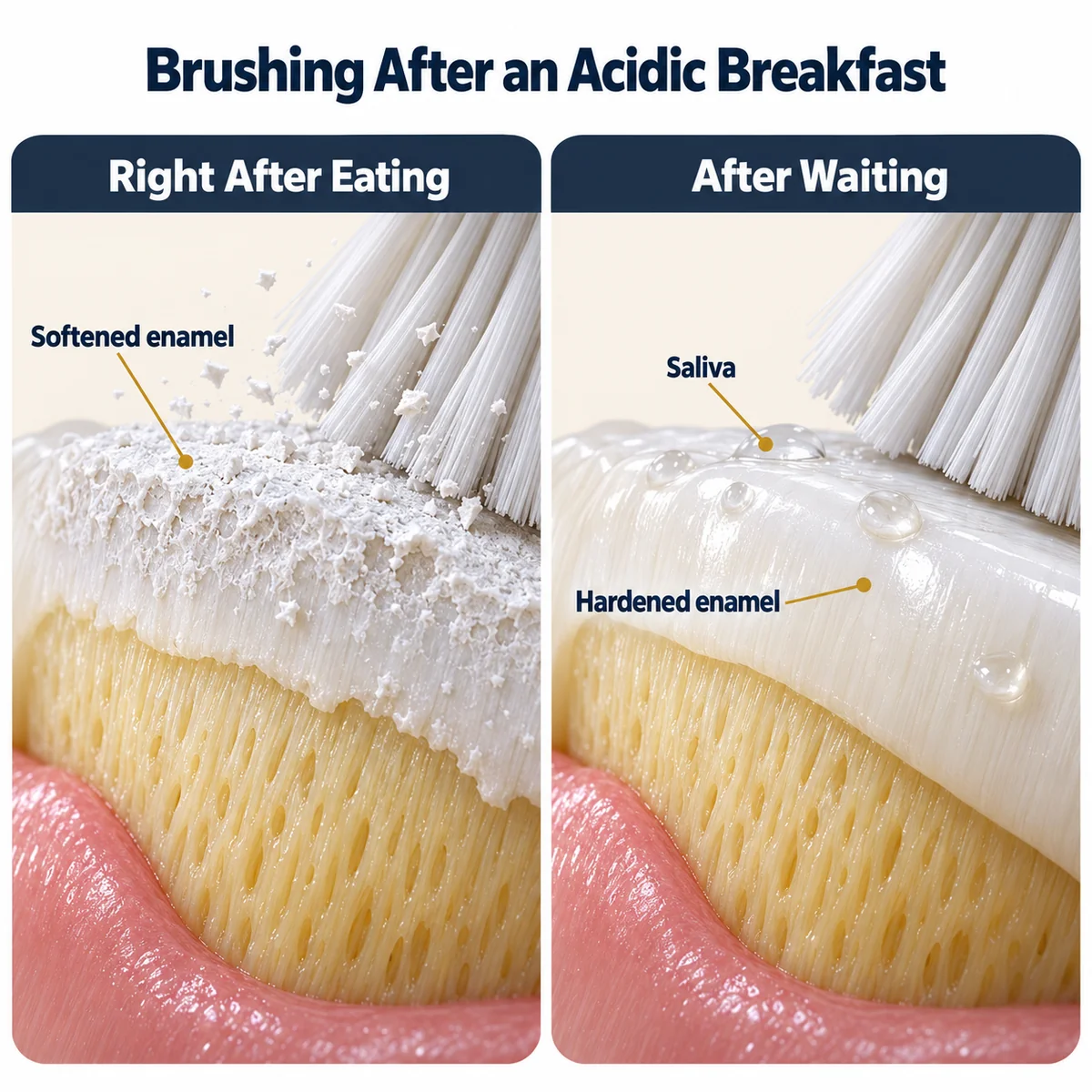
Acid from food and drinks softens the outer surface of your enamel just after you eat. A toothbrush used in that window can scrub away part of the softened layer.
Common breakfast items with acid include orange juice and other fruit juices, citrus fruit and coffee. A single brush in the wrong window does little harm. The wear adds up over months and years, and thinner enamel can leave the dentin underneath exposed.
The same waiting rule applies to the sour candy and citrus in our guide to holiday foods and your teeth.
How long should you wait to brush after breakfast?
Wait at least 30 minutes after eating, and up to an hour after an acidic meal or drink. In that time your saliva dilutes the acid and your mouth settles back to its normal balance.
On mornings when you cannot wait, these steps help:
- Brush before you eat. It keeps your routine on track even when breakfast is rushed or eaten on the way to work.
- Rinse with plain water. A few mouthfuls after eating clear food and acid from your teeth.
- Chew sugar-free gum. It gets saliva flowing on the move, but keep gum for adults and older children.
What makes a morning brush count?
Any morning brush beats skipping it. Use a fluoride toothpaste, a soft brush and a light touch for two minutes, with the bristles tilted toward the gumline.
Brush twice a day and floss or clean between your teeth daily. Bedtime is a good time to floss. Extra brushing is not needed. Hard scrubbing several times a day can wear enamel and irritate your gums, so rinse with water between meals instead.
Any plaque you miss turns into hard tartar over time, and removing it takes a professional cleaning. At Grimsby Lake Dental in Grimsby, a dental cleaning visit includes home-care advice, so bring your questions about timing and toothpaste.
Frequently asked questions
Is it bad to brush right after coffee?
Coffee is acidic. Rinse with water, then give your teeth 30 to 60 minutes before you brush, or brush before your first cup.
Is brushing once a day enough?
No. Two brushes a day with fluoride toothpaste, plus daily flossing, keep plaque under control. The bedtime brush matters most.
What if I eat breakfast on the way to work?
Brush before you leave home. After you eat, rinse with water or chew sugar-free gum, then brush again at bedtime.