
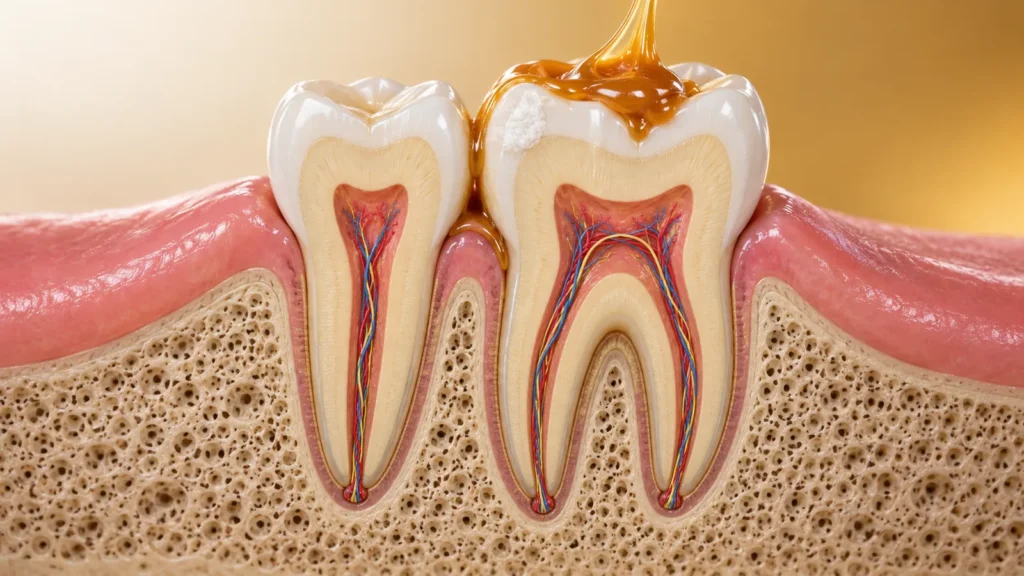
You do not have to skip the season's treats to protect your teeth. This guide explains what each kind of holiday food does to your teeth and which small habits make the biggest difference.
Key takeaways
- Grazing does the most harm. Every sweet bite starts a fresh acid attack on your enamel and a day of nibbling adds up fast.
- Judge a treat by how it behaves in your mouth. Sticky, slow to dissolve, hard and acidic foods are the ones to limit.
- Pair sweets with a meal. Your mouth makes more saliva at mealtimes to rinse sugar off your teeth.
- Hold the toothbrush after acid. Rinse with water and wait about 30 minutes before you brush.
- A broken tooth needs a call. Phone the clinic about a tooth that breaks on a treat even if it does not hurt yet.
What happens to your teeth after a sweet bite?
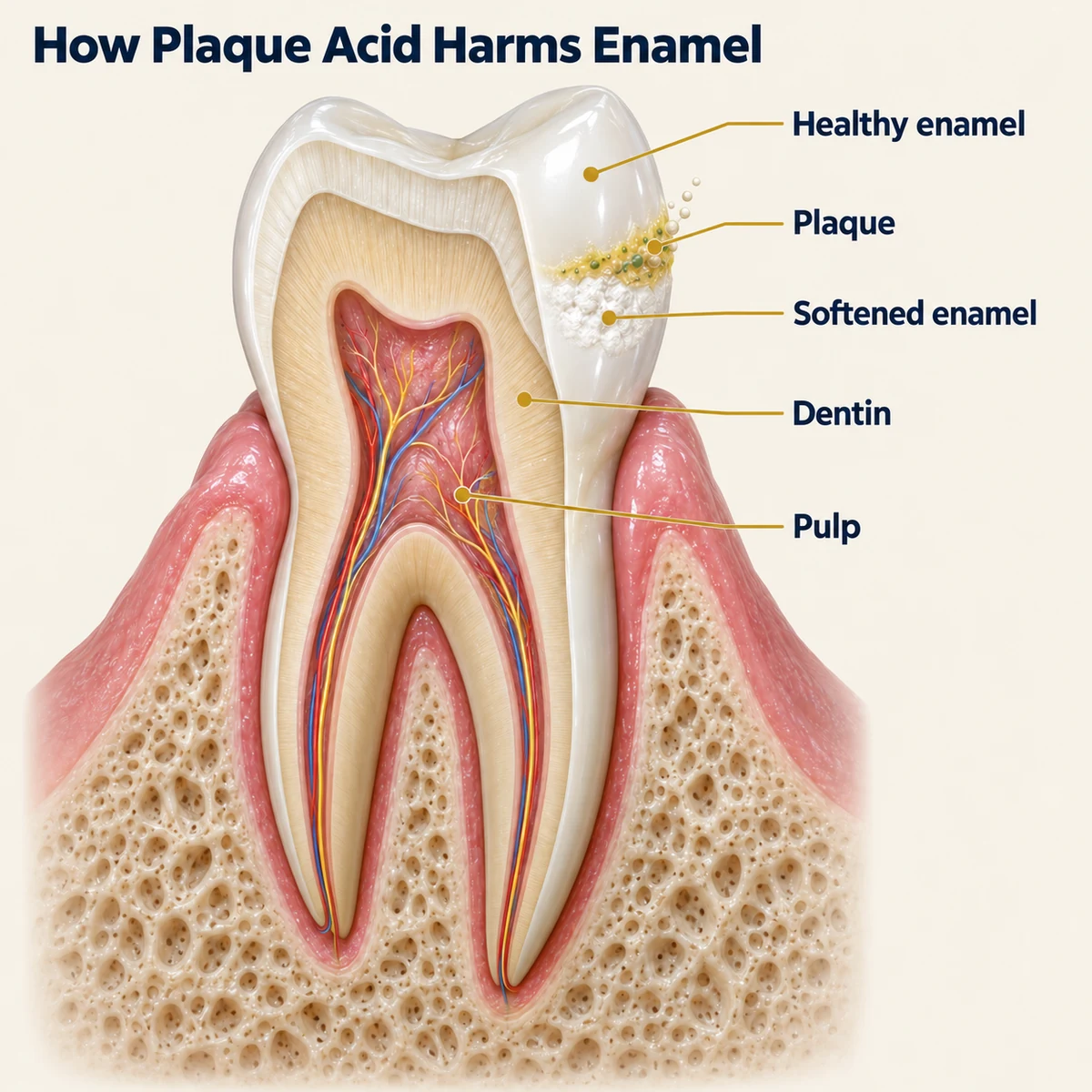
After a sweet bite, bacteria in plaque feed on the sugar and turn it into acid. That acid softens the enamel, the hard outer layer of each tooth.
Plaque is the sticky film that forms on your teeth every day and its bacteria keep making acid for some time after each sweet bite. Saliva then washes that acid away so the enamel can recover. A plate of cookies you pick at all afternoon never gives your saliva that break.
Starchy foods like crackers, stuffing and cake count too because they break down into sugar and pack into the gaps between teeth.
What makes a holiday food risky for your teeth?
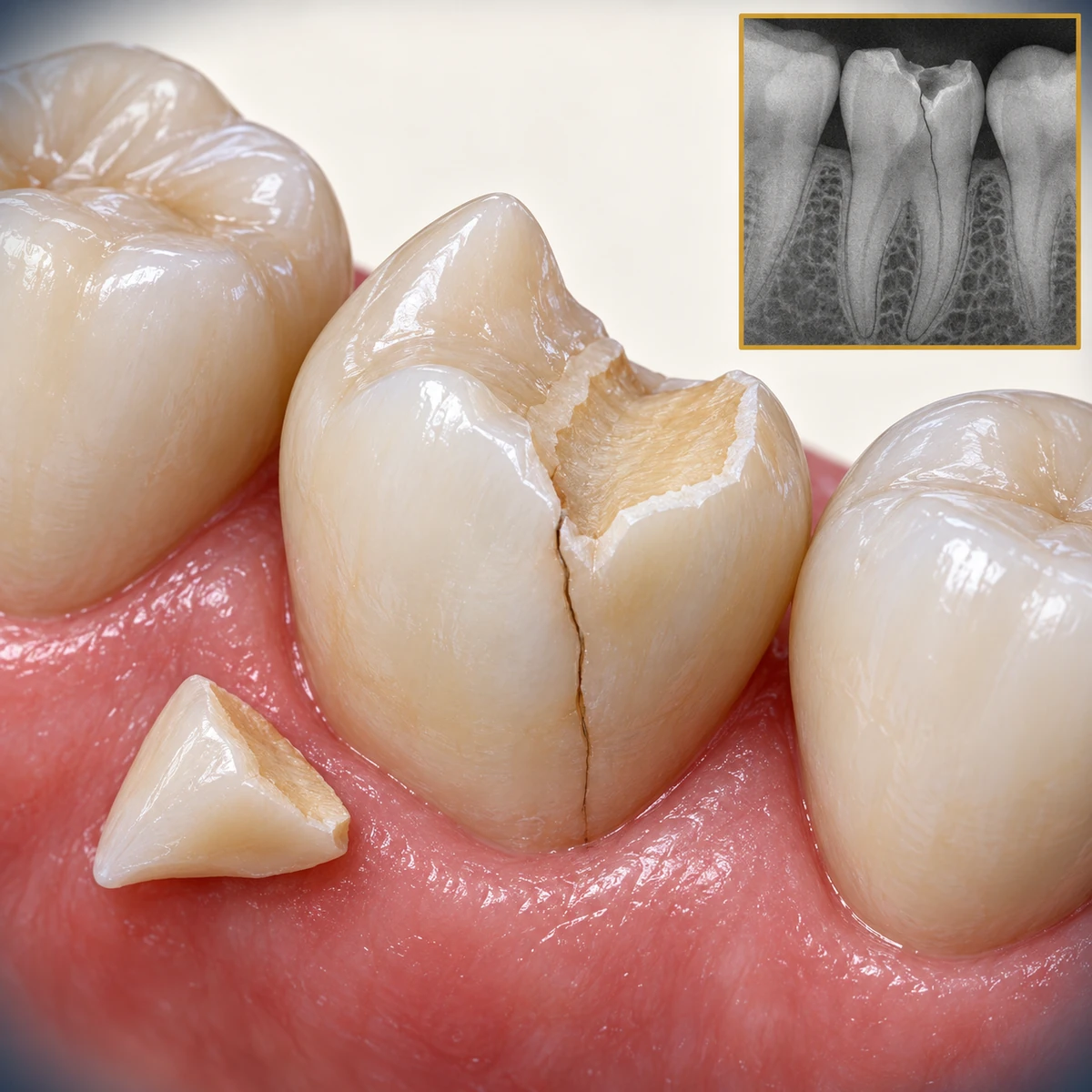
A holiday food is risky when it clings to your teeth, stays in your mouth for a long time, takes hard biting or bathes your teeth in acid. Many seasonal treats do two of these at once.
| Holiday food | What makes it risky | A kinder habit |
|---|---|---|
| Caramels, toffee and gumdrops | They glue sugar into the grooves | Have them with a meal and rinse with water |
| Candy canes and hard candy | Slow to dissolve and hard to bite | Let it melt and never crunch it |
| Dried fruit and fruitcake | Sticky sugar settles between teeth | Choose fresh fruit with a meal |
| Eggnog, hot chocolate and cider | A lot of sugar in every cup | Keep to one small cup and drink water after |
| Wine and spirits | Alcohol dries your mouth and red wine stains | Sip water between drinks |
| Sour candy and citrus | Acid softens enamel directly | Rinse and wait before you brush |
| Peanut brittle, nuts and popcorn | Hard pieces and stray kernels | Chew slowly and check each handful |
Sticky toffee can pull a loose crown or filling out of place. Hard and chewy treats also put extra strain on dentures and bridges. Cut them into small pieces or pass on them.
If a hard treat breaks a tooth, stop chewing on that side and keep any broken piece. Call the clinic even if it does not hurt, and do the same for a child's chipped tooth. Our page on broken tooth repair explains the repair options. Keep hard candy, whole nuts and popcorn away from children under 4, because they can choke on them. For severe pain, call Grimsby Lake Dental in Grimsby at (905) 309-5757 for the soonest available appointment.
Which holiday foods are kinder to your teeth?
Cheese, plain yogurt, raw vegetables and lean meat make better holiday snacks than candy, and plain water is the best drink between meals.
These foods carry little sugar, so they give plaque bacteria less to work with. Put the stuffing and cranberry sauce on your dinner plate and skip picking at the leftovers later. Fresh fruit beats dried fruit and citrus is easiest on your enamel when you eat it as part of a meal. Sugar-free gum after a meal also helps your saliva clear away food.
How do you build a tooth-friendly holiday routine?
Eat your treats with a meal or straight after one, then drink water and keep up your normal brushing.
- Pick a time for dessert. One sitting gives your teeth fewer acid attacks than a whole day of snacking.
- Brush twice a day with fluoride toothpaste. Make the last brush of the day come after the party ends.
- Floss once a day. Holiday starches hide between teeth in places a brush cannot reach.
A dental cleaning removes the hardened plaque that brushing misses. Ask about fluoride treatment at that visit if you get cavities easily. A dental exam can find decay early, when a small filling can still repair it. Our guide to what happens at a dental checkup walks you through the visit.
Frequently asked questions
Is stuffing bad for your teeth?
Stuffing is soft and starchy, so it packs between your teeth and feeds plaque. Floss on the days you eat it.
Can alcohol harm your teeth?
Alcohol dries out your mouth, which leaves less saliva to rinse away sugar and acid. Drink a glass of water alongside each drink.
Can I still have eggnog over the holidays?
Yes, in a small serving. Drink it with a meal and follow it with a glass of water to rinse off the sugar.