

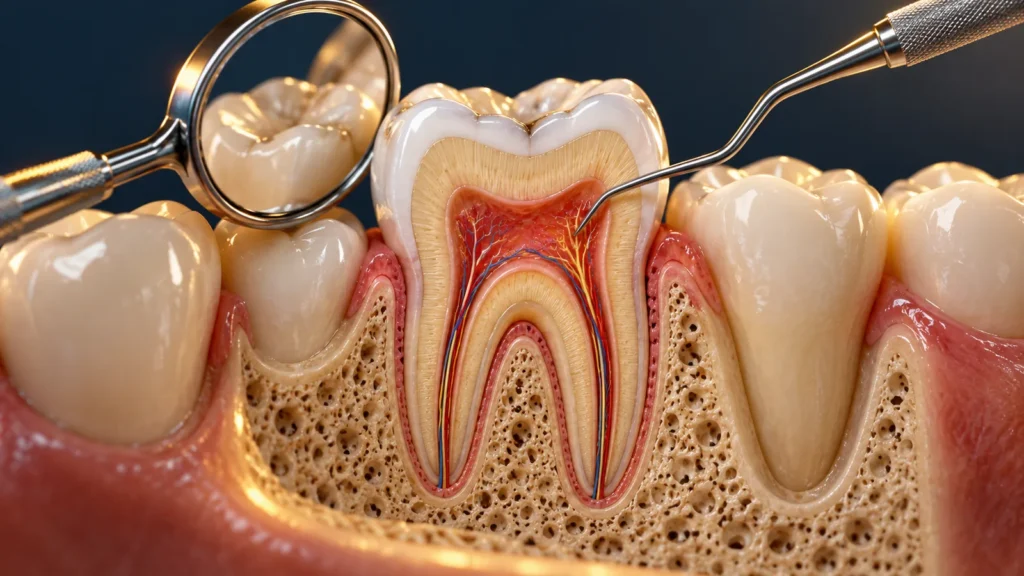
Most dental problems start quietly, and a checkup finds them when they are small and easier to treat.
Key takeaways
- A checkup is an exam that covers your teeth and gums as well as your jaw and old dental work
- A cleaning is a separate service. You can book both for one visit
- X-rays are not taken at every visit. The dentist asks for them when something cannot be seen by eye
- Six months between visits suits many patients. Your dentist sets the gap that fits your mouth
- Severe pain or swelling is not a routine checkup. Severe facial swelling goes to the emergency department. For severe pain, call us for the soonest available appointment
What happens at a dental checkup, step by step?
A checkup has four stages. You talk about your health and the dentist does the exam. X-rays follow if they are needed and the visit ends with a plan for what comes next.
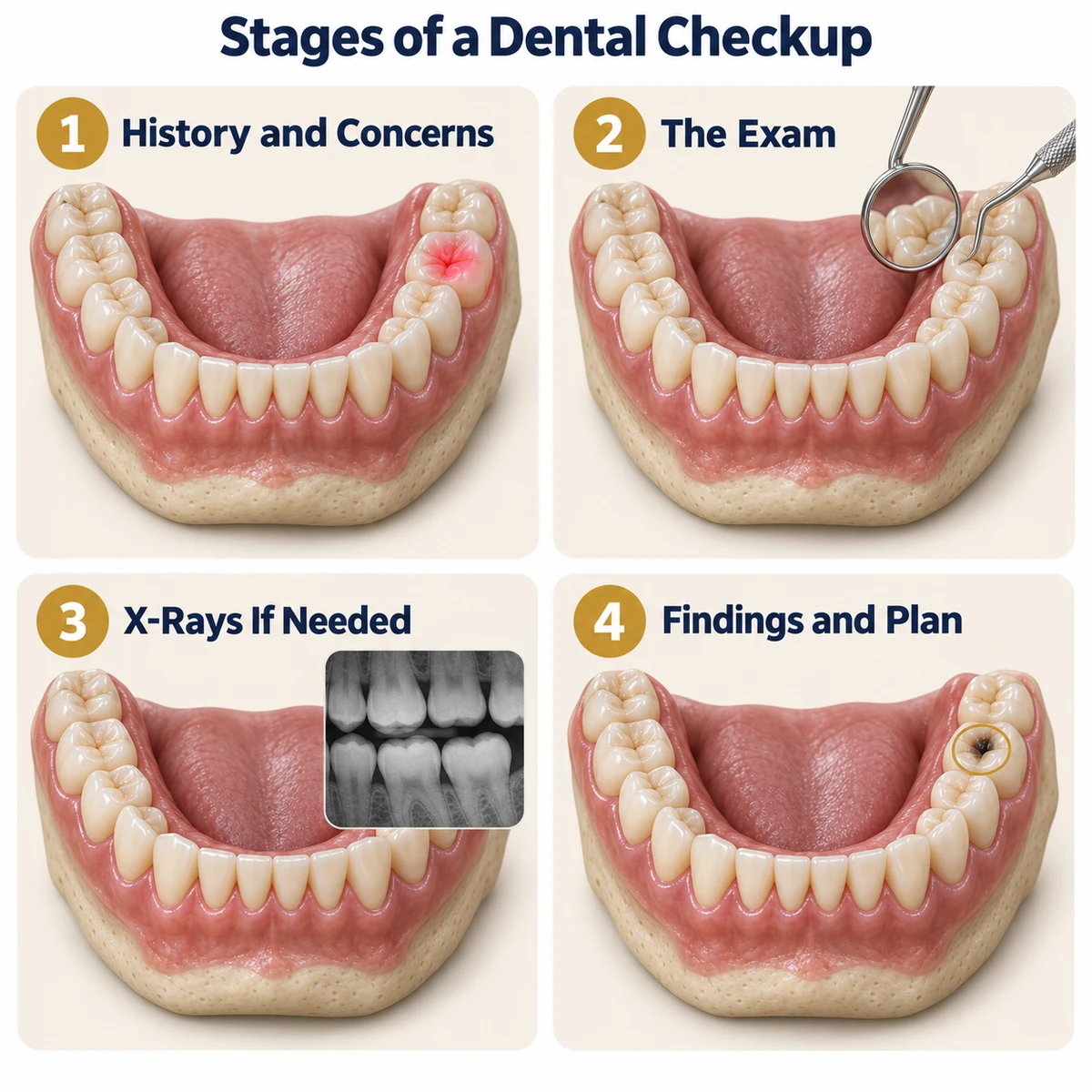
- History and concerns. The team reviews your oral health history and medical updates. You mention any sensitivity, bleeding gums or pain
- The exam. The dentist reviews each area of your mouth in turn. The next section lists each check
- X-rays, only if needed. The dentist recommends them for areas the eye cannot see
- Findings and plan. The dentist explains what they found in clear language. If you need treatment we talk through options and timing, and we review estimated costs before anything starts
You can ask any question you like at any point during the visit, from the first talk to the final plan.
What does the dentist look at during a checkup?
The dentist looks at your whole mouth and not only at your teeth, so each area gets its own check.
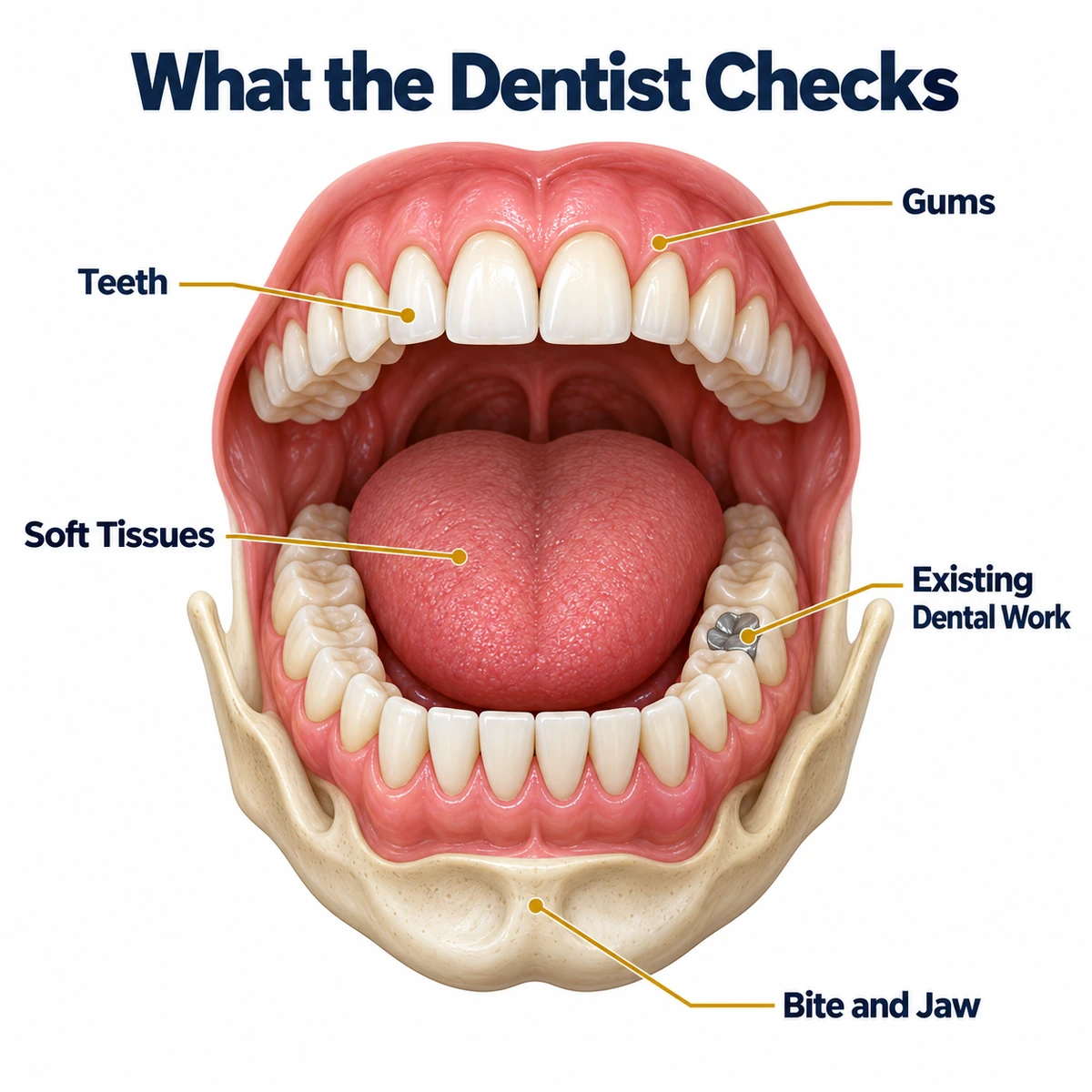
Teeth. The dentist checks each tooth for cavities, cracks, wear and damaged fillings. A cavity can grow under the surface before it hurts.
Gums. The dentist looks for bleeding, swelling, recession and pocketing. Gum disease can progress with very little pain, so mention any bleeding at your visit.
Bite and jaw. The dentist checks how your teeth meet and how your jaw feels. Uneven wear can point to grinding or clenching and a custom night guard protects your teeth in that case.
Existing dental work. Fillings, crowns, bridges and dentures are checked for fit and wear. A worn filling is easier to replace than the cavity it lets in.
Soft tissues. The dentist can check your lips, tongue and cheeks for unusual changes. The same check covers the roof and floor of your mouth and your throat area. It forms the oral cancer screening part of the exam.
Do you need x-rays at every checkup?
No. Your symptoms, dental history and exam findings decide whether you need them. X-rays show what the eye cannot see, such as the spaces between teeth, the areas under fillings, the roots and the bone that supports your teeth. Ask the team why one is recommended and what it will show you.
Is a dental checkup the same as a cleaning?
No. The exam belongs to the dentist and the cleaning belongs to the hygienist. You can book them together on the same day but they are separate services with separate jobs.
| Checkup (exam) | Cleaning | |
|---|---|---|
| Who does it | The dentist | The hygienist |
| What it does | Checks and diagnoses your oral health | Removes plaque, tartar and surface buildup |
| What you leave with | Findings and a plan | Cleaner teeth and gums |
Brushing and flossing cannot fully remove tartar at home, which is why a professional cleaning does that job for you. If you are due for both, tell us when you book and we set up the right appointment type.
How long should you wait between checkups, even if nothing hurts?
Many patients book about every six months. Your dentist sets your own gap from your gums, your cavity risk and your history. A shorter gap suits people with gum concerns, frequent cavities, dry mouth, heavy tartar buildup, crowns, bridges or dentures, or a history of dental problems.
You should still go when nothing hurts. A small cavity can need only a filling, but left alone it can grow into a bigger repair. Early gum inflammation can improve with cleaning and better home care, while advanced gum disease can need deeper care and long-term monitoring.
When should children start having checkups?
Start early. A first visit lets the dentist check tooth development and cavity risk. It also helps your child get used to the clinic, because baby teeth help children chew and speak and hold space for the adult teeth.
What should you tell the dentist and bring?
Tell the team what has changed since your last visit and bring your coverage details. Mention any of these at check-in:
- New medicines, health conditions or allergies
- Pain, sensitivity or bleeding gums
- Dry mouth, jaw clicking or morning headaches
Dental anxiety is common, so tell us you are nervous and the team will know about it before you sit down in the chair.
What does a dental checkup cost, and does CDCP help?
The cost depends on the type of exam and on your coverage. It also changes if you need x-rays or book a cleaning at the same visit. Grimsby Lake Dental does not publish a price list for checkups, and our team reviews your estimated costs before treatment begins.
We accept the Canadian Dental Care Plan for eligible patients and eligible services. CDCP can help with eligible exams under its eligibility rules, frequency limits and co-payments. It does not make every service free.
When should you not wait for your next checkup?
Do not wait for a routine visit if you have pain or swelling or bleeding. The same goes for a broken tooth or a lost filling.
For severe pain without those signs, call us on (905) 309-5757 for the soonest available appointment. When we are closed, go to the nearest hospital emergency department or an emergency dental service. The steps are in our dental emergency guide. You can read about emergency dentistry and toothache and tooth pain too.
Frequently asked questions
What does a dental checkup include?
It covers a review of your health and concerns followed by an exam of the whole mouth. You leave with the dentist's findings and a plan.
How many months should I leave between dental checkups?
Six months suits many patients and your dentist sets your own gap after the exam.
Are dental x-rays always needed?
No. The dentist recommends them from your symptoms, history and exam findings.
Can a checkup find problems I cannot feel?
Yes. Cavities, gum problems, worn fillings and bite concerns can develop before pain starts, and the exam checks for them.
Do I get a cleaning at my checkup?
Only if you book one. We can set up both for the same visit when you ask.
Do you accept new patients?
Yes. New patients of all ages are welcome.