
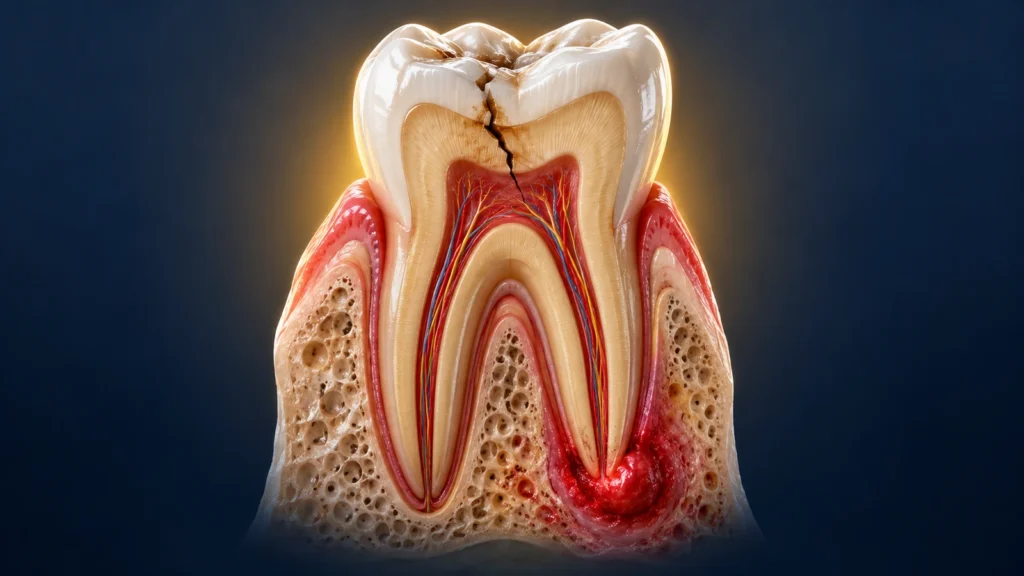
Most dental emergencies involve pain or swelling or a broken tooth or an injury. The first few minutes call for calm and simple steps. This guide covers what to do for each problem and what to avoid.
Key takeaways
- Call the clinic first for most dental problems. Describe your symptoms clearly so the team can book the soonest appointment
- Chew on the other side. A gentle warm-water rinse is fine for an irritated area
- Keep any broken piece or lost crown. Bring it to your visit
- A cold compress goes on the outside of the face. Aspirin never goes on the gum or tooth
- Some symptoms are medical emergencies. Trouble breathing or swallowing and spreading swelling need a hospital
- Do not wait for pain to get severe before you call
What qualifies as a dental emergency?
It is an urgent problem with pain or swelling or injury or bleeding, or damage that can worsen without timely care. Severe toothache and broken teeth and lost fillings are common examples.
Call a dentist promptly if you have:
- A severe toothache
- Swelling around the gums or jaw or face
- A broken or cracked tooth
- A knocked-out adult tooth
- A lost filling or lost crown
- A dental abscess concern
- Pain when biting
- Bleeding after a dental injury
- An injury to your teeth or gums or lips or mouth
- Sensitivity that suddenly gets worse
Not sure if yours counts? Call Grimsby Lake Dental on (905) 309-5757. The team can tell you whether to book an urgent visit or seek medical care.
Should you go to the hospital instead of the dentist?
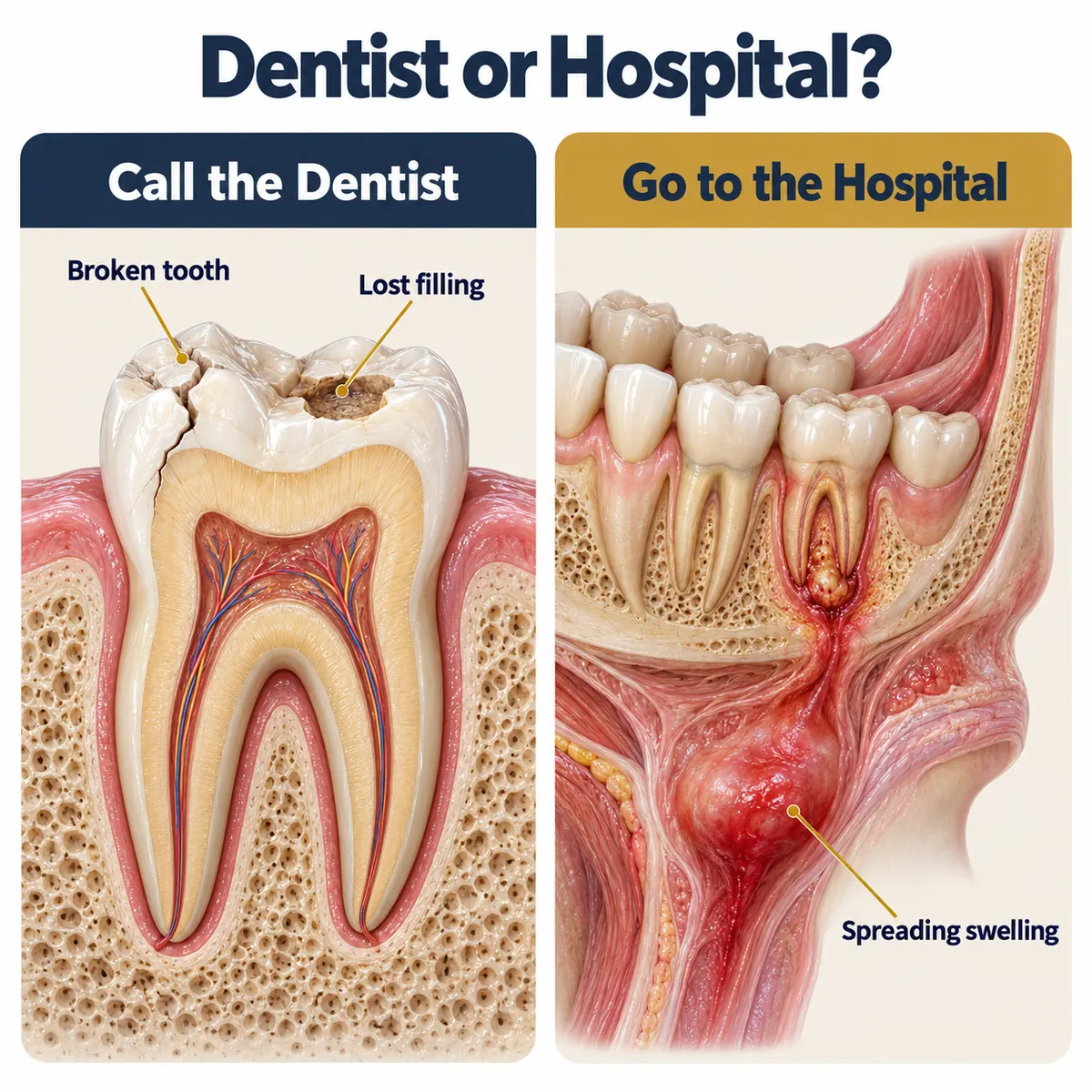
Go to the hospital if your problem affects breathing or swallowing or involves heavy bleeding or a serious injury. A dentist treats many emergencies, yet these symptoms can need hospital care first.
When in doubt, call. Swelling that grows or comes with a fever should not wait for a dental appointment.
What should you do for a severe toothache?
Call the clinic and avoid chewing on that side. Tooth pain is a symptom and not a diagnosis, so an exam finds the cause. It can come from decay or a crack or infection or a damaged filling.
Until you are seen:
- A gentle warm-water rinse helps if the area is irritated
- If food is stuck, floss slowly and never force the floss
- For swelling, hold a cold compress against the outside of your face
- Take over-the-counter pain relief only as your physician or pharmacist directs
- Keep aspirin off the gum and off the tooth
- Get help quickly if swelling or a fever or the pain gets worse
Pain that wakes you at night or will not settle is a reason to phone promptly. So is a bad taste or fluid draining near a tooth. The toothache page lists the causes and what the visit involves.
What should you do if you break or chip a tooth?
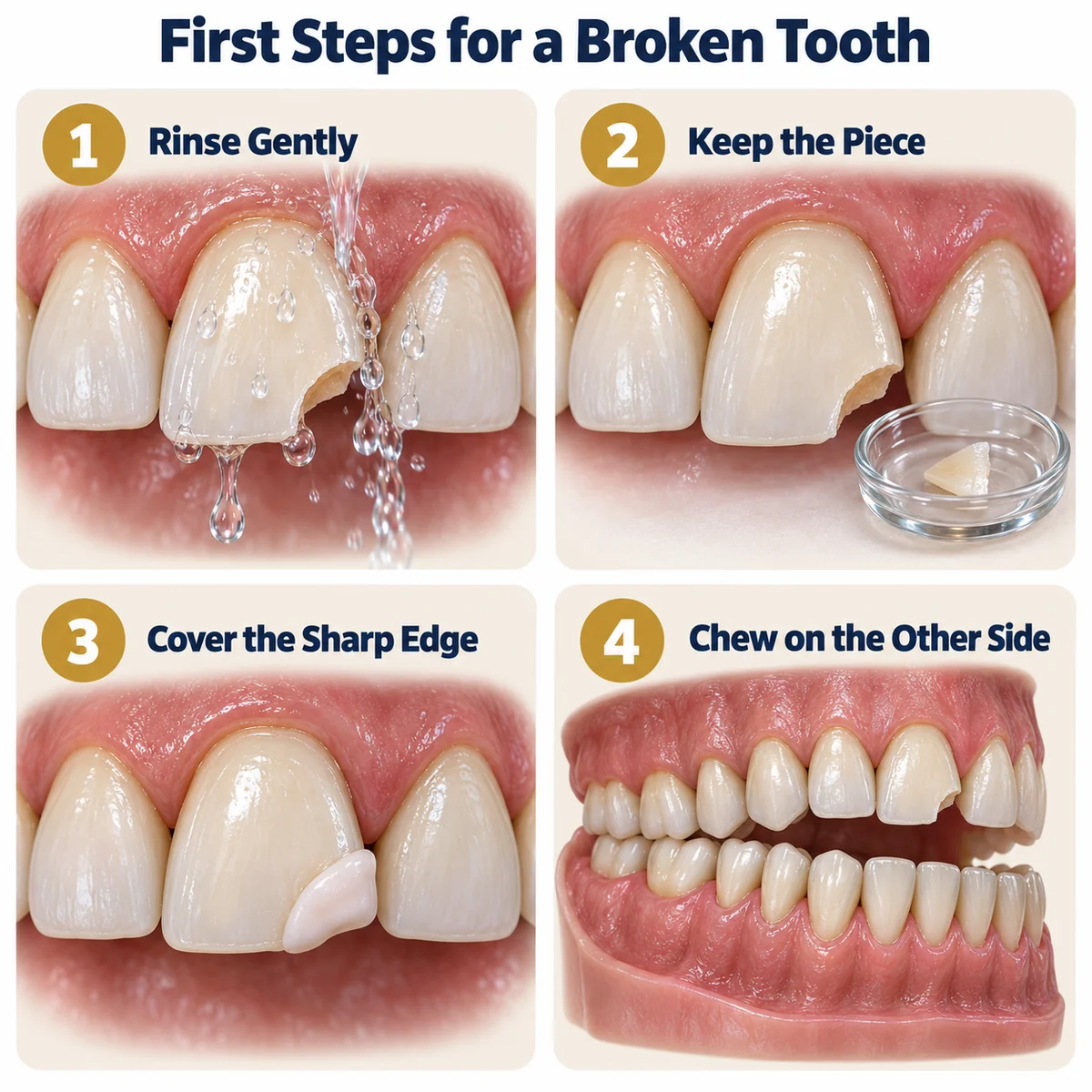
Phone the clinic and chew on the other side. Keep any piece that broke off. A broken tooth needs a check even when it does not hurt, because a chip or crack can expose the tooth to sensitivity or further damage.
While you wait for your visit:
- Swish warm water around the area if it feels irritated.
- Press dental wax over a sharp edge if you have some.
- Hold a cold compress against your cheek for swelling.
- Keep household glue away from the tooth and from any crown.
- Ask your pharmacist about pain relief.
These steps protect the area. They do not fix the tooth.
The repair depends on the damage. A small chip can be smoothed or bonded. A bigger break can need a filling or a crown. A deep break can reach the inner tooth and call for a root canal assessment. Read more about broken tooth repair.
Call promptly if the tooth broke in a fall or feels loose or bleeds or swells.
What should you do if a tooth is knocked out?
Phone the clinic immediately. A knocked-out adult tooth is urgent. Treatment options are more likely to stay open the sooner the tooth is assessed.
Tell the team how the injury happened and what other symptoms you have. For a serious injury or heavy bleeding, go to a hospital emergency department.
While you get to care, look after the tooth itself:
- Hold it by the crown, the white part you see when you smile. Keep your fingers off the root, because the cells on the root help the tooth reattach
- Rinse it only if it is dirty, and only for a moment, in milk or saline. Plain water is fine for a few seconds at most
- Do not scrub, dry or wrap it. Skip soap, disinfectant and tissue
- If the person is fully alert and calm, slide the tooth back into its socket the right way round, without forcing it. A gentle bite on a clean cloth holds it in place
- If it will not go back, keep it wet. Milk or a tooth-saving solution comes first, then saline. Water is the last choice, but it is still better than letting the tooth dry
- Bring the tooth with you and phone on the way
Never put a knocked-out baby tooth back. It can harm the adult tooth growing underneath. If you are not sure whether it is a baby tooth or an adult tooth, leave it out, keep it in milk and call the clinic.
If the clinic is closed, go to the nearest hospital emergency department or an emergency dental service right away, because time matters. Do not wait to see how it feels.
What should you do about a lost filling or crown?
Stay off that side when you eat and phone the clinic. Without its filling the tooth is exposed and sensitive, and chewing on it risks more damage.
If a crown comes off, hold on to it and bring it with you. Household glue is not safe for putting it back. The tooth underneath is exposed, so the sooner it is checked the better. Learn about dental fillings and dental crowns.
What should you do if you think you have a dental abscess?
A dental abscess is an infection concern and it needs a prompt visit. Swelling in the gums or jaw or face can point to infection or inflammation. A bad taste or drainage by a tooth is another sign, and so is pain that wakes you or will not settle.
Call the clinic, say where the swelling is and tell the team when it started. Do not wait to see whether it settles. Severe facial swelling goes to a hospital even if it is not spreading. So do swelling that moves toward your eye or neck, a fever, and trouble with breathing or swallowing, as the warning above says. After the exam the plan can include a root canal assessment.
What should you do about bleeding or a mouth injury?
Call the clinic for bleeding after a dental injury and for any other injury to the mouth or lips or gums. A cold compress held against the outside of your face can help with swelling or injury.
Bleeding you cannot stop is not a home problem. Go to a hospital emergency department for uncontrolled bleeding or a serious facial or jaw injury.
What happens at an emergency dental visit?
The team reviews your symptoms and examines the tooth and gums and your bite. X-rays are taken when needed to check the roots and bone and any cracks or infection. The dentist then explains the cause and your options.
Depending on what the exam finds, the plan can include a filling or a crown assessment or a root canal assessment or a temporary repair. Some cases need a referral. The team also walks you through estimated costs and coverage before any treatment starts.
Bring a short list of your symptoms, including when they began, where the pain is and what sets it off. Add any swelling or fever, your medical history and medications, and any insurance or CDCP details. If you saved a broken piece or a lost crown, bring that too.
Does CDCP cover emergency dental care?
CDCP can help with eligible emergency services for eligible patients. What it pays depends on your eligibility and the treatment and frequency limits and co-payments and plan rules. It does not pay for everything.
Emergency costs depend on the problem and the exam and any X-rays and the treatment needed. We do not publish prices online, and the team goes over estimated costs before any treatment starts.
How can you lower the risk of a dental emergency?
You cannot prevent every accident, but regular care catches many problems early. Three habits cut the risk of a surprise:
- Keep your regular checkups. Our checkup guide shows what happens at one
- Wear a custom sports guard for contact sports or any activity with falls or collisions
- Ask about a night guard if you clench or grind
Children get hurt playing too, so a sports guard is worth it for them as well.
Frequently asked questions
What counts as a dental emergency?
Severe toothache and swelling and a broken or knocked-out tooth all count. So do a lost filling or crown and pain when biting. When unsure, call the clinic.
Is the emergency room the right place for tooth pain?
Go if you also have trouble breathing or swallowing or severe or spreading swelling. A fever with worsening swelling is another reason. For tooth pain alone, call your dentist.
Can a knocked-out tooth be saved?
A knocked-out adult tooth is urgent, and the sooner it is assessed the better the chance of discussing treatment options. Follow the steps above and phone the clinic right away.
How do I store a knocked-out tooth?
Hold it by the crown only and never scrub or dry it. Put it back only if the person is fully alert. Otherwise keep it in milk. Come in or go to a hospital right away, and never put a baby tooth back.
What are the signs of a dental abscess?
Swollen gums or a swollen jaw or face are warning signs, along with a foul taste or drainage by a tooth. Call the clinic promptly. Severe or spreading swelling needs the hospital.
What happens if my crown falls off?
Save the crown and call the clinic for guidance. Household glue is not a safe fix.
Is facial swelling a dental emergency?
It can be. Swelling that spreads or comes with a fever or trouble swallowing or breathing needs urgent medical care.
Can I put aspirin on a sore tooth?
No. Do not place aspirin directly on the gums or tooth. Ask your physician or pharmacist about pain relief.
Does CDCP cover emergency dental care?
Partly, for eligible patients. Eligibility, frequency limits and co-payments decide what the plan pays.
Do you see new patients in an emergency?
Yes. Grimsby Lake Dental sees new patients with urgent concerns. Call (905) 309-5757 for the soonest available appointment.