
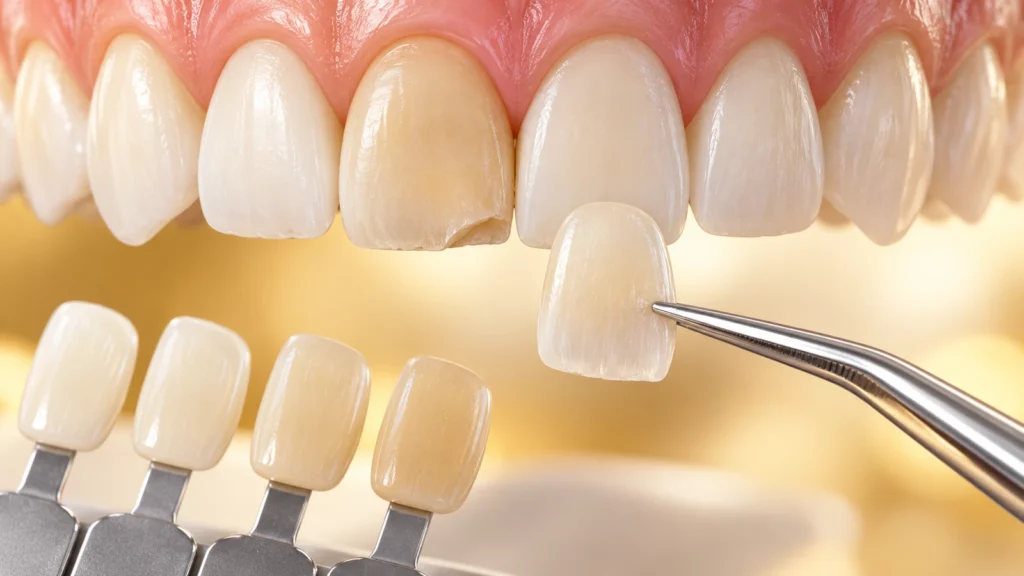
Colour, chips, gaps and missing teeth all have different answers. This guide matches each concern to a treatment and says who each option does not suit.
Key takeaways
- Whitening changes the shade of natural teeth only. Crowns, veneers, bridges and fillings do not whiten
- Bonding fixes small chips and small gaps and uneven edges. It is a conservative option for small repairs
- Veneers cover the front of a tooth. They change colour and shape across several teeth
- Clear aligners move teeth. They suit mild to moderate crowding and spacing
- Health comes first. Decay and gum disease and heavy grinding are treated before cosmetic work
What are the main types of cosmetic dentistry?
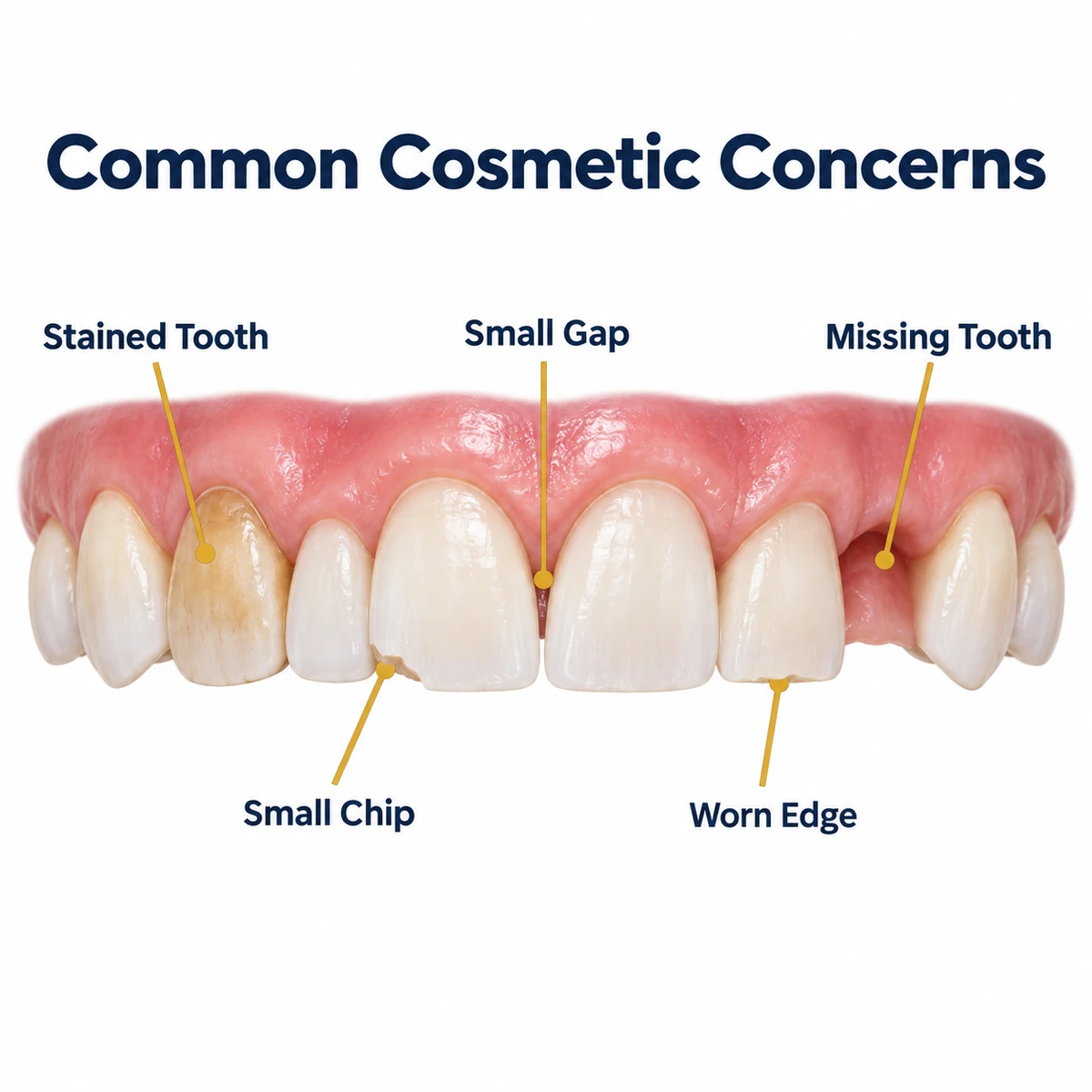
There are four main types: whitening, bonding, veneers and clear aligners. Whitening and bonding are the most conservative options. Veneers and aligners suit bigger changes. Crowns and bridges and dentures belong to restorative care and sit at the end of the table.
| Your concern | Treatment to ask about | What it does |
|---|---|---|
| Dull or stained natural teeth | Teeth whitening | Brightens the colour of natural teeth |
| Small chip or gap or uneven edge | Dental bonding | Adds tooth-coloured resin to part of a tooth |
| Colour, shape or size across front teeth | Veneers | Covers the front surface of a tooth |
| Crowding, spacing or shifted teeth | Clear aligners | Moves teeth into better positions |
| Weak or worn tooth | Dental crowns (restorative) | Covers and protects the whole visible tooth |
| One or more missing teeth | Bridges or dentures (restorative) | Replace missing teeth |
Your dentist at Grimsby Lake Dental checks your teeth and gums and bite before suggesting any of these. The plan follows your exam.
Will teeth whitening fix stained or dull teeth?
Whitening lightens the shade of natural teeth and may help with stains from coffee and tea and red wine and tobacco. It does not change tooth shape or spacing, and results vary with the type of stain and your natural tooth colour. Our post on whitening before the holidays compares in-office and at-home options. A dentist checks for cavities and gum problems and sensitivity first. That check is the main reason to choose professional whitening over a store-bought kit.
Whitening has limits:
- It does not work on crowns or veneers or bridges or tooth-coloured fillings
- It cannot fix deep internal stains or colour changes from injury or medication
- Some people feel temporary sensitivity during or after treatment
Teeth stain again over time so habits matter. If buildup dulls your teeth then a dental cleaning can come first to show your true shade.
Which treatment repairs a chip or a gap?
Bonding repairs a small chip or closes a small gap with tooth-coloured resin. The dentist shapes the resin on the tooth and hardens it with a curing light before polishing it. In many small cases little tooth removal is needed.
Bonding is not for a large break or a deep crack or an active cavity or heavy grinding, and resin is softer than enamel so it chips and stains sooner than porcelain. A chip that hurts or leaves a sharp edge is a repair job first, so read about broken tooth repair.
When do veneers make more sense than bonding?
Veneers make more sense when the change is broad, such as several front teeth or deeper discolouration or a shape concern. A veneer is a thin custom shell over the front surface of a tooth. Porcelain veneers are made outside the mouth and bonded on. Composite veneers are built from resin directly on the tooth.
Porcelain can need a thin layer of enamel prepared. Enamel does not grow back, so this choice is long term.
Can clear aligners straighten crooked teeth?
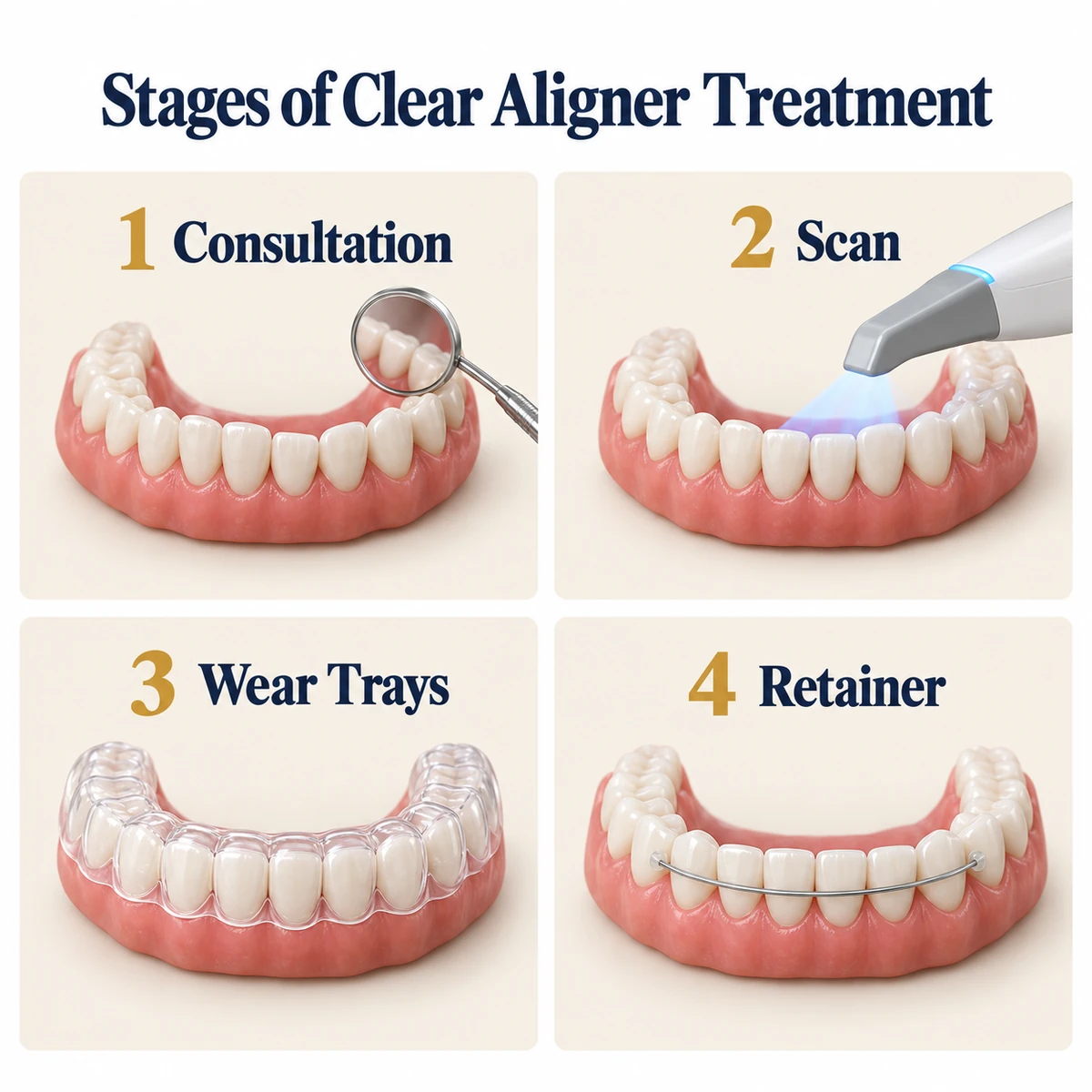
Yes, for mild to moderate crowding and small gaps and shifted teeth. Clear aligners are removable trays that move teeth in steps.
They only work when worn as instructed. Some cases need traditional braces or specialist care. A consultation confirms whether aligners can move your teeth safely, and we offer clear aligners and Invisalign and you can read about orthodontic options.
A retainer is normally needed afterwards to keep teeth from shifting back. Bonding or a veneer can cover a gap but cannot move teeth. A gap caused by tooth position calls for aligners first.
What do crowns, bridges and dentures do for a smile?
They restore teeth that are weak or worn or missing. They change how your smile looks as well.
- Crowns cover a cracked or worn tooth and restore its shape and strength and look
- Bridges replace one or more missing teeth using nearby teeth for support
- Dentures are removable and replace several teeth or a full arch
Who should wait before cosmetic work?
Active decay and gum disease are treated first with a filling or gum health care. Cracked or leaking teeth need repair before whitening. Heavy grinding is managed first as well because strong pressure chips resin and cracks porcelain. A night guard can protect new work.
What does cosmetic dentistry cost and does CDCP cover it?
Cost depends on the treatment and the number of teeth and the planning each case needs. We do not publish a price list online. Our team reviews estimated costs with you before treatment begins.
Whitening and veneers and cosmetic bonding are not on the CDCP coverage list. That page also says orthodontic services are currently not available. Bonding that repairs damage is judged by the clinical reason. Private plans set their own rules so bring your insurance details. We accept CDCP for eligible patients and eligible services.
Frequently asked questions
What are the most common types of cosmetic dentistry?
The four main types are whitening, bonding, veneers and clear aligners. Restorative dentistry such as crowns and bridges and dentures alters your smile too.
Is cosmetic dentistry only about looks?
No. Aligners improve cleaning access and crowns and bridges restore chewing. Bonding repairs a chip so the look improves along with how the tooth works.
Does whitening work on veneers or crowns?
No. Whitening lightens natural teeth only so crowns and veneers and bridges and tooth-coloured fillings keep their shade.
Can I get cosmetic work if I have crooked teeth?
Yes. Clear aligners move teeth into better positions and some cases need braces. A veneer or bonding can cover a gap but does not move teeth.