

The right choice for a holiday smile depends on your stains and your timeline. It also depends on the health of your teeth, so start planning well before the first party.
Key takeaways
- Strength is the main difference. Professional gels are stronger than store products and change the shade faster.
- Check your teeth first. Cavities, cracks, exposed roots and gum problems need care before any bleaching starts.
- Dental work keeps its colour. Crowns, veneers, bridges and tooth-coloured fillings do not whiten.
- Whitening toothpaste mainly polishes. It lifts surface film and does little to the colour of the tooth itself.
- Plan around the holidays. Leave time for a checkup and a cleaning before the whitening itself.
What is the difference between professional and at-home whitening?
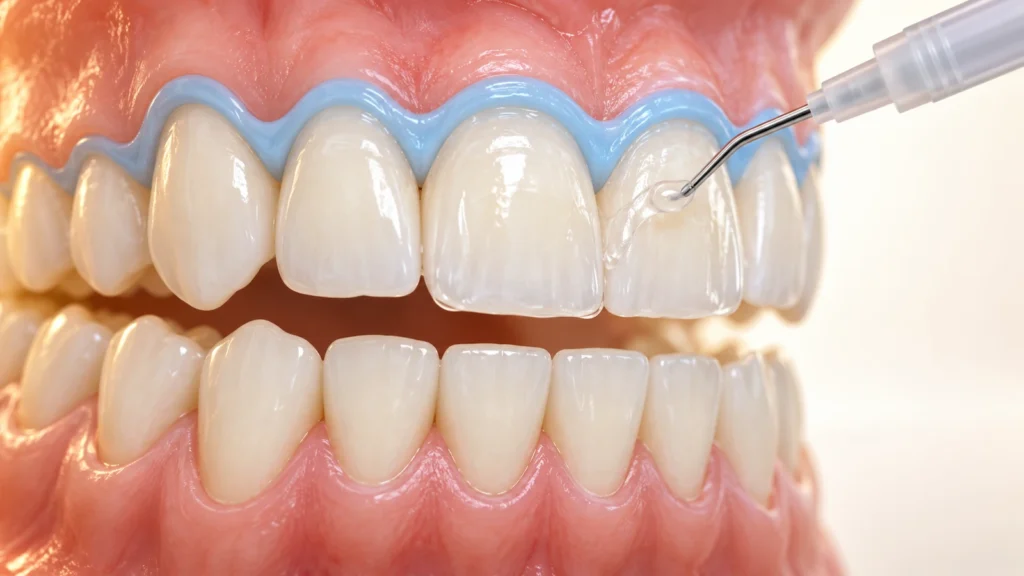
Professional whitening uses a higher strength gel that your dental team chooses and supervises. At-home products use weaker gels or polishing agents that you apply yourself with no check of your teeth beforehand.
Most whitening gels contain hydrogen peroxide or carbamide peroxide. These bleaching agents pass into the enamel and break up the stain molecules inside it. Gel strength, fit and a check of your mouth first make the real difference.
Dental offices offer professional whitening in two main forms. In the chair the team shields your gums with a barrier and applies a strong gel for a set time. With take-home trays the dental team makes trays shaped to your own teeth and gives you a gel to wear at home. Ask at your visit which methods are available and which one suits your teeth.
How well do store-bought whitening products work?
Store products help with light surface stains on healthy and even teeth. The change comes slowly, and deeper or older stains barely move.
- Whitening toothpaste polishes the surface with mild abrasives. It can lift a fresh coffee or tea film but leaves the shade underneath the same.
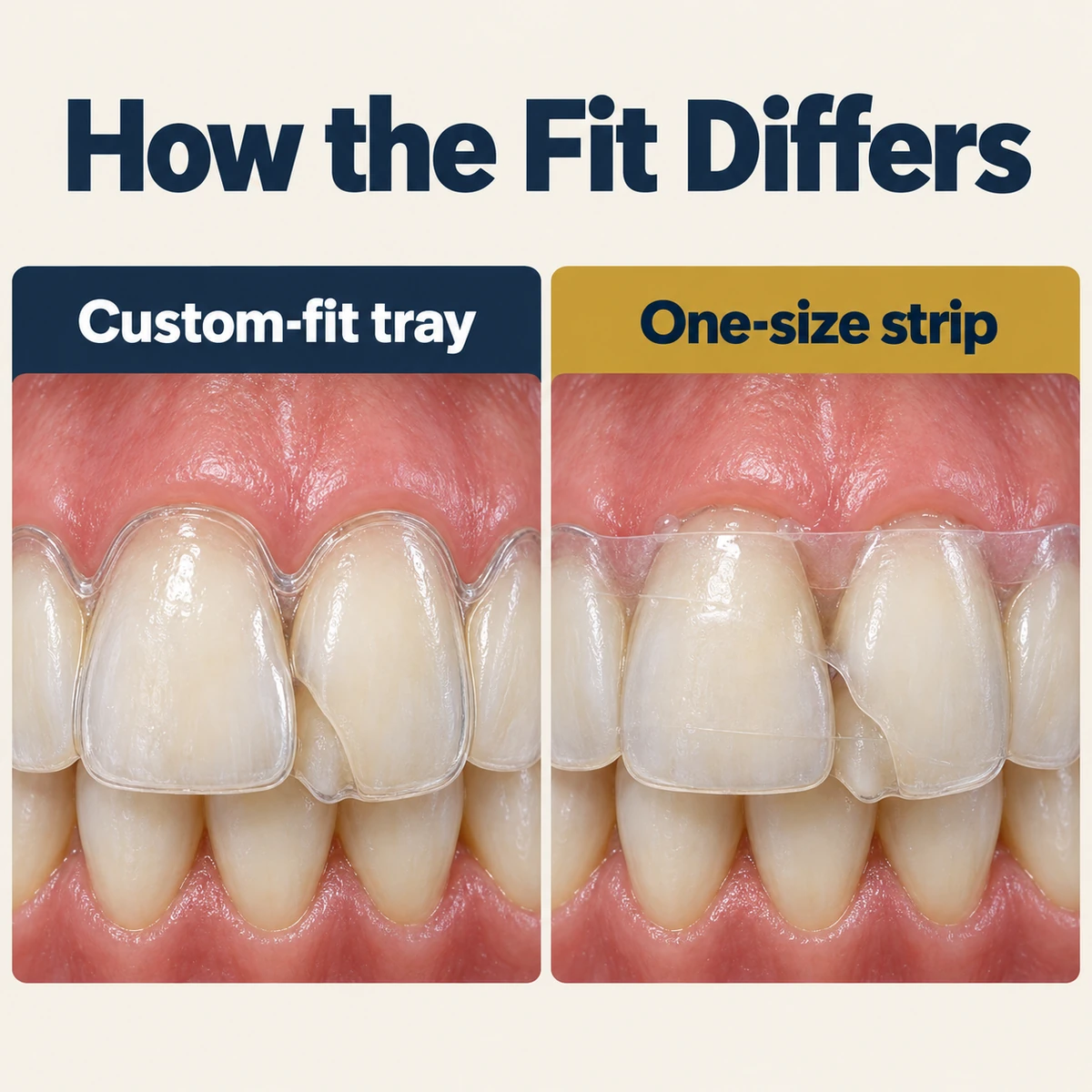
- Strips and paint-on gels hold a low dose of peroxide against the front teeth. One size has to fit every mouth, so crowded or overlapping teeth can whiten unevenly.
- Store tray kits use a stock tray that does not match your bite. Gel can seep out onto the gums and irritate them.
Overusing any of these products can leave your teeth sensitive. Follow the directions on the package, and stop and tell your dental team if your teeth or gums react badly. Ask your dental team before a child or teen uses any whitening product.
Pros and cons at a glance
Professional whitening
- Stronger gel and a faster change in shade
- A dental check first for cavities, cracks and gum problems
- A plan that can be adjusted for sensitive teeth
- Costs more and needs an appointment
At-home products
- Lower cost and sold in most pharmacies
- Used on your own schedule at home
- Weaker gels with slower and smaller changes
- One-size strips and trays can fit poorly and irritate gums
How much time do you need before the holidays?
Give yourself several weeks. Book your checkup and any cleaning first and whiten after that, so problems get treated and your dentist can see the true shade of your teeth.
| In-chair whitening | Dentist take-home trays | Store strips and gels | Whitening toothpaste | |
|---|---|---|---|---|
| Gel strength | Highest | Strong | Low | Mostly polish |
| Fit on your teeth | Gums shielded by a barrier | Trays made for your teeth | One size | Not applicable |
| Time to a change | One or more visits | Daily wear over a few weeks | Regular use over weeks | Weeks to months |
| Teeth checked first | Yes | Yes | No | No |
Teeth can look dull from buildup that a cleaning takes off. Grimsby Lake Dental can book a dental cleaning before your teeth whitening visit so the plan starts from your real tooth colour.
Will whitening work on your teeth?
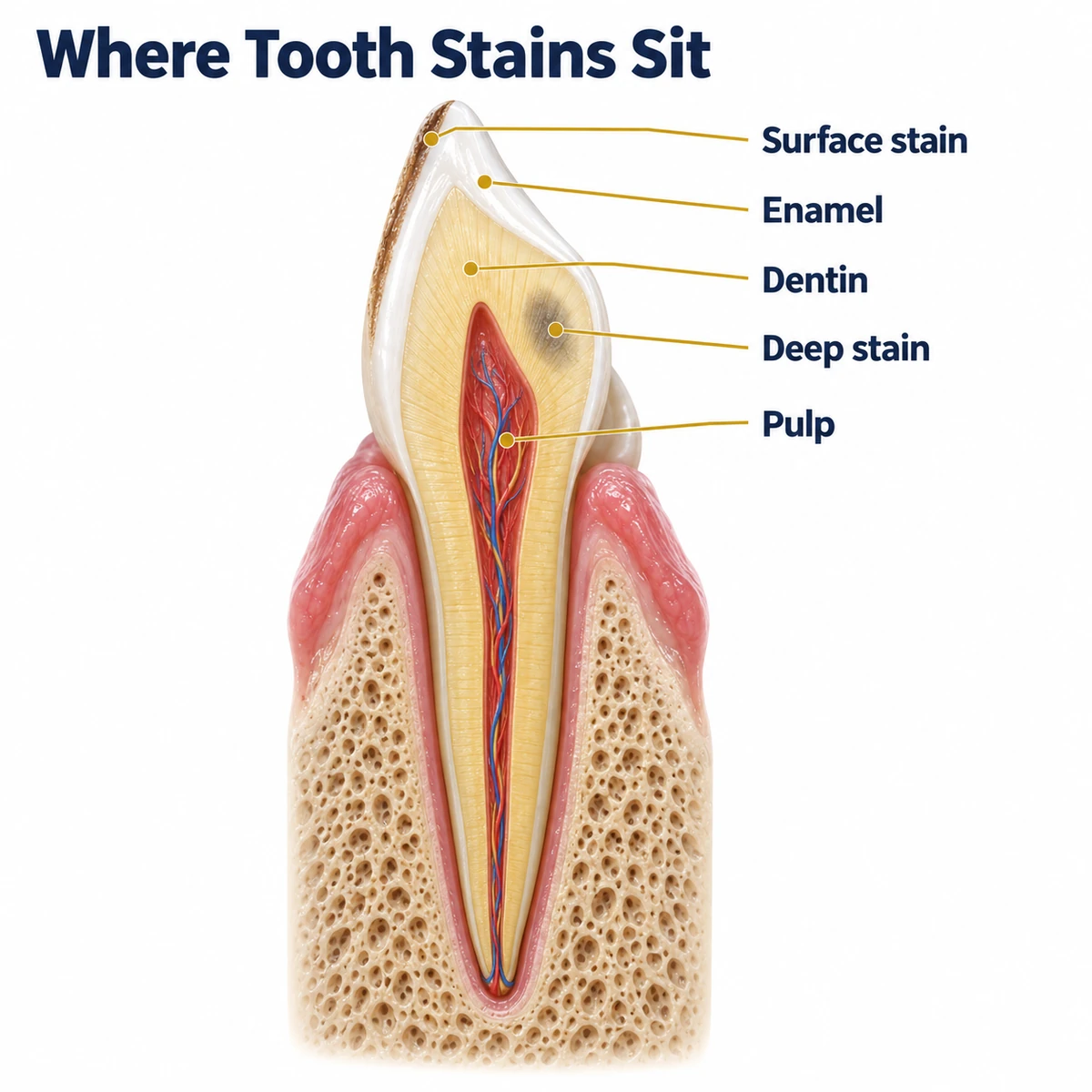
Whitening works best on natural teeth that have turned yellow or dull from coffee, tea, red wine or tobacco. Deeper stains from an injury or certain medications respond less, and some do not change at all.
Dental work keeps its original shade, and that includes crowns, veneers, bridges and tooth-coloured fillings. After whitening, a front crown or filling can look darker next to the lighter teeth around it. Your dentist can plan the timing of whitening around that dental work.
If whitening is not the right fit, dental bonding can cover a small discoloured spot. Veneers are another option when whitening falls short on colour. Our guide to types of cosmetic dentistry compares more options.
Who should hold off on whitening?
Hold off if you have untreated cavities, gum disease, cracked teeth, leaking fillings, exposed roots or teeth that are already very sensitive. These problems make sensitivity more likely and need treatment before any bleaching.
Mild sensitivity during or after whitening is a common side effect that is usually temporary. Tell your dentist before you start if your teeth are already sensitive and tell your dental team and your doctor if you are pregnant or breastfeeding. A dental exam finds these problems before they turn a holiday plan into a setback.
What helps a whiter shade last into the new year?
Teeth pick up stains again over time. Rinse with water after coffee or red wine. Brush twice a day and keep up with your regular cleanings. Our post on holiday foods and your teeth covers the treats that are hardest on enamel.
Whitening is a cosmetic service, and the Canadian Dental Care Plan does not list cosmetic treatments. Check your own insurance plan's rules as well. The team in Grimsby reviews whitening costs with you before treatment begins.
Frequently asked questions
Is professional whitening better than strips?
For a short timeline, a professional gel changes the shade faster and comes with a check of your teeth first. Strips suit light surface stains on healthy and evenly lined-up teeth.
Does whitening damage enamel?
Overusing store products can wear on enamel, irritate gums and leave teeth sensitive. Used as directed on teeth your dentist has checked, the common side effect is temporary sensitivity.
Can you whiten crowns or fillings?
No. Whitening only lightens natural tooth structure, and crowns, veneers, bridges and tooth-coloured fillings keep their colour.
How long does teeth whitening last?
It varies with your diet, tobacco use and how you care for your teeth. Teeth slowly pick up stains again, and your dentist can explain touch-up options.