
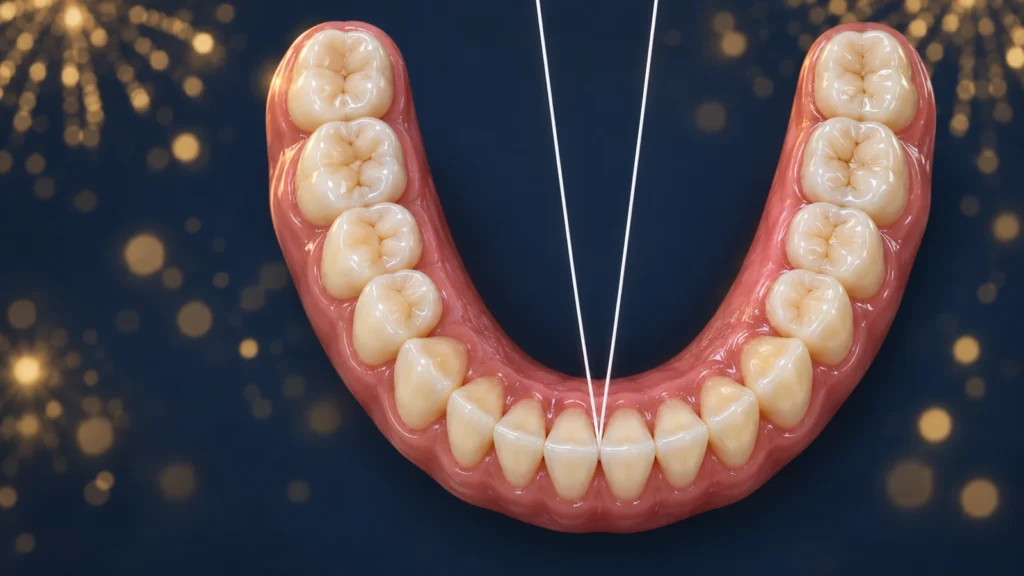
These five habits take a few minutes a day and protect your teeth and gums for the long run.
Key takeaways
- Technique beats effort: two gentle minutes of brushing, twice a day, do more than hard scrubbing.
- Floss once a day: a toothbrush cannot reach the gaps between your teeth.
- How often you snack matters: frequent sugar keeps your teeth under acid attack all day.
- Checkups catch problems early: your dentist sets how often you need one.
Why put your teeth on your resolution list?
Your mouth affects the rest of your body. Gum disease and untreated decay are linked with wider health problems such as diabetes and heart disease. Caring for your teeth supports the rest of your body too.
How do you brush and floss better this year?
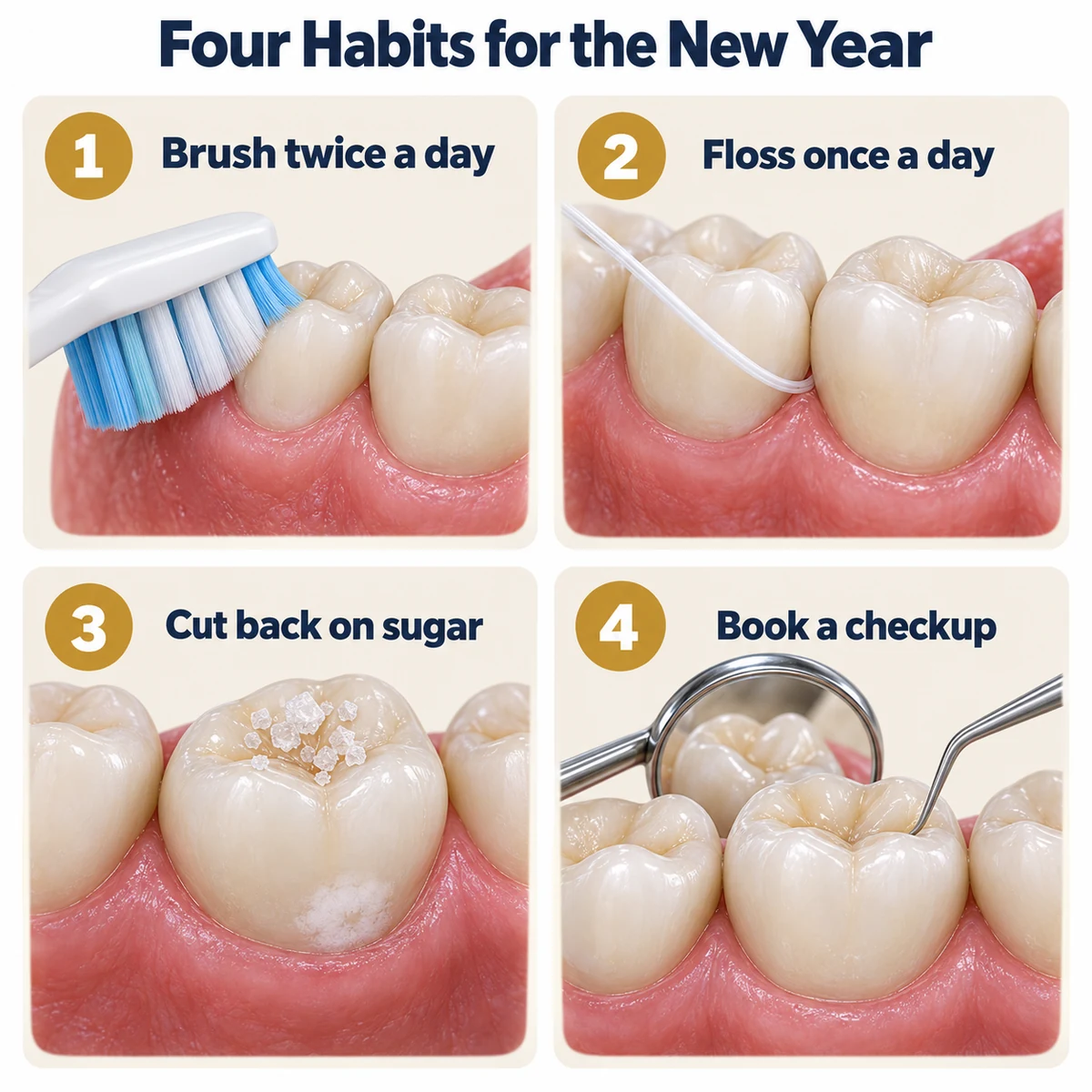
Brush for two minutes twice a day with a soft brush and fluoride toothpaste, then floss once a day.
Hold the brush at a slight angle towards the gum line and use small, gentle circles.
Curve the floss around each tooth in a C shape and slide it just under the gum line. Plaque, the sticky film of bacteria that forms every day, collects there and between teeth, out of reach of bristles.
Niagara Region does not add fluoride to its tap water. That makes fluoride toothpaste worth the habit, and your team can tell you whether fluoride treatment suits you.
Which foods and drinks should you cut back on?
Sugary snacks and sweet or acidic drinks do the most harm. Bacteria turn sugar into acid, and that acid weakens enamel until a cavity forms.
How often you eat sugar matters as much as how much. Sipping a sweet coffee all morning keeps your teeth under attack for hours.
- Watch hidden sugar. Sauces, dressings and flavoured yogurt can hide more sugar than you expect.
- Go easy on sticky and hard candy. Gummies and caramels cling to teeth, and hard candy dissolves slowly.
- Choose water. Pop, sports drinks and juice can wear down enamel over time.
Which habits are worth breaking?
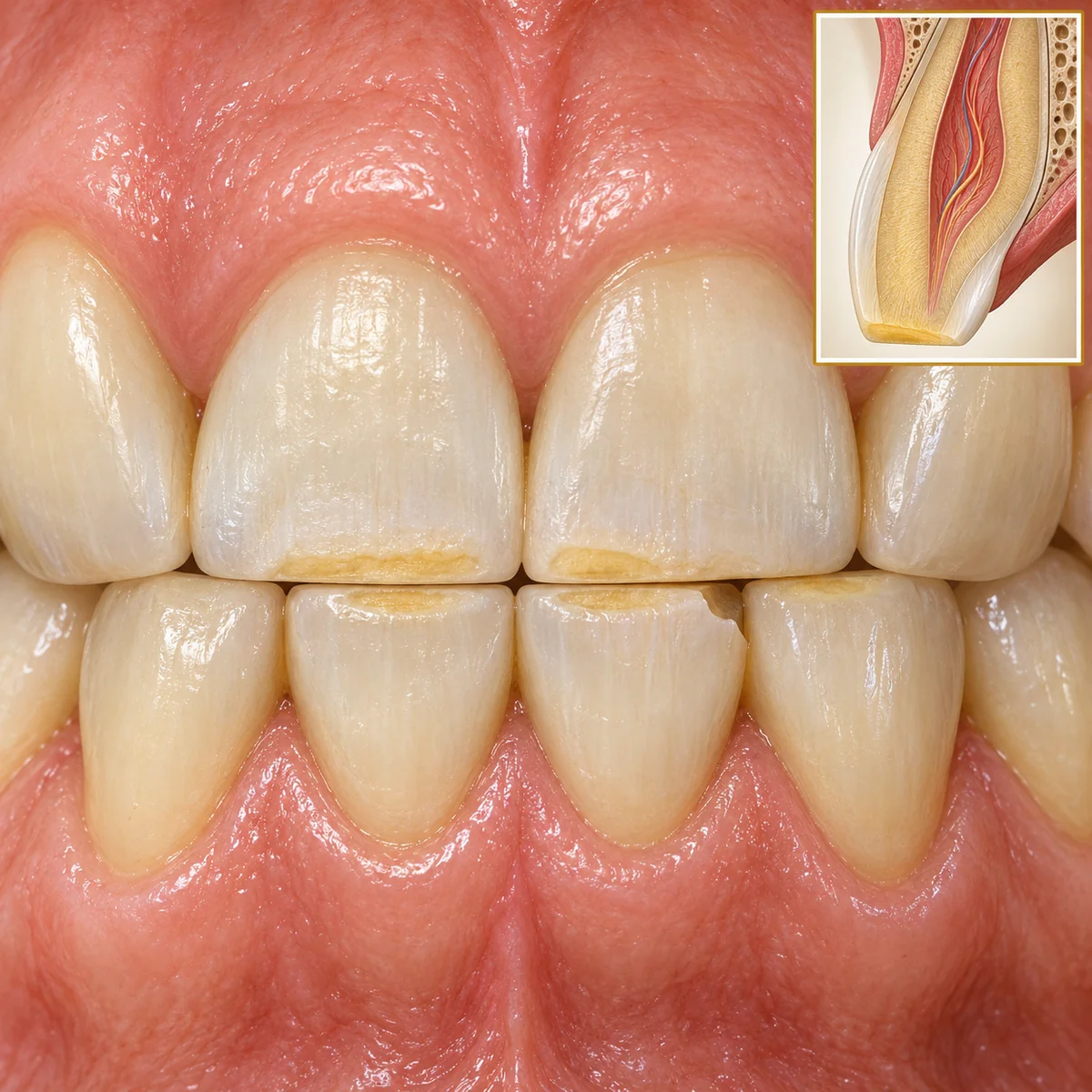
Any habit that puts teeth under strain or smoke against your gums is worth dropping. Chewing ice or pens, biting your nails and tearing open packages with your teeth can crack or chip enamel. Phone the clinic promptly about a chipped or cracked tooth, and right away for a knocked-out adult tooth.
Grinding or clenching at night flattens and wears teeth, and plenty of people grind without realising. A custom night guard takes that force while you sleep. Our post on how a night guard protects your teeth explains how it works.
Quitting smoking or vaping is one of the biggest favours you can do your mouth. Tobacco stains teeth and raises the risk of gum disease and tooth loss. It also raises the chance of oral cancer. Tell your dentist about any sore or patch in your mouth that has not healed.
When should you book your next checkup?
Many people visit about every six months, but your dentist sets the right interval from your gums and your risk of decay.
Tartar is plaque that has hardened on the teeth, and only a professional dental cleaning takes it off. At a dental exam, the team at Grimsby Lake Dental checks for decay, gum disease and unusual changes in your mouth and throat.
If you have the CDCP, exams and cleanings are on the plan's list of services, within its rules and frequency limits. You can still owe a co-payment and any fees above the plan rate.
Frequently asked questions
Is Dry January good for your teeth?
Yes. A break from alcohol helps your mouth stay moist, and saliva protects teeth from acid and bacteria. Many drinks also contain sugar that feeds decay. If you drink heavily, talk to your doctor before you stop.
What is the best drink for your teeth?
Plain water. It has no sugar or acid, and it helps rinse food and bacteria off your teeth between meals.
How often should you see the dentist?
Many people come in about every six months for a checkup and cleaning. Your dentist can set a shorter or longer gap to suit your mouth.