

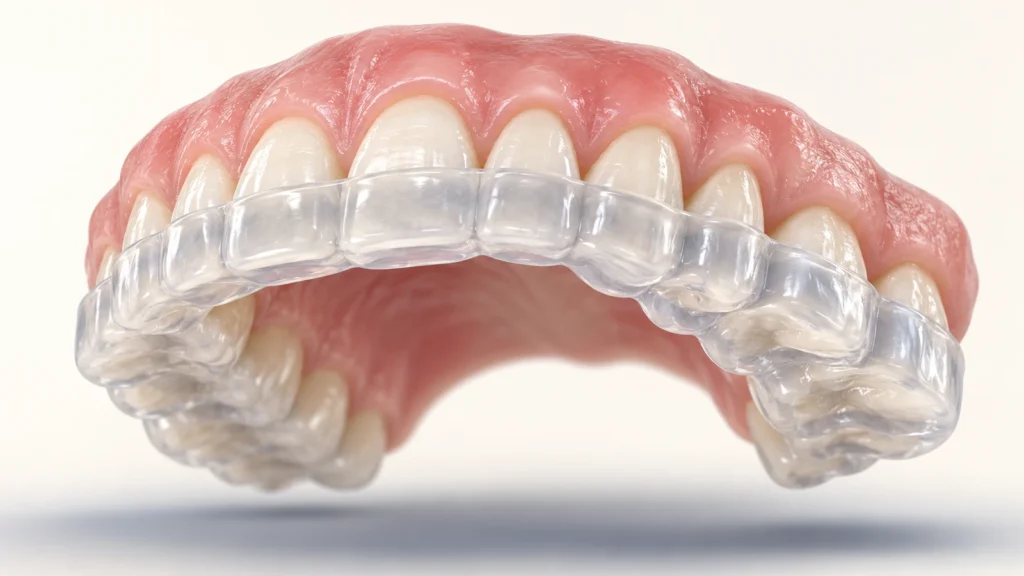
A night guard puts a barrier between your upper and lower teeth during the night. That reduces direct tooth-to-tooth pressure on your enamel and your dental work. This guide explains how it works and which type fits which mouth. It also covers what a fitting involves and when a guard is not enough.
Key takeaways
- A night guard can help protect teeth. It does not cure grinding. The habit carries on, but the guard takes the hit
- Custom guards fit better than store-bought ones. Our clinic provides custom guards, made from impressions or a scan of your teeth
- Three types exist. Soft, hard and dual-laminate suit different levels of grinding
- Many people grind without knowing it. Worn teeth and morning jaw soreness are the usual clues
- A guard is not a cure for jaw or sleep problems. Some symptoms need further assessment
- A guard needs care and replacing. Cracked or worn guards stop protecting you
Do night guards work for teeth grinding?
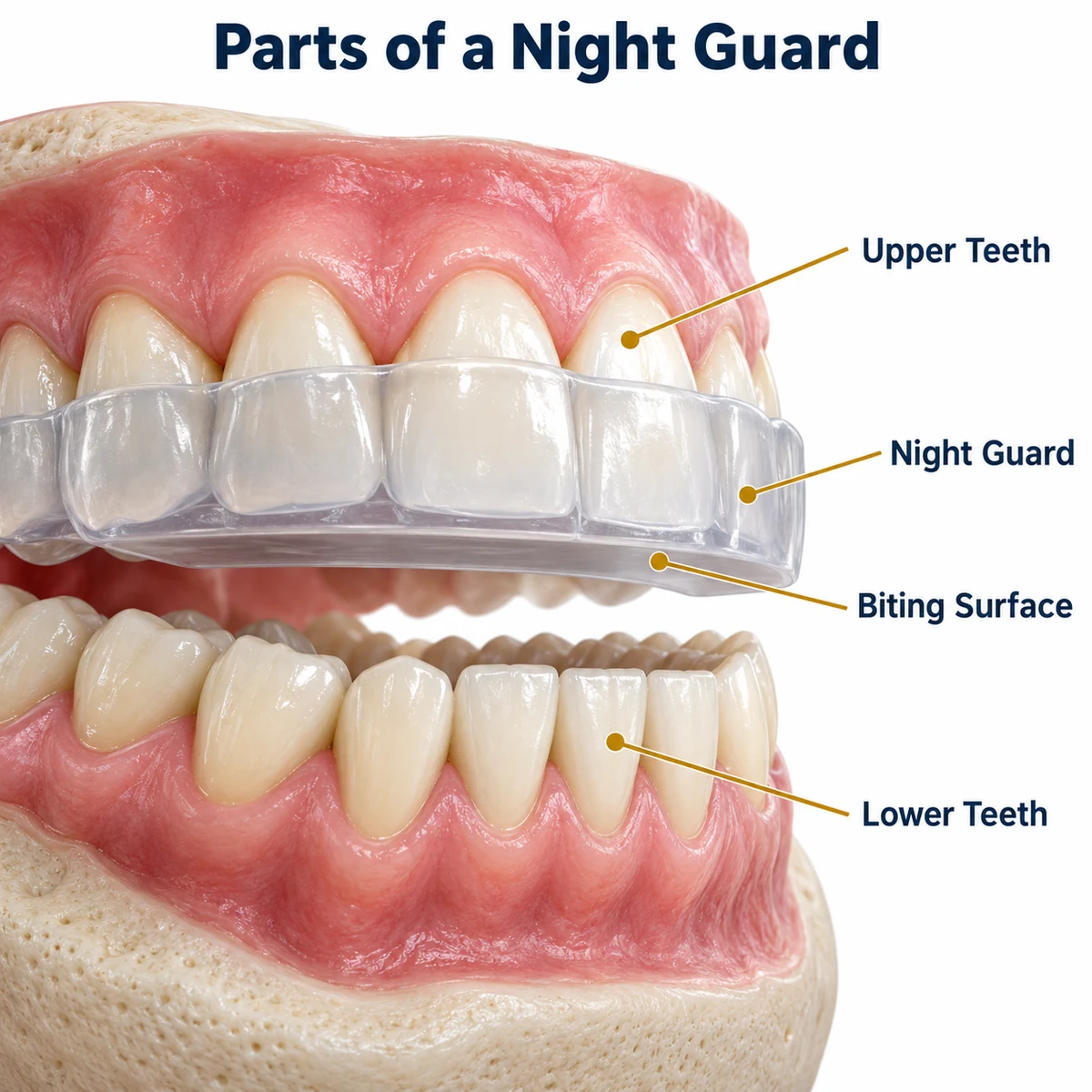
It can, because a night guard is a cover that fits over your teeth overnight and shields them from grinding and clenching, which dentists call bruxism. It does not stop the grinding.
Over time that pressure can wear teeth down and chip or crack them. It can also cause sore jaw muscles and headaches. Crowns, fillings and other dental work take damage too.
A guard gives the force somewhere else to go. Think of it as a crash helmet for your teeth and not a treatment for the cause.
A night guard can help with:
- Tooth wear from grinding
- Chipped or cracked teeth linked to clenching
- Pressure on crowns, fillings, veneers and bridges
- Tooth sensitivity from wear
- Jaw muscle pressure and morning tightness
Jaw symptoms are less clear, because jaw pain has several possible causes. A dental assessment finds out which applies to you. A guard also does not remove stress, fix a sleep problem or straighten a bite. Those need their own plan.
How do you know if you grind your teeth?
Look for worn or flattened teeth, chips, cracks and repeated broken fillings. Morning jaw soreness and headaches are common clues. Often the signs show up during a dental exam, or a partner hears grinding at night.
Other signs a dentist looks for:
- Sensitivity from enamel wear
- Jaw tightness or tiredness
- Bite marks on the cheeks or tongue
- Crowns or bridges under heavy pressure
No single sign proves you need a guard, and a guard is not always the only answer. Each one is a reason to get checked. Our guide to dental checkups explains what an exam covers.
Several things can contribute to grinding. Stress and tension are common, and so are uneven bite contact and missing or misaligned teeth. Medications, caffeine and alcohol can play a part for some people. Some sleep concerns need a physician.
A guard matters most if you have crowns, veneers or a bonded tooth that keeps chipping, because grinding shortens the life of that work. Our post on bonding vs veneers covers those choices.
What types of night guards are there?
There are soft, hard and dual-laminate night guards. The right one depends on how hard you grind and how your bite and dental work look.
| Type | Feel | Best suited to |
|---|---|---|
| Soft | Flexible | Mild grinding or clenching |
| Hard | Firm and durable | Stronger grinding and heavier bite pressure |
| Dual-laminate | Soft inside and hard outside | Patients who need comfort and durability |
A soft guard can feel better at first but wears through sooner under heavy grinding. A hard guard lasts under force. A dual-laminate guard combines the two. Your dentist recommends the type from your wear pattern and oral health.
Is a custom guard better than one from the drugstore?
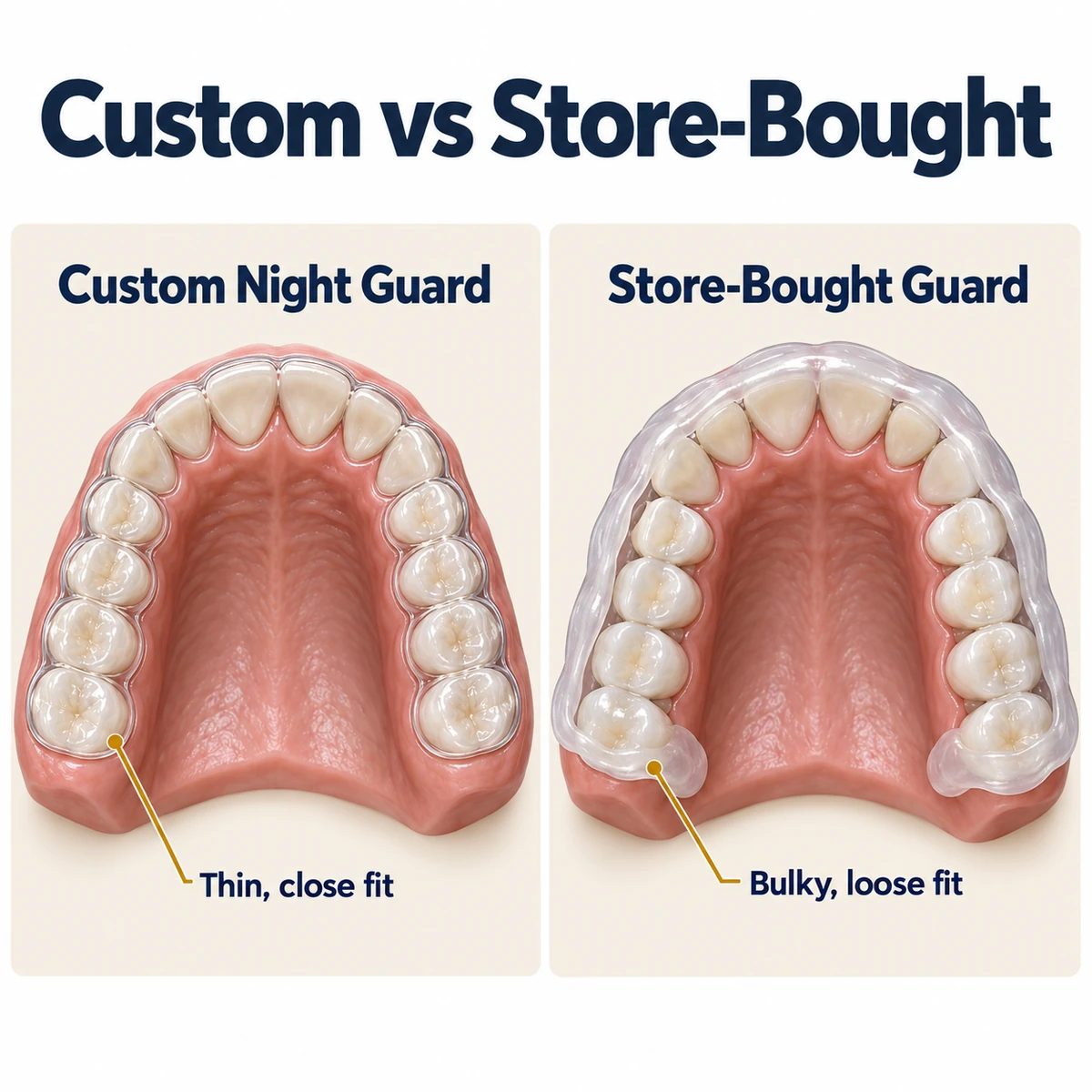
If you grind heavily or already have wear, a custom guard is the safer option to discuss. It is shaped from a mould or digital scan of your own teeth. Drugstore versions come in standard sizes or a boil-and-bite style, and they can feel bulky or slip while you sleep.
Custom guard
- Built from a mould or scan of your teeth
- Fits more steadily and carries less bulk
- Comes with a dentist's review of your bite
- Needs a dental visit first
Store-bought guard
- Sold in standard sizes or boil-and-bite
- Can feel bulky
- Can fit poorly or shift in your sleep
- Not reviewed by a dentist for your wear pattern
Heavy grinders and people with crowns, bridges, worn teeth or jaw discomfort should ask for a dentist-made guard first. A drugstore guard is not shaped to your bite and nobody has looked at your wear.
What happens when you get a custom night guard?
Getting a custom guard takes a few steps. Here is how it works at our clinic.
- First visit. The dentist looks at your teeth for wear and cracks, checks how your jaw feels and reviews any crowns or fillings. You describe what you have noticed, such as headaches or a sore jaw.
- Shape of your teeth. We take an impression or a digital scan so the guard fits your teeth more accurately.
- Making the guard. It is made to suit your mouth and the type of protection your dentist recommends.
- Fitting. When it is ready, the dentist checks that it sits well and your bite meets evenly. You also get instructions for wearing it.
If the guard feels tight, loose or uncomfortable, ask for an adjustment instead of wearing one that hurts.
How do you care for a night guard, and how long does it last?
Rinse the guard when you take it out and brush it gently as your dentist shows you. Let it dry before it goes in the case.
- Store it in its case and away from heat
- Never wrap it in a tissue, because it ends up in the garbage
- Take it to your dental visits so the fit can be checked
- Get a new one if it cracks, wears through or feels loose
A good guard can last for years. Heavy grinding, the material and your care routine all change that. A guard that has worn thin no longer protects you.
When is a night guard not enough?
Book a closer assessment if you have severe jaw pain or a jaw that locks or will not open fully. The same goes for frequent headaches, tooth pain that carries on, or teeth that keep breaking even with a guard in place. Loud snoring or a possible sleep breathing problem also needs a look.
Your dentist can suggest more dental care, a medical check or a referral. Jaw pain and clicking can come from the joint itself and not only from grinding. TMD therapy looks at that side. Pain in one tooth deserves its own check, so read about toothache and tooth pain.
Severe pain or swelling: call us at (905) 309-5757. Trouble breathing or swallowing, swelling spreading toward the eye or neck, or a fever with facial swelling: call 911 or go to the nearest hospital emergency department. See our dental emergency guide.
What does a night guard cost?
The cost depends on the type of guard, the materials, the impressions or scan and the fit checks. Our team reviews estimated costs before treatment begins. We do not publish prices online.
Ask us whether your plan, including the CDCP, covers a guard before you book. Our CDCP guide explains how the plan works, and our CDCP page covers it at our clinic.
Frequently asked questions
Do night guards stop teeth grinding?
No. The habit carries on. The guard keeps your upper and lower teeth from grinding directly on each other.
Will a night guard ease my jaw pain?
It can ease the pressure of clenching teeth together. Jaw pain has several possible causes, so a dental assessment comes first.
Why choose a custom guard over a drugstore one?
A custom guard is shaped to your teeth and bite. Drugstore guards can feel bulky and fit poorly.
How long does a night guard last?
It can last for years. Heavy grinding and poor care shorten that.
Does a night guard protect my dental work?
It can help protect crowns, fillings and bridges from the force of heavy grinding.
What are the signs of grinding at night?
Worn teeth, chips and jaw soreness are the usual signs. A partner can also hear grinding. A dental exam confirms it.